
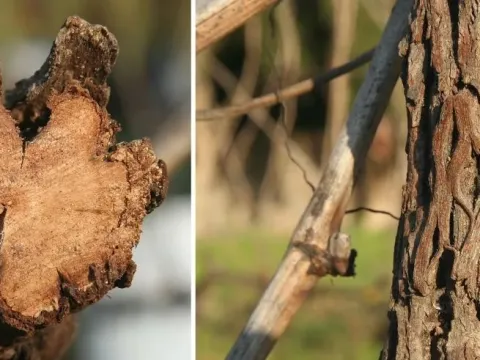
Grapevine rugose wood complex
Foveavirus tafvitis
The Grapevine rugose wood complex is associated with several vitiviruses, most notably the Grapevine virus A (GVA), a member of the Betaflexiviridae family.
What the section contains
Grapevine rugose wood complex
These pathogens are phloem-limited viruses that interfere with the normal development of the vascular system in grapevines.
Transmission occurs primarily through the propagation of infected scions and rootstocks, making the nursery stage the most critical point for disease control.
In the field, the virus is efficiently transmitted by mealybugs (Pseudococcidae) and scale insects (Coccidae) that feed on the grapevine sap.
The disease often persists in latent forms, meaning vines can carry the virus for years without showing obvious symptoms, acting as a reservoir for spread.
The diagnostic sign of rugose wood is observed after peeling back the bark from the trunk, particularly around the graft union.
One will find deep, longitudinal grooves, furrows, and depressions on the woody cylinder, which correspond to protuberances on the underside of the bark.
The graft union area often appears swollen or shows poor tissue fusion, which is a classic indicator of vascular incompatibility caused by the virus.
Above-ground symptoms include stunted vegetative growth, delayed budburst, and a general lack of vigor compared to healthy vines in the same block.
- Chlorotic or reddish discoloration of leaves.
- Delayed ripening of berries.
- Increased susceptibility to winter damage.
- Shortened internodes on shoots.
The disease causes a gradual decline in vine productivity, leading to smaller, lower-quality yields that are often unusable for premium winemaking.
Because the virus attacks the vascular tissue, the vine struggles to transport essential nutrients, leading to physiological starvation of the foliage and clusters.
Infected vines exhibit significant cold sensitivity, often resulting in widespread dieback during extreme temperature drops in the dormant season.
The economic lifespan of the vineyard is drastically reduced, often requiring premature replanting of the affected blocks to maintain commercial viability.
Mixed infections of GVA with other viruses, such as leafroll viruses, cause rapid decline, where the vine may die within a few years of infection.
Strict adherence to phytosanitary protocols is essential, starting with the use of certified, virus-tested planting material from reputable nurseries.
Implementing a rigorous pest management program to control mealybug and scale insect populations is vital to stop the spread of the virus within the vineyard.
Regular monitoring and removal of symptomatic vines help limit the spread of the virus to neighboring healthy plants in the orchard.
All pruning equipment and grafting tools should be thoroughly disinfected to prevent mechanical transmission of the pathogen during routine maintenance.
Establishing buffer zones and avoiding planting new vines adjacent to old, infected vineyard blocks reduces the risk of insect-borne transmission.