
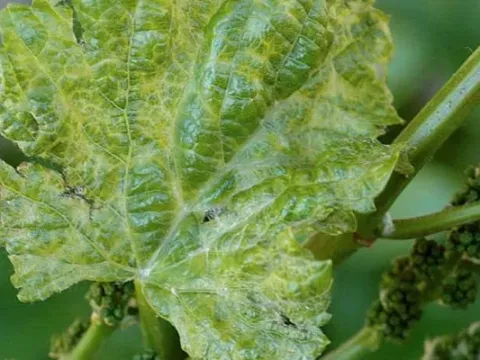
Grapevine virus A
Trichovirus pinovitis
Grapevine virus A (GVA) is the causal agent of this disease, belonging to the genus Vitivirus within the Betaflexiviridae family.
What the section contains
Grapevine virus A
The virus consists of single-stranded RNA particles and is known for its systemic distribution throughout the host plant's tissues.
Transmission primarily occurs through infected vegetative propagation material, which remains the most critical pathway for long-distance spread.
In the field, the virus is transmitted by various sucking insects, most notably mealybugs (Pseudococcidae) and scale insects (Coccidae).
GVA is often found in complex associations with other grapevine viruses, such as leafroll-associated viruses, which complicates diagnostic efforts.
Symptoms of Grapevine virus A infection are highly variable and often remain latent, showing no clear signs of disease for long periods.
Infected vines typically show stunted growth, reduced vigor, and a general decline in productivity over several growing seasons.
Foliar symptoms may include interveinal chlorosis, reddening of the leaves, and sometimes leaf curling, depending on the grapevine cultivar.
The disease causes a reduction in berry size, poor bunch development, and uneven ripening, which significantly affects the final quality of the fruit.
In chronic cases, the canes may fail to mature properly, resulting in increased susceptibility to frost damage and winter mortality.
The primary driver of GVA dissemination is the international and regional movement of infected grapevine cuttings and rootstocks.
Warm and humid climatic conditions favor the rapid population growth of insect vectors, thereby increasing the risk of virus spread within a vineyard.
Failure to maintain strict sanitary protocols in nurseries leads to the inadvertent production and sale of virus-infected planting material.
Mechanical transfer of the virus can occur during pruning or grafting if tools are not properly disinfected between different vines.
Neglecting pest management programs allows vectors to reach high densities, which facilitates the transmission of the virus from infected to healthy plants.
Grapevine virus A is responsible for significant economic losses, as it leads to reduced grape yield and poor fruit quality.
The reduction in sugar content and the alteration of acidity profiles make infected fruit unsuitable for high-quality wine production.
Severe infections eventually lead to the loss of vine productivity and the need for premature vineyard replanting, causing heavy financial losses.
Weakened vines show increased sensitivity to environmental stresses, leading to further declines in vineyard longevity.
The presence of GVA also limits the commercial potential of nurseries and restricts the trade of grapevine cultivars.
The most effective strategy is the use of certified virus-free planting material derived from established heat-treatment or tissue culture programs.
Vigorous control of mealybug and scale insect populations using integrated pest management (IPM) practices is essential to reduce vector transmission.
Regular visual scouting and laboratory testing (ELISA or PCR) are necessary to identify and rogue infected vines as early as possible.
Tools used for pruning and grafting must be disinfected frequently to prevent the mechanical transmission of the virus between vines.
Establishing proper spatial isolation between new, healthy plantations and older, potentially infected vineyards helps to mitigate the risk of spreading the pathogen.