
Urd bean
Urd bean
Urd bean, scientifically known as Vigna mungo and often referred to as black gram, is a significant pulse crop susceptible to several plant diseases.
What the section contains
Urd bean
The most devastating pathogen affecting Vigna mungo is the Mung bean yellow mosaic virus (MYMV), which is transmitted by the whitefly Bemisia tabaci.
Fungal pathogens such as Erysiphe polygoni, the causal agent of powdery mildew, frequently threaten the crop under favorable environmental conditions.
Anthracnose, caused by Colletotrichum lindemuthianum, and bacterial blight, caused by Xanthomonas phaseoli, are also prevalent diseases that impact crop health.
Understanding the etiology of these pathogens is essential for developing effective integrated pest and disease management strategies in commercial farming.
The hallmark of MYMV infection is the development of scattered yellow spots on the leaves, which eventually turn into a severe mosaic pattern.
Powdery mildew appears as white, floury patches on the leaf surface, which can coalesce to cover the entire leaf, eventually leading to senescence.
Anthracnose symptoms include dark, sunken lesions with reddish margins found on stems, pods, and leaves, significantly weakening the plant structure.
Bacterial blight manifests as water-soaked spots that become angular and brown, often surrounded by a characteristic yellow halo on the foliage.
- Stunted growth and poor pod development.
- Premature yellowing and leaf shedding.
- Reduced flower production and pod set.
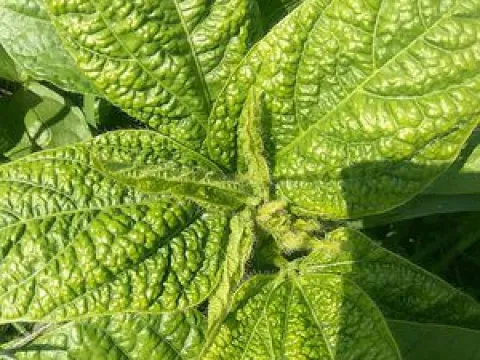
- Deformed foliage with mosaic patterns.
High humidity combined with warm temperatures (22–30°C) provides the perfect environment for the rapid spread of fungal infections in urd bean fields.
Dry, hot spells are particularly favorable for whitefly populations, which increases the incidence of viral mosaic diseases throughout the growing season.
Dense planting configurations reduce air circulation, leading to a microclimate that promotes the development of mildew and other foliage diseases.
Continuous cropping of pulses in the same field leads to the accumulation of soil-borne pathogens, increasing the risk of early-season disease outbreaks.
Lack of crop rotation and improper weed management provide reservoirs for pathogens, facilitating their transmission to the main crop.
Disease outbreaks in urd bean can cause substantial yield losses, sometimes resulting in total crop failure if management measures are neglected.
Quality degradation is a major concern, as diseased seeds exhibit poor germination, low nutritional value, and poor marketability for export.
Viral infections lead to systemic issues, where the plant stops vegetative growth and becomes unable to produce viable seeds, causing economic instability.
The cost of intensive fungicide and insecticide applications significantly reduces the profit margin of the cultivation cycle for smallholders.
Widespread disease impacts the stability of the legume supply chain, influencing local market prices and food security for the region.
The primary control strategy involves planting resistant or tolerant cultivars developed through breeding programs to withstand local pathogen strains.
Seed treatment with systemic fungicides is a standard preventive practice that protects the crop against early soil-borne pathogen infections.
Effective management of the whitefly population using targeted insecticides is critical for controlling the spread of yellow mosaic virus.
Adopting appropriate crop rotation cycles and maintaining spatial isolation from other susceptible legumes helps break the pathogen lifecycle.
Field sanitation, including the destruction of diseased plants and weed control, prevents the buildup of primary inoculum in the field.