
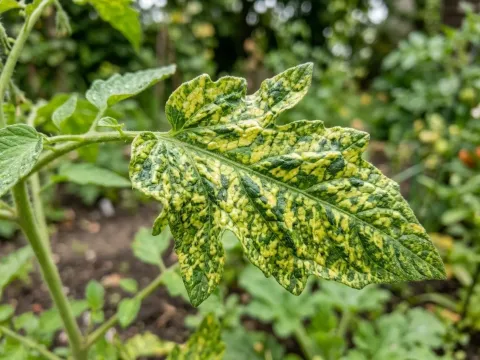
Solanum mosaic virus
Tymovirus dulcamarae
The causal agent of this disease is Tymovirus dulcamarae, a virus belonging to the Tymovirus genus with a single-stranded RNA genome.
What the section contains
Solanum mosaic virus
The virus primarily targets plants within the Solanaceae family, with bittersweet nightshade (Solanum dulcamara) serving as the main natural reservoir.
It is a systemic pathogen, meaning that after entering the host, it utilizes the plant's vascular system to spread throughout all parts of the organism.
Transmission occurs mechanically through contaminated tools or contact, and via specific insect vectors that feed on the sap of infected plants.
The virus exhibits significant stability in the environment, remaining viable in plant debris and on surfaces for extended periods, complicating eradication efforts.
The primary symptom is a distinct mosaic or mottling pattern on the leaves, characterized by alternating light green and yellow patches.
Infected leaves often exhibit signs of deformation, such as curling, wrinkling, or significant stunting compared to healthy foliage.
Overall plant development is typically restricted, with infected individuals appearing smaller, weaker, and less vigorous than non-infected counterparts.
Reproductive success is severely compromised, with reduced flowering, distorted blossoms, and frequent abortion of fruit set.
Fruit quality is negatively impacted, often presenting uneven coloration, smaller size, and inferior texture due to metabolic disruption.
Warm environmental conditions facilitate the metabolic activity of host plants, which in turn accelerates the replication cycles of the virus.
High planting density in fields or greenhouses increases the probability of contact-based transmission between neighboring plants.
The presence of wild Solanaceae weeds in the vicinity provides a constant source of inoculum, fueling the spread of the virus during the growing season.
Agricultural practices such as pruning, trimming, or harvesting without proper equipment sanitation are primary drivers of mechanical spread.
Activity levels of insect vectors are strongly correlated with temperature, which influences the rate at which the virus is introduced to healthy crops.
Solanum mosaic virus causes considerable economic loss by reducing crop yields by 20–40% depending on the severity of the infection.
Marketability is significantly reduced because deformed and discolored fruits fail to meet consumer standards for fresh produce.
The virus disrupts photosynthesis, causing premature senescence of plant tissues and weakening the plant's overall resilience to abiotic stress.
Early-stage infections often result in total plant loss, requiring additional labor and costs to replace affected stock in the nursery or field.
Large-scale outbreaks in commercial greenhouses can be devastating, leading to total yield destruction and the necessity for rigorous sanitation measures.
The foundation of effective management is the use of high-quality, virus-free seeds and seedlings at the start of the planting season.
Rigorous weed management is essential, particularly for Solanum species, to eliminate the reservoir hosts that keep the virus present on the farm.
Strict disinfection protocols for all pruning tools and agricultural equipment must be followed, using approved sterilizing agents between plants.
Implementing an integrated pest management program to control insect vectors is crucial to preventing the introduction and spread of the pathogen.
Prompt identification and roguing (removal and destruction) of symptomatic plants is vital to protect the remaining crop from secondary infections.