
Solanum nepovirus
Nepovirus solani
Description
Symptoms
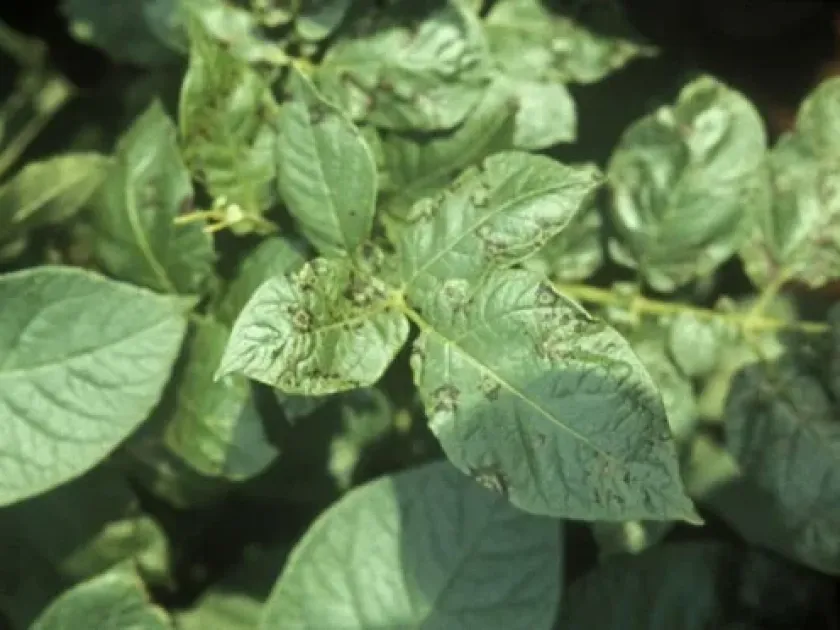
Clinical symptoms vary significantly depending on the cultivar and the environmental conditions. The most common manifestation is the development of chlorotic lesions that often form intricate ring patterns or arcs on the foliage.
Affected leaves frequently show deformation, such as curling, wrinkling, or marginal necrosis. These symptoms occur because the virus interferes with the normal hormonal balance and photosynthetic processes of the leaf tissue.
Infected plants typically show significant stunting and reduced biomass compared to healthy individuals. Internodes may become shortened, giving the plant a crowded or bushy appearance, often described as a dwarfing syndrome.
Flowering is often negatively impacted, leading to flower abortion or the formation of malformed blossoms. Any fruit that reaches maturity is usually undersized, irregularly shaped, and may exhibit mottled or mosaic coloration patterns.
The root system may show signs of deterioration as the plant loses its ability to sustain healthy growth. This lack of vigor makes the plant highly susceptible to additional environmental stress factors like heat or drought.
Pathogen
The causative agent is Nepovirus solani, a member of the Nepovirus genus within the Secoviridae family. The virus particles are isometric and carry a genome consisting of positive-sense single-stranded RNA.
It is an obligate parasite that relies on plant host cells for replication. In natural conditions, the virus is primarily transmitted by soil-dwelling nematodes, particularly species of the genera Xiphinema and Longidorus.
The virus exhibits rapid systemic infection capabilities, colonizing the vascular tissues of the host plant. Once established, it causes systemic symptoms by disrupting metabolic pathways throughout the entire plant system.
Mechanical transmission is another significant pathway, often facilitated by farm equipment and handling during pruning or harvesting. The virus can also be seed-borne or transmitted via infected pollen, complicating control efforts.
The virus remains viable in infected plant debris within the soil for extended periods. Its ability to survive in root remnants means that even after the crop is harvested, the soil remains a potential source of infection for the next season.
Conditions for development
The proliferation of the disease is highly dependent on the presence of nematode populations in the soil. Optimal moisture and temperate conditions facilitate the movement of these vectors toward the plant's root system.
Intensive irrigation practices can increase the risk of disease spread, as moist soil provides a suitable environment for nematode migration. This makes fields with improper drainage particularly vulnerable to rapid localized outbreaks.
Continuous cropping of Solanaceous plants without adequate rotation leads to a heavy accumulation of both the virus and its nematode vectors. This shortens the interval between outbreaks and makes the field highly problematic.
Wounds created during tillage, weeding, or crop management tasks provide entry points for mechanical transmission. Handling infected plants followed by healthy ones significantly increases the infection rate across the field.
The presence of wild reservoirs or weed species that harbor the virus is a critical factor in long-term disease maintenance. These plants allow the virus to persist in the field even during the off-season or when non-host crops are grown.
Why it matters
Solanum nepovirus causes substantial economic losses by reducing both yield quantity and the overall quality of agricultural produce. Market value is significantly diminished due to fruit malformations and poor shelf life.
The virus negatively affects the accumulation of essential nutrients and sugars, making the produce less attractive for both fresh consumption and food processing industries.
Plants weakened by the virus become highly susceptible to secondary pathogens, including fungi and bacteria. This often results in accelerated plant death, requiring additional expenditure on pesticides and crop management.
Large-scale infections can lead to total crop failure in extreme cases. The financial impact is compounded by the loss of the investment in seeds, labor, fertilizer, and land preparation for the affected season.
The persistence of the virus in the soil creates a long-term management challenge. Farmers are often forced to implement strict quarantine measures or switch to non-host crops for several years to mitigate the infection pressure.
Protection
The primary control strategy is the use of high-quality, certified, and virus-free seed or transplant material. Testing programs for seeds are essential to ensure the starting population is clean.
Crop rotation with non-host plants is fundamental to breaking the life cycle of the nematode vectors. Diversifying the rotation plan helps naturally reduce the population density of soil-borne carriers.
Management of nematode populations using soil fumigants or biological control agents can be effective in reducing infection risk. These methods should be integrated into a comprehensive pest management plan.
Sanitation of agricultural tools is vital. Disinfecting pruners and machinery using approved antiviral solutions prevents the mechanical spread of the virus from infected to healthy sections of the crop.
Regular monitoring for symptoms, coupled with the immediate removal and destruction of infected plants, helps contain localized outbreaks. Maintaining a clean field free of reservoir weeds further protects the integrity of the crop.
Discussion
No discussions yet — be the first.