
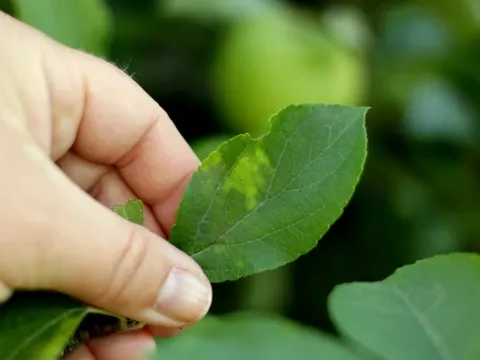
Apple chlorotic leaf spot virus
Trichovirus mali
The causal agent of this disease is the Apple chlorotic leaf spot virus (ACLSV), which belongs to the genus Trichovirus. It is a widespread pathogen affecting various Rosaceae species.
What the section contains
Apple chlorotic leaf spot virus
The virus has a rod-shaped morphology and typically causes systemic infection within the host plant, moving through the phloem to various parts of the tree.
Transmission primarily occurs through infected scionwood used in grafting or via contaminated cutting tools during orchard maintenance practices.
ACLSV is characterized by a single-stranded RNA genome, which contributes to its ability to mutate and adapt to different host cultivars and environmental conditions.
Once established, the virus remains within the tree for its entire lifespan, continuously disrupting plant metabolism and reducing vigor.
Symptoms of ACLSV vary greatly depending on the apple cultivar, environmental factors, and the specific strain of the virus present in the tree.
Visible signs often include chlorotic spots on the leaves, which may transition into mosaics, rings, or line patterns along the leaf veins.
Incompatible grafting is a common diagnostic sign; the union site may show bark cracking, swelling, or the death of tissue, leading to a weak connection between scion and rootstock.
Overall, trees infected with this virus exhibit stunted growth, reduced annual shoot production, and sometimes a premature leaf drop during the growing season.
- chlorotic leaf spotting;
- mosaic or line patterns;
- graft incompatibility and bark necrosis;
- overall tree stunting;
- reduced fruit quality.
The primary driver for the spread of this virus is the use of non-certified or infected propagating material during nursery production.
Human activity is a major factor in disease dispersal, especially if pruning tools are not disinfected between individual trees or different orchard blocks.
The virus persists in living tissues throughout the year, meaning asymptomatic trees can act as silent reservoirs for the spread of the pathogen.
While environmental conditions do not dictate the virus's survival, they can influence the symptom severity and the behavior of potential vectors like aphids.
Poor orchard sanitation and the absence of phytosanitary regulations in nursery management provide the ideal environment for the virus to multiply.
This virus causes substantial economic losses by reducing fruit yield and negatively affecting the overall health and longevity of the apple orchard.
Fruit quality is significantly degraded; apples from infected trees are often undersized, deformed, and lack the characteristic color or shelf life of healthy crops.
Infected trees become more susceptible to secondary stressors, including drought, nutrient deficiency, and attacks by fungal or bacterial pathogens.
Severe cases of graft incompatibility caused by the virus can result in the complete death of the tree, requiring early replanting of orchard sections.
Furthermore, the virus limits the trade and export potential of nursery stock, as plants must meet strict international phytosanitary health requirements.
The most effective strategy for control is the utilization of virus-tested, certified disease-free nursery stock for all new orchard plantings.
Orchardists must implement rigorous sanitation protocols, including the disinfection of pruning tools with appropriate alcohol or bleach solutions between trees.
Active management and control of insect vectors such as aphids and mites are essential to reduce the risk of secondary virus transmission within the plantation.
Infected trees should be monitored and removed from the orchard promptly to eliminate the primary source of inoculum for neighboring trees.
Advanced techniques such as thermotherapy or meristem-tip culture are utilized in specialized laboratories to produce virus-free planting material for the industry.