
Apple apple scar skin viroid (specific variant)
Apscaviroid betaflavivitis
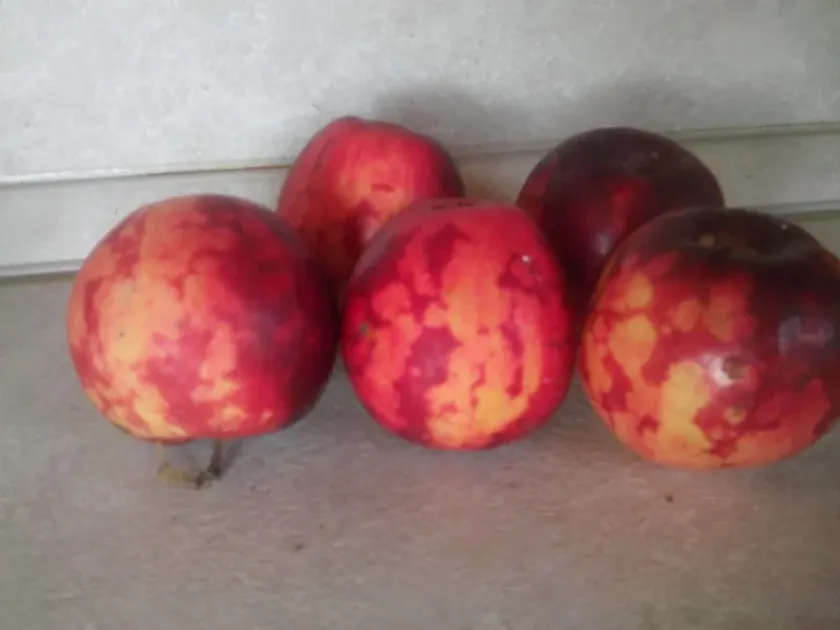
Description
Symptoms
The primary symptom is leaf yellowing, which often appears as chlorotic spots, mosaic patterns, or generalized yellowing of the foliage during the season.
Infected trees exhibit reduced growth rates, characterized by shortened internodes and a stunted appearance, often referred to as a rosette effect.
Fruit development is significantly compromised, resulting in small, malformed fruits that lack proper size, color, and marketability.
Early leaf drop is frequently observed, further weakening the tree and reducing the photosynthetic capacity needed for fruit maturation.
In severe or long-standing cases, bark necrosis and cracking may occur, leading to the gradual decline and eventual death of the affected branches.
Pathogen
The causative agent of the disease is Apscaviroid betaflavivitis, a member of the Apscaviroid genus. It is a subviral pathogen consisting of a small, circular, single-stranded RNA molecule without a protein coat.
The viroid replicates within the host's cells, hijacking the plant's metabolic machinery to create copies of itself, which leads to physiological disruption.
It colonizes the phloem tissues, causing systemic infection throughout the tree and severely affecting nutrient transport and general development.
Transmission primarily occurs via vegetative propagation methods, specifically through the use of infected scions or rootstocks in nursery settings.
As a biological entity, this viroid is highly persistent and can remain latent within host tissues for extended periods before external symptoms manifest.
Conditions for development
The primary mode of dissemination in modern orchards is through human activities, specifically grafting practices where infected materials are used.
Contaminated pruning tools are a significant vector; when blades are not disinfected between trees, the viroid is easily transferred via sap containing the pathogen.
The persistence of the viroid in asymptomatic carrier trees allows it to survive in the environment and serve as a constant source of inoculum.
Varietal susceptibility plays a crucial role; some cultivars may exhibit severe symptoms, while others act as silent reservoirs of the pathogen.
Environmental conditions, while not the direct cause, can exacerbate the physiological stress caused by the infection, making the decline more rapid.
Why it matters
The disease causes significant economic loss by drastically reducing fruit yield and lowering the quality of the harvested produce.
By compromising the plant's systemic health, the viroid increases susceptibility to secondary bacterial and fungal infections, shortening the tree's lifespan.
There is no known chemical cure or curative therapy for trees already infected with the viroid, making infected plants a permanent liability to the orchard.
The risk of uncontrolled spread poses a massive threat to the nursery industry, where infected material can unknowingly introduce the disease to new regions.
Long-term orchard productivity is severely affected, often forcing growers to remove entire blocks of trees to contain the spread.
Protection
The most reliable control method is the exclusive use of pathogen-tested, virus-free certified planting material from reputable nurseries.
Strict sanitation protocols for pruning and grafting equipment, including disinfection with approved sanitizing agents, are essential to prevent cross-contamination.
Immediate removal and destruction of infected trees are necessary to stop the spread of the viroid to neighboring healthy specimens.
Regular visual inspections during the growing season help identify early symptoms, facilitating the timely removal of suspect plants.
Preventative policies regarding the movement of vegetative propagation material between regions must be strictly enforced to avoid further outbreaks.
Discussion
No discussions yet — be the first.