
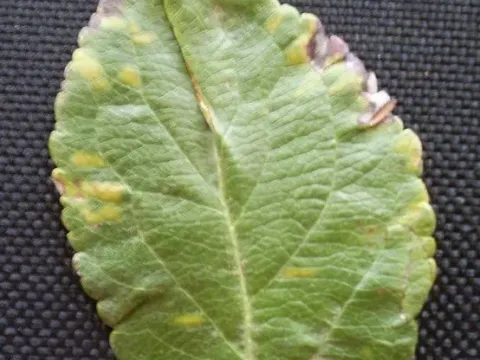
Apple chlorotic leaf spot
Foveavirus mali
The disease is caused by the Apple chlorotic leaf spot virus (ACLSV), which is a member of the genus Foveavirus.
What the section contains
Apple chlorotic leaf spot
This viral pathogen possesses filamentous particles and induces systemic infections in various fruit tree species within the Rosaceae family.
It is a globally distributed virus, frequently found in major apple, pear, and stone fruit production areas across different continents.
The virus is known for its ability to persist in plant tissues for years without causing obvious symptoms, making it a "silent" threat in horticulture.
Host plants include apple, pear, quince, plum, cherry, and various ornamental species that can serve as reservoirs for the pathogen.
Clinical signs of ACLSV infection vary widely depending on the apple cultivar, the specific virus strain, and the environmental conditions.
Typical foliar symptoms include chlorotic spots, chlorotic lines, or the characteristic oak-leaf pattern on the leaves during the early growing season.
Affected trees may exhibit leaf distortion, curling, or premature yellowing and leaf drop, which impairs the plant's overall photosynthetic capability.
In sensitive varieties, the virus can cause severe stunting, shortening of internodes, and a general loss of vigor throughout the canopy.
Many apple trees show latent infection, where the tree remains asymptomatic despite carrying the virus, which complicates diagnosis in the field.
The primary mode of transmission for this virus is the use of infected propagation material, including scion wood and rootstocks.
Propagation methods such as grafting and budding are the main culprits for the spread of ACLSV within nurseries and orchards.
Mechanical transmission through contaminated pruning tools is another significant pathway that can spread the virus between trees in an orchard.
Unlike some other plant viruses, there is no evidence that insect vectors play a major role in the transmission of ACLSV in typical orchards.
Environmental stress, such as drought or nutritional imbalances, often exacerbates symptom expression and speeds up the decline of the tree.
The economic impact of Apple chlorotic leaf spot is substantial, as it leads to reduced fruit yield and lower quality of the harvested produce.
Infected trees show reduced resilience to environmental stress factors, including winter hardiness issues and susceptibility to extreme heat.
Fruit quality is often compromised, with apples becoming smaller, misshapen, or showing diminished flavor profiles compared to healthy specimens.
Long-term infection leads to the gradual decline of the tree's health, eventually resulting in the need for premature orchard removal and replanting.
Nursery operations suffer significant losses when stock is found to be virus-infected, leading to the destruction of entire batches of saplings.
The most effective strategy for managing this disease is the use of certified, virus-indexed nursery stock obtained through tissue culture programs.
Rigorous phytosanitary practices must be implemented in the orchard, including the prompt removal and destruction of infected, symptomatic trees.
Strict disinfection protocols for all pruning and grafting equipment are essential to prevent the mechanical spread of the virus via sap transmission.
Regular monitoring of nursery orchards and the application of diagnostic molecular tests help in identifying and eliminating latent virus sources.
Maintaining high standards of plant health through proper fertilization and irrigation helps the trees mitigate the stress caused by the viral infection.