
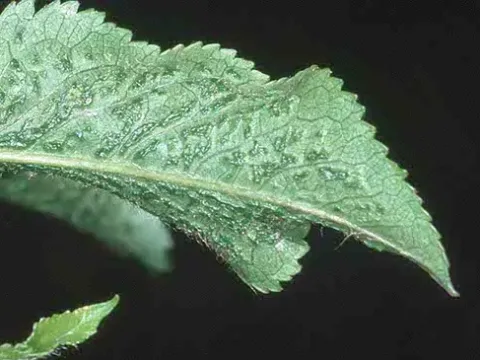
Apple mosaic virus
Cheravirus mali
The primary symptom of apple mosaic disease is the appearance of chlorotic patterns on the foliage. These symptoms typically manifest as creamy-white or light yellow irregular spots, blotches, or a distinctive mosaic pattern that contrasts with the surrounding green leaf tissue.
What the section contains
Apple mosaic virus
In cases of severe infection, leaves may exhibit morphological changes, such as curling at the margins, distortion of the leaf shape, or even premature necrosis. Infected leaves often drop earlier than those on healthy trees, weakening the overall vigor of the canopy.
Affected trees frequently show signs of stunted growth, characterized by shortened internodes and a reduced rate of shoot elongation. This growth suppression becomes more apparent over several growing seasons as the virus spreads throughout the plant's vascular system.
Fruit quality is significantly impacted by the viral infection. Infected apples may be smaller in size, exhibit poor coloration, or develop unsightly ring spots and net-like skin patterns, rendering them commercially unappealing.
Symptom expression is often irregular, with some branches showing heavy infection while others remain apparently asymptomatic. This uneven distribution makes diagnosis challenging and necessitates laboratory testing for confirmation.
The disease is caused by Cheravirus mali, a viral agent that specifically infects apple trees. This virus is systemic, meaning it colonizes the entire tree, including roots, stems, and fruits, once it has successfully infected the host plant.
The virus persists in the living tissues of the host indefinitely. It spreads internally via the phloem, disrupting normal metabolic pathways and carbon distribution from leaves to other parts of the tree.
The most common mode of transmission is through vegetative propagation using infected rootstocks or scion wood. Because the virus is present in the sap, any vegetative part of an infected tree can act as a carrier.
Soil-borne nematodes are also recognized as potential vectors for Cheravirus mali. These organisms feed on the roots of infected trees, acquiring the virus and transmitting it to healthy roots during their feeding cycles.
Mechanical transmission represents a major risk in orchard management. If pruning tools, grafting knives, or other equipment are not properly disinfected between trees, the virus can easily move from an infected individual to healthy ones.
Environmental stress plays a crucial role in the development and visibility of the disease. Trees suffering from drought, poor nutrition, or waterlogging are often more susceptible to showing severe symptoms compared to well-maintained trees.
Temperature fluctuations have a noted impact on symptom severity. Cooler temperatures, particularly during the early spring flush, typically make the mosaic patterns more distinct, while symptoms may appear to fade or remain latent during the intense heat of mid-summer.
Soil conditions that favor the proliferation of nematode vectors also increase the risk of disease spread. Moist, loose, and organic-rich soils provide an ideal habitat for these vectors to thrive and transmit the pathogen.
The proximity of weed species or alternative plant hosts can act as a reservoir for the virus. Even if these plants show no symptoms, they provide a continuous source of inoculum that can infect nearby apple trees.
Intensive orchard management practices, such as excessive pruning or heavy fertilization, can sometimes mask symptoms or stimulate growth that makes the underlying viral infection more difficult to manage over time.
The main harm caused by apple mosaic is the long-term reduction in the tree's physiological efficiency. The persistent viral burden leads to a chronic decline in health, ultimately reducing the productive lifespan of the orchard.
Infected trees often exhibit decreased winter hardiness, making them more vulnerable to frost damage. This can lead to branch dieback or total tree loss during extreme weather events, which healthy trees might otherwise survive.
Yield loss is significant, both in quantity and quality. The combination of smaller fruit size and aesthetic defects makes the produce unsuitable for market, resulting in substantial financial losses for the grower.
The structural development of the tree is compromised, with uneven growth leading to lopsided canopies and difficult-to-manage branching patterns, which complicates routine pruning and spraying activities.
Because there is no cure for the virus once established, an infected orchard represents a permanent liability. The orchardist cannot eradicate the pathogen from the tree, and the only long-term management option is the removal of the infected plant.
The most effective strategy for managing apple mosaic is the use of certified virus-free planting material. Establishing a new orchard with healthy stock is the only way to ensure the disease is not introduced from the start.
A rigorous inspection and rogueing program should be implemented. If a tree displays signs of the virus, it must be promptly identified, removed, and destroyed to prevent the infection from spreading to adjacent trees.
Monitoring and controlling soil-borne nematode populations is essential. Before establishing an orchard, growers should test the soil and, if necessary, implement measures to reduce nematode density.
Strict tool sanitation is mandatory. Pruning tools must be disinfected after each tree using appropriate solutions (such as alcohol or sodium hypochlorite) to prevent the mechanical transfer of viral particles via sap.
Maintaining optimal tree vigor through balanced fertilization and appropriate irrigation helps the trees cope with the stress of the viral infection, although it does not eliminate the virus itself.