
Anthriscus mosaic virus
Waikavirus anthrisci
The causal agent is the Waikavirus anthrisci, a member of the genus Waikavirus within the family Secoviridae. This RNA virus is a specialized pathogen that primarily targets plants within the Apiaceae family.
What the section contains
Anthriscus mosaic virus
The disease is classified as a systemic viral mosaic. The virus hijacks the host plant's cellular machinery to replicate, spreading through the phloem to infect various tissues, which disrupts the plant's normal physiological functions.
The virus persists in wild perennial hosts, particularly members of the Anthriscus genus and other related weeds. These plants act as essential reservoirs that keep the virus present in the landscape throughout the year.
Infection leads to significant metabolic disturbance, specifically interfering with the synthesis and stability of chlorophyll. This structural disruption in the leaf mesophyll results in the visible discoloration characteristic of the mosaic symptoms.
Transmission of the virus is mediated by aphid vectors. These insects acquire the virus while feeding on infected wild hosts and subsequently introduce the viral particles into healthy agricultural crops during their feeding process.
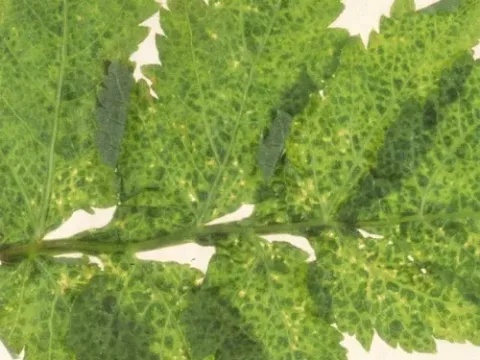
The primary symptom is a distinct mosaic pattern on the leaves, characterized by a patchy distribution of light green, yellowish, and dark green areas across the leaf blade.
Affected plants often display severe morphological changes, including leaf curling, crinkling, and malformation. This deformation is a direct consequence of the localized growth disturbances caused by the viral infection within the developing tissues.
Stunting is a hallmark of this disease; infected plants are typically much smaller than their healthy counterparts. This reduction in size is due to shortened internodes and a decrease in overall leaf biomass.
Chlorosis, or yellowing, may progress to involve larger sections of the plant. In some cases, as the viral load increases, the leaf tissues may develop necrotic spots, leading to premature senescence and tissue death.
Reproductive growth is also negatively impacted. Plants may fail to produce flowers, or the flowers may be deformed, resulting in reduced fruit or seed set, which undermines the crop's yield potential.
This virus poses a significant threat to commercially important Apiaceae crops such as carrots, parsley, celery, and parsnips. Outbreaks can result in substantial yield losses, significantly reducing the marketability of the harvest.
Beyond the reduction in volume, the quality of the harvested product is severely diminished. Deformed or undersized roots and leaves are often rejected by retailers, leading to financial losses for the grower.
Plants infected with the mosaic virus exhibit lower resilience to environmental stressors like drought or heat. They are also more susceptible to secondary fungal or bacterial infections, which can further destroy the crop.
The nutritional profile of the harvested crops may be compromised, as the plant's reduced photosynthetic capacity leads to lower levels of sugar accumulation and essential vitamins in the storage organs.
If the virus spreads through a seed production field, it can be devastating, as infected seed material can lead to poor germination rates and stunted plants in subsequent growing seasons.
Since there are no curative treatments for established viral infections in plants, management focuses on prevention and mitigating the spread by vectors.
Effective weed control is a critical component of management. Eliminating wild Apiaceae, including Anthriscus species, in and around the field borders removes the primary source of the virus.
Management of aphid populations is essential. Using systemic insecticides can help reduce the number of insect vectors, thereby breaking the cycle of virus transmission to the crop.
Farmers should prioritize the use of high-quality, certified, and disease-free seeds. Establishing physical isolation zones between new plantings and older, potentially infected areas is also highly recommended.
Regular field scouting is necessary to identify and rogue out infected plants. Removing symptomatic plants early in the season is a vital practice to contain the infection and prevent large-scale spread within the farm.