
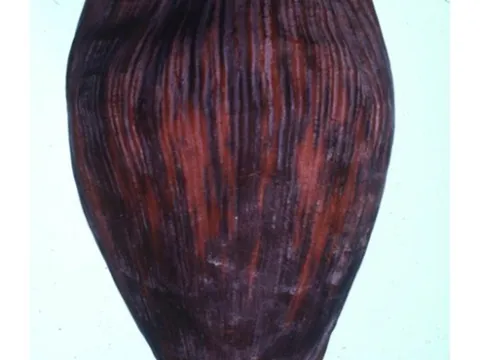
Banana mosaic virus
Potyvirus musae
The primary symptom of the disease is a distinctive mosaic pattern on the leaf blades. The tissue exhibits alternating patches of light green, yellow, and dark green, creating a mottled appearance that reduces the plant's photosynthetic capacity.
What the section contains
Banana mosaic virus
As the infection progresses, leaves may show chlorotic streaks and significant deformation. The leaf blade often becomes wavy or curled, which compromises the integrity of the foliage and stunts the plant's overall growth rate.
Fruits from infected plants display uneven ripening and specific scarring or spotting. The banana peel often becomes rough and may develop necrotic patches, which significantly lowers the marketability and quality of the produce.
Internal tissues of the banana plant also undergo pathological changes, leading to the general inhibition of pseudostem growth. Infected stools often appear stunted and lag significantly behind healthy plants in their development cycle.
In cases of chronic infection, the lower leaves wither and die prematurely. This loss of foliage creates an exhausted appearance and drastically reduces the energy reserves of the plant, often leading to a lack of fruit production.
The disease is caused by a virus belonging to the Potyvirus genus, which specifically targets members of the Musaceae family. This is an obligate parasite, meaning it can only survive and multiply within the living cells of its host plant.
The viral particles typically have a filamentous, rod-like structure characteristic of the Potyviridae family. Due to their high rate of mutation, these viruses can adapt quickly, complicating breeding efforts for resistant banana cultivars.
The infection becomes systemic, spreading through the vascular system to all parts of the plant, including roots, corms, stalks, and fruit. Once a plant is infected, the virus is present in almost all of its tissues, making control difficult.
Transmission occurs naturally primarily through insect vectors, such as various species of aphids. When an aphid feeds on an infected plant, it picks up the virus and carries it to healthy plants, facilitating rapid spread across the plantation.
A major pathway for infection is the use of contaminated planting material, such as corms or suckers. If vegetative propagation involves material from a diseased plant, the virus is invariably transmitted to the new generation.
The development of the virus is favored by warm and humid conditions, which also support the survival and rapid reproduction of aphid populations. In tropical regions, these conditions often lead to seasonal outbreaks of the disease.
Weed growth within and around the plantation acts as a hidden reservoir for the virus. Many weed species can host the virus without showing obvious symptoms, providing a constant source of inoculum throughout the year.
High planting density increases the ease with which insect vectors can move between plants, significantly raising the risk of widespread infection. Failure to manage plantation sanitation allows the virus to move unchecked through a field.
Agricultural practices, such as pruning or corm division using non-sterile tools, serve as a frequent method of mechanical transmission. A single contaminated knife can effectively spread the virus across an entire row of healthy plants.
Continuous monoculture systems create an environment where the virus can persist and accumulate. Without proper crop rotation or fallow periods, the infectious load in the plantation area remains high, threatening future yields.
The primary economic harm from banana mosaic is the dramatic decline in fruit quality. Infested plants produce fruits that are undersized, scarred, and unsuitable for export, resulting in massive financial losses for producers.
The disease causes a reduction in vegetative biomass, which prevents the banana plant from reaching its full potential yield. In severe outbreaks, the entire harvest from a block can be rendered unsalable.
Infected plants are often more susceptible to secondary pathogens, including fungi and bacteria. This increased vulnerability reduces the productive lifespan of the banana stool, necessitating premature plantation renovation.
The absence of effective chemical cures means that infected plants must be uprooted and destroyed, which is labor-intensive and costly. This management requirement adds significant overhead to the operation of a banana farm.
The persistent threat of the virus restricts regional banana production and limits market opportunities. It poses a challenge to food security and the long-term profitability of agriculture in regions where bananas are a staple crop.
The most crucial strategy is the exclusive use of virus-free planting material. Sourcing seedlings from reputable labs that utilize tissue culture/micropropagation is the only way to ensure the initial stock is free from pathogens.
Strict plantation hygiene is essential; all tools used for pruning or corm management must be thoroughly disinfected using appropriate chemical solutions between each plant. This prevents the mechanical spread of the virus.
Integrated pest management (IPM) should be employed to control aphid populations, which are the main carriers of the virus. Regular scouting and the removal of infected plants (roguing) are necessary to minimize the spread of the virus.
Maintaining clear fields by removing weeds that may act as alternative hosts is a key preventative measure. By managing the surroundings of the plantation, the pressure from insect vectors and viral reservoirs can be reduced.
- Utilize certified virus-free tissue-cultured plants.
- Implement rigorous tool disinfection protocols.
- Conduct regular field inspections and rogue infected stools.
- Manage weed populations to eliminate viral reservoirs.
- Employ IPM to control aphid vector populations.