
Leek yellow stripe virus
Potyvirus ampeloprasi
The causal agent of this disease is the Leek yellow stripe virus (LYSV), belonging to the genus Potyvirus. It consists of flexuous filamentous particles containing single-stranded RNA.
What the section contains
Leek yellow stripe virus
The virus is an obligate parasite, meaning it can only survive and replicate within the tissues of a living host plant. In agricultural settings, it persists in overwintering bulbs and perennial Allium species.
Transmission occurs primarily through aphid vectors, most notably Myzus persicae, in a non-persistent manner. The virus is acquired and transmitted by the insect during brief probes of the plant epidermis.
Additionally, the virus can be spread mechanically through contaminated sap during routine agricultural practices such as pruning or transplanting. Seed transmission is rare and not considered a significant epidemiological pathway.
Host plants include a wide range of Allium species, specifically leeks, garlic, and onions. Susceptibility and the severity of symptoms vary depending on the plant variety and environmental factors.
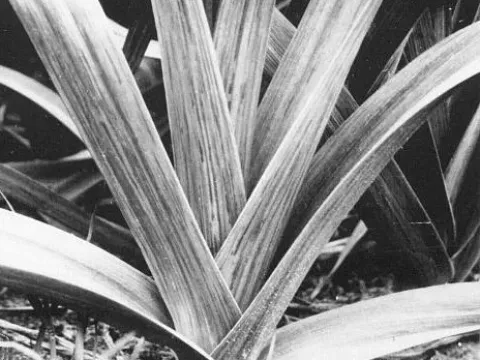
The most characteristic symptom is the development of longitudinal, pale yellow, or chlorotic stripes on the leaves. Infected foliage often exhibits a variegated appearance, leading to the name of the disease.
Infected plants typically show stunted growth and poor development. The leaves of leeks often lose turgor, become flaccid, and show signs of deformation or bending.
Under severe infection, leaf blades can curl or become twisted. General chlorosis is often observed, which significantly reduces the photosynthetic capacity and aesthetic quality of the crop.
In garlic, the virus often causes distinct mosaic patterns and significant reduction in bulb size. Early-stage infections may be mild and can be easily misidentified as nutrient deficiencies.
The virus is frequently present in a mixed infection with other pathogens, which complicates field diagnosis. Laboratory testing, such as ELISA or PCR, is required for definitive identification.
The economic impact of LYSV is mainly reflected in reduced marketability and significant yield loss. Due to impaired photosynthesis, plants fail to reach standard sizes and weights.
Product quality deteriorates, particularly in onions and garlic, where improper scale formation negatively affects shelf life. Total harvest losses can range from 20% to 50% in heavily infected fields.
Viral infection leaves the plants susceptible to secondary bacterial and fungal pathogens. Weakened tissues are much more likely to develop rot during the growing season and in storage.
Economic losses also stem from the inability to use infected harvests for seed production. These plants act as a chronic reservoir for the virus, threatening future cultivation cycles.
Repeated planting of infected stock in the same area leads to severe variety degradation and the eventual loss of crop productivity in the region.
Disease progression is highly dependent on the population dynamics of aphid vectors. Dry and warm conditions promote increased insect activity and rapid viral spread across fields.
Infection often initiates at the field borders, where winged aphids settle after migrating from surrounding perennial Allium sources. These reservoirs sustain the virus over the winter months.
The use of infected planting material, such as garlic cloves or onion sets, is the primary condition for establishing new disease hotspots. The virus remains dormant within these tissues.
Poor rotation practices and leaving crop debris in the soil contribute to pathogen build-up. Overcrowded fields create a microclimate that facilitates the movement of insect vectors.
Failure to manage weeds that serve as alternative hosts also encourages the continuous circulation of the virus throughout the growing season.
The primary control strategy is the use of healthy, certified, virus-free planting material. This is the most effective way to prevent the introduction of LYSV into new areas.
Rigorous management of aphid populations using targeted insecticides is crucial during migration periods. Timely intervention can significantly disrupt the transmission cycle.
Maintaining proper spatial isolation between new Allium crops and older, potentially infected plantings is essential. A sound crop rotation cycle should also be strictly implemented.
- Phytosanitary roguing: actively removing and destroying plants showing signs of mosaic disease as soon as they are spotted.
- Elimination of reservoir weeds belonging to the Allium or Liliaceae families.
- Rigorous hygiene: disinfecting tools after working with symptomatic plants to avoid mechanical sap transfer.
Selecting and planting resistant or tolerant varieties is the most reliable long-term solution for regions where LYSV is endemic.