
Lettuce chlorosis crinivirus
Crinivirus lactucaflavi
Description
Symptoms
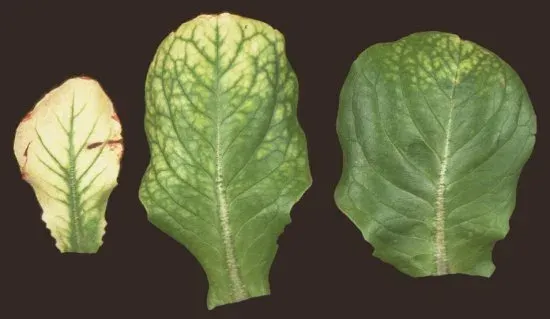
The hallmark symptom of LCV infection is prominent interveinal chlorosis. The leaf tissue turns bright yellow or pale, while the primary veins remain green, creating a distinct mosaic-like pattern.
As the infection progresses, the yellowing becomes more intense and spreads across the entire leaf. Infected plants appear stunted, and their overall development is significantly hindered compared to healthy plants.
Leaves may become brittle and deformed. In severe cases, the edges of the leaves may roll downwards, and the overall plant structure becomes weak and unsightly.
Because the virus causes systemic infection, symptoms usually appear first on older leaves and then move upwards as the virus spreads throughout the plant's vascular system.
The lack of proper head formation in lettuce crops is a common and destructive sign, rendering the harvested product commercially valueless for fresh market distribution.
Pathogen
The causal agent of the disease is the Lettuce chlorosis virus (LCV), a member of the genus Crinivirus within the Closteroviridae family. The virus consists of filamentous particles containing single-stranded RNA.
The virus does not spread through seeds or mechanical contact. It relies exclusively on insect vectors for transmission between plants, making insect control the primary focus for prevention.
The primary vector for LCV is the tobacco whitefly (Bemisia tabaci). The virus is transmitted in a semi-persistent manner, meaning the insect requires a feeding period to acquire the virus and then can transmit it for several days.
Lettuce is the most significant host, but the virus can infect a variety of species within the Asteraceae family. This wide host range allows the virus to persist in the environment outside of the main growing season.
Inside the plant, the virus is restricted to the phloem tissue. This limitation affects the translocation of photoassimilates, leading to the characteristic yellowing and growth retardation observed in infected crops.
Conditions for development
The prevalence of the virus is directly linked to the population density of whiteflies. Warm, humid environments, especially within greenhouses, provide ideal conditions for rapid vector reproduction.
Summer months and high-temperature periods in the field facilitate higher rates of whitefly migration, which in turn spikes the incidence of the virus across vegetable growing regions.
The presence of wild reservoir hosts, such as various weeds, allows the virus to survive and persist near fields, acting as a constant source of primary inoculum.
Agricultural practices that allow for continuous cropping without break periods or proper cleaning of facilities between cycles contribute to the buildup of virus-carrying insect populations.
Inadequate pest management in neighboring crops can lead to massive infestations of whiteflies, which can introduce the virus into clean lettuce fields very rapidly.
Why it matters
The economic impact of LCV is primarily due to the loss of marketable quality. Chlorotic, stunted, and deformed lettuce heads are unacceptable for retail sale and consumer use.
Yield reduction is significant, as infected plants stop growing and fail to produce the weight and appearance required for profitable harvest cycles.
The systemic nature of the virus means that recovery is impossible. Once a plant is infected, it remains a permanent source of inoculum for the rest of the crop cycle.
Additional costs include the frequent application of insecticides to keep vector populations under control, which increases production overhead and environmental pressure.
Widespread outbreaks can result in the total loss of greenhouse or field blocks, forcing producers to perform complete crop destruction to prevent further spread to subsequent plantings.
Protection
Effective control relies heavily on managing the whitefly population. Implementing a robust insecticide program that targets all life stages of the vector is crucial for mitigation.
Strict sanitation protocols, including the removal of weeds within and surrounding the production area, are essential to eliminate potential viral reservoirs.
Physical exclusion methods, such as insect-proof netting on greenhouse vents and doors, are highly effective in preventing whiteflies from entering the facility.
Monitoring for vector presence using yellow sticky traps is a vital diagnostic practice. Early detection of whiteflies allows for immediate intervention before the virus spreads widely.
Prompt roguing of infected plants is recommended to reduce the overall viral load in the field. Removing these plants as soon as symptoms are noticed helps protect the remaining healthy population.
Discussion
No discussions yet — be the first.