
Leonurus begomovirus
Begomovirus leonuri
The causal agent is Begomovirus leonuri, a member of the Geminiviridae family characterized by its single-stranded circular DNA genome.
What the section contains
Leonurus begomovirus
This virus is transmitted primarily by the tobacco whitefly (Bemisia tabaci) in a persistent, circulative manner, meaning the insect carries the virus throughout its life.
The pathogen infects a wide variety of plants, particularly those in the Lamiaceae and Solanaceae families, causing systemic infections that affect the plant's overall health.
The ability of the virus to mutate and adapt to new host plants poses a significant challenge for researchers and agriculturalists attempting to develop resistant cultivars.
Understanding the molecular interaction between the virus and the vector is crucial for designing effective management strategies in affected regions.
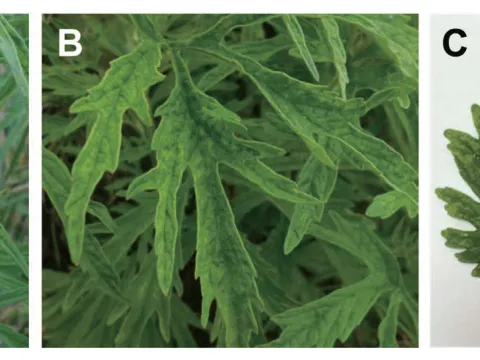
Infected plants typically display severe leaf curling, stunted growth, and a distinct mosaic pattern characterized by yellowing or chlorosis.
The symptoms often include the development of vein yellowing and thickening, which disrupts the photosynthetic process and limits plant vitality.
Plants affected at an early stage of growth show significantly reduced height and altered leaf morphology, often appearing smaller and more brittle than healthy individuals.
Floral development can also be impacted, leading to reduced flower count, color abnormalities, or complete failure of reproductive organs.
Symptoms may vary depending on the host plant species and the environmental conditions, necessitating precise diagnostic tests for accurate identification.
The spread of this virus is highly correlated with the population dynamics of the whitefly vector, which thrives in warm and humid environments.
High temperature and drought conditions often accelerate the life cycle of the whitefly, leading to rapid increases in its numbers and subsequent virus spread.
The presence of wild reservoirs or weed species acts as a bridge for the virus, allowing it to persist throughout the year and infect new crops.
Poor agricultural practices, such as lack of field sanitation or neglecting the separation between different crop cycles, significantly promote the development of epidemics.
Intensive farming systems with continuous cropping provide a constant supply of host plants, which facilitates the stable transmission of the virus.
The primary threat of this virus is the substantial reduction in crop yield, which can lead to significant economic losses for farmers.
Infected produce often fails to meet market standards due to distorted shape, poor color, and reduced nutritional quality, rendering it unsellable.
The long-term impact involves systemic physiological changes that weaken the plant, making it more susceptible to secondary fungal or bacterial infections.
In cases of severe outbreaks, entire fields may need to be destroyed to prevent further spreading of the virus to neighboring areas.
The management costs associated with pest control and preventive measures add a considerable financial burden to the overall cost of production.
Effective control requires a multi-faceted approach, starting with rigorous management of the whitefly population through integrated pest management (IPM).
Regular monitoring of fields for signs of infection and the prompt removal and destruction of diseased plants are essential to limit the spread.
The use of reflective mulches and physical barriers, such as insect-proof nets in greenhouses, effectively prevents vectors from reaching the crops.
Crop rotation and the implementation of host-free periods help break the transmission cycle and reduce the viral reservoir in the environment.
- Apply selective insecticides to manage whitefly populations.
- Practice strict weed control in and around field edges.
- Use certified virus-free seeds and planting material.
- Implement proper spacing to reduce insect movement.