
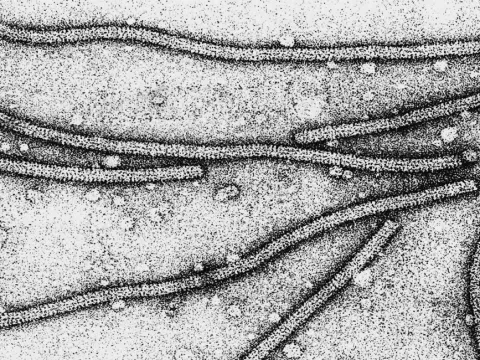
Setaria mosaic virus
Potexvirus setariae
Setaria mosaic virus is a member of the Potexvirus genus. This phytopathogenic virus possesses filamentous particles and primarily affects monocotyledonous plants, particularly those belonging to the Poaceae family.
What the section contains
Setaria mosaic virus
The virus functions as an obligate parasite, replicating exclusively within living plant cells. Throughout its evolution, it has developed sophisticated mechanisms to suppress the host plant's immune response.
The viral genome consists of a single-stranded RNA of positive polarity. Its stability in plant sap facilitates easy mechanical transmission between individual plants in a field environment.
Infection occurs when plant tissues are damaged, allowing viral particles to infiltrate adjacent cells. Once the primary infection is established, the virus spreads systemically throughout the entire plant.
This pathogen poses a significant threat to agricultural biodiversity, as it can persist in wild grass species that serve as natural reservoirs for the infection during the off-season.
The primary symptoms of Setaria mosaic virus infection manifest as mosaic patterns on the leaves. Leaf blades show alternating areas of normal coloration and chlorotic spots or stripes.
Infected plants frequently exhibit general growth stunting and significant development delays compared to healthy plants. Stems may become visibly thinner and more fragile as the virus progresses.
In certain instances, leaf deformation is observed; leaves may curl or assume irregular shapes due to the disruption of hormonal metabolism in plant tissues triggered by the virus.
In cases of severe infestation, the reproductive organs of the cereal crops remain underdeveloped. Spikes may be sparse or empty, and grains are often small or shriveled, sharply reducing yield quality and quantity.
Visual symptoms can vary significantly depending on the crop variety, the growth stage at the time of initial infection, and prevailing weather conditions that influence plant metabolism.
The development and spread of the virus depend heavily on the availability of susceptible hosts. The infection spreads most actively during the peak vegetative growth periods of cereal crops.
Mechanical transmission is the primary mode of spread, occurring through contact between damaged plants or via agricultural tools and machinery contaminated with infected sap.
High crop density creates favorable conditions for viral accumulation, facilitating rapid transmission from plant to plant whenever physical contact leads to tissue wounding.
Temperature plays a crucial role in the speed of viral replication within host cells. Warmer weather typically accelerates the metabolic processes, leading to more intense symptom expression.
Weed populations are critical factors in the viral life cycle. Perennial and annual species, particularly foxtail grasses (Setaria spp.), harbor the virus during winter and act as primary infection sources in spring.
The economic impact of Setaria mosaic virus stems from significant reductions in the productivity of affected cereal crops. The virus redirects plant resources, depleting stored nutrients intended for grain development.
Disturbances in photosynthetic processes, caused by damage to chloroplasts, lead to a decreased accumulation of biomass. Consequently, plants fail to achieve their full genetic yield potential.
Viral infection also reduces the overall tolerance of crops to other environmental stressors, such as drought or extreme heat. Infested fields are more susceptible to yield failure under stress conditions.
Commercial produce quality is severely degraded. Grains harvested from infected fields often exhibit poor germination energy, rendering them unsuitable for use as seed in subsequent seasons.
Total economic losses encompass both direct yield reductions and the added costs of implementing intensive agrotechnical measures to contain the spread of the disease.
The fundamental strategy for control is the strict adherence to crop rotation, which breaks the cycle of viral accumulation in the soil and remaining crop debris.
It is essential to implement timely weed management programs to eliminate wild host reservoirs. Removing foxtail grasses and other susceptible weeds around fields significantly lowers the risk of primary infection.
Only certified, pathogen-free planting material should be used. Infected seeds can act as long-distance carriers, introducing the virus to new, previously clean areas.
Sanitary protocols for cleaning agricultural equipment and machinery before moving from infected to healthy fields are critical to preventing mechanical transmission of viral particles.
Breeding and the adoption of virus-resistant cereal varieties remain the most sustainable and economically viable methods for long-term protection of agricultural crops against this virus.