
Zygocactus potexvirus
Potexvirus eczygocacti
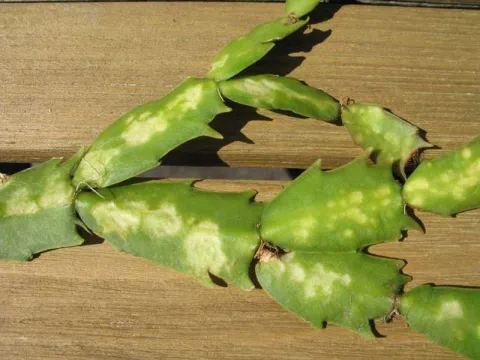
The main symptom of Zygocactus infection by this virus is the appearance of specific chlorotic spots and a mosaic pattern on the stem segments of the plant.
What the section contains
Zygocactus potexvirus
Often, necrotic areas may be observed on the epidermis surface, which gradually expand, leading to the decay of the segment tissues.
Infected plants show signs of stunted growth, delayed development, and a significant reduction in flowering, often leading to complete absence of blossoms.
In some cases, the shape of the stem segments becomes deformed, showing curling or premature dropping due to the infectious process.
Visual diagnosis is often difficult as symptoms resemble physiological disorders or fungal infections, therefore laboratory analysis is recommended for confirmation.
The pathogen is Schlumbergera virus X, belonging to the Potexvirus genus, known for its ability to affect a wide range of ornamental crops.
The virus consists of filamentous particles containing single-stranded RNA, which invades plant cells and uses their internal resources for replication.
This pathology is systemic in nature, meaning the viral particles spread throughout all plant tissues via the phloem transport system.
Viruses of this genus are characterized by high stability in the environment, allowing them to remain infectious in plant debris for extended periods.
The disease is classified as a systemic viral infection, transmitted mechanically or through infected propagation material.
The primary factor for the spread of the virus in collections is the use of contaminated tools during propagation or pruning of cacti.
The virus is easily transmitted through the sap of diseased plants when tissues are damaged, even during minor mechanical contact during routine care.
Crowded planting environments serve as a favorable factor for infection spread, as physical contact between healthy and infected plants occurs much more frequently.
Failure to implement quarantine measures when introducing new specimens is a critical factor that leads to the introduction of the pathogen into healthy populations.
Stressful conditions, such as improper temperature regulation or excessive substrate moisture, weaken the cactus's immune system and facilitate rapid symptom development.
The harmfulness of the Zygocactus potexvirus lies in the irreversible disruption of the plant's metabolic processes, rendering it highly vulnerable.
The infection leads to a loss of ornamental value, which is critical for commercial horticulture focused on selling high-quality planting material.
The virus triggers severe exhaustion, causing the plant to lose the ability to form flower buds and develop properly throughout the growing season.
In the long term, viral infection leads to the degradation and death of individual segments, and in cases of heavy infection, the entire plant may die.
Economic damage is associated with the need to cull and destroy entire collections, as effective treatments for plant viral diseases currently do not exist.
The only effective method of control is strict adherence to phytosanitary standards and the culling of infected plants from the collection.
It is necessary to conduct regular disinfection of all gardening tools using alcohol solutions or specialized antiseptics after every single use.
Prevention includes mandatory quarantine for all new plants entering the collection for at least one month before they come into contact with established specimens.
It is important to control populations of sap-sucking insects, such as aphids or thrips, which can mechanically transmit the virus from diseased to healthy plants.
- Use sterile substrates during repotting.
- Thorough hand washing and glove disinfection when handling Zygocactus.
- Purchasing propagation material only from reputable nurseries with certified phytosanitary control.