
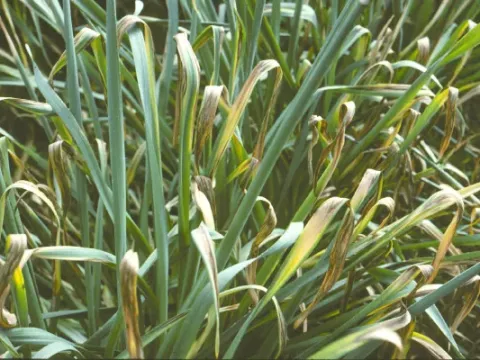
Narcissus leaf scorch
Narcissus tip
The first symptoms of narcissus leaf scorch appear as small, reddish-brown or yellowish spots on the tips of leaves as they emerge from the ground in spring.
What the section contains
Narcissus leaf scorch
These spots gradually enlarge and extend downwards, often taking on a burnt appearance, which is why the disease is commonly referred to as leaf scorch.
Upon closer inspection, small black fruiting bodies of the fungus may become visible on the dead tissue, especially in humid conditions.
In severe cases, the infection may spread to the flower stalks, causing distortion, brown lesions, and preventing the buds from opening properly.
As the disease progresses, the leaves may die back prematurely, which significantly limits the plant's ability to produce energy for the bulb's development.
The disease is caused by the fungus Stagonospora curtisii (formerly known as Phoma narcissi), a pathogen that specifically targets bulbous plants.
The fungus overwinters in crop debris, on the soil surface, and within the scales of infected bulbs, making it a persistent threat in established flower beds.
It infects host tissues through natural openings like stomata or through mechanical wounds caused by wind, frost, or careless cultivation practices.
The biological cycle of the fungus is tightly synchronized with the growth of narcissus, allowing it to re-infect emerging shoots every single spring.
Spores are dispersed by water splashes from rainfall or irrigation and can be carried by wind, facilitating the rapid spread of the disease within the garden.
Narcissus leaf scorch thrives in cool, wet weather, particularly during the early stages of plant development when foliage is most vulnerable.
High humidity and frequent spring rainfall are the primary environmental drivers that promote the germination of spores and the development of the fungal mycelium.
Densely planted beds with poor air circulation create an ideal microclimate where moisture persists on the leaves for longer periods, favoring infection.
Poor soil drainage and low-lying sites that accumulate water are significantly more prone to outbreaks of this fungal disease compared to well-drained areas.
Temperature fluctuations, especially late spring frosts that damage delicate leaf tissues, provide easy entry points for the pathogen to establish an infection.
The disease drastically reduces the aesthetic value of the plantings, leaving leaves brown and withered during the peak of the flowering season.
By shortening the photosynthetic life of the foliage, leaf scorch prevents the plant from accumulating enough starch in the bulb to support next year's growth.
Recurring infections lead to progressive weakening of the bulbs, resulting in smaller flowers, lack of blooms, or total plant decline over several years.
Plants affected by the fungus are more susceptible to secondary pathogens and environmental stresses, potentially leading to increased winter mortality.
Commercial growers face economic risks due to the loss of marketable quality and the potential for the pathogen to spread through large batches of nursery stock.
The most effective strategy is the use of healthy, disease-free planting material; inspect bulbs thoroughly before planting and discard any that show decay.
Crop rotation is essential for maintaining soil health, as narcissus should not be grown in the same spot for more than three to four consecutive years.
Strict sanitation measures, such as removing and destroying all foliage debris at the end of the season, are critical to reduce the inoculum level.
When symptoms appear, applying fungicides containing copper or systemic active ingredients can help protect healthy tissue from further infection.
Improving the cultural environment by ensuring proper spacing and ensuring the soil is well-drained will significantly reduce the humidity levels that favor the fungus.