
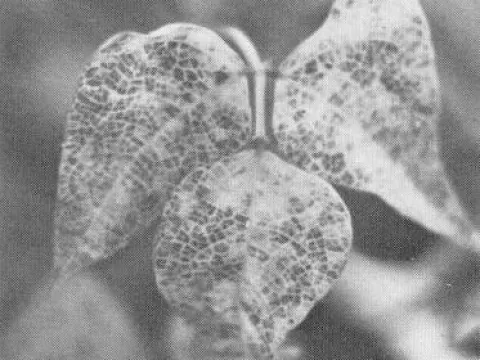
Lima bean golden mosaic
Limabean golden
The disease is caused by the Lima bean golden mosaic virus (BGMV), a member of the Begomovirus genus within the Geminiviridae family.
What the section contains
Lima bean golden mosaic
It is a single-stranded DNA virus that primarily infects species of the Phaseolus genus, causing severe yellowing and mosaic patterns on leaves.
The virus is transmitted by the whitefly Bemisia tabaci in a persistent circulative manner, meaning the insect remains a carrier for its entire life.
These viruses are characterized by their twin-capsid (geminate) structure, which is diagnostic for the Geminiviridae family of plant viruses.
The virus is highly adaptable and can evolve rapidly, which complicates the development of long-term resistant plant varieties.
The most distinctive symptom is the bright yellow mosaic coloration on the leaves, which reflects the destruction of chlorophyll-bearing tissues.
Affected plants often exhibit significant stunting, reduced leaf size, and severe puckering or distortion of the foliage, preventing proper growth.
Shortening of internodes is common, leading to a bushier, stunted appearance of the plant that makes it easily distinguishable from healthy specimens.
In the reproductive stage, the virus causes extensive flower and pod shedding, which leads to a dramatic drop in total crop yields for the season.
The yellowing may progress to complete chlorosis of the leaves if the infection occurs during the early seedling stages of plant development.
Outbreaks are heavily dependent on the population density of the whitefly vector, which thrives in warm and humid tropical environments.
The presence of weeds serves as an alternate host reservoir for both the virus and the whitefly, maintaining the infection cycle throughout the year.
High temperatures accelerate the reproductive rate of whiteflies, which increases the pressure of viral transmission in commercial bean fields.
Poor agricultural practices, such as lack of crop rotation and neglecting field sanitation, exacerbate the prevalence of the disease in a given area.
Weather patterns that favor whitefly migration facilitate the rapid spread of the virus over wide geographic regions during the growing season.
Lima bean golden mosaic is economically devastating, with potential yield losses reaching 100% in highly susceptible bean varieties if infection occurs early.
The commercial quality of the harvested beans is severely compromised, as the pods are often underdeveloped, deformed, or discolored.
Growers face increased costs due to the need for intensive insecticide applications to manage the whitefly population and limit virus spread.
The seeds harvested from infected plants are often of poor quality, leading to reduced germination rates and weakened performance in subsequent crops.
Severe and persistent viral pressure often forces farmers to abandon Lima bean production in favor of more resistant but potentially less profitable crops.
Effective control focuses on the management of the whitefly population through integrated pest management (IPM) strategies including systemic insecticides.
Planting resistant or tolerant cultivars is considered the most reliable and environmentally sustainable strategy for long-term disease management.
Maintaining strict weed control in and around the fields removes potential sources of the virus and prevents the whitefly from establishing populations.
Implementing spatial isolation between newly planted crops and older, potentially infected fields helps to break the chain of viral transmission.
Field sanitation, including the destruction of plant debris after harvest, helps in reducing the viral load and the population of the primary vector.