
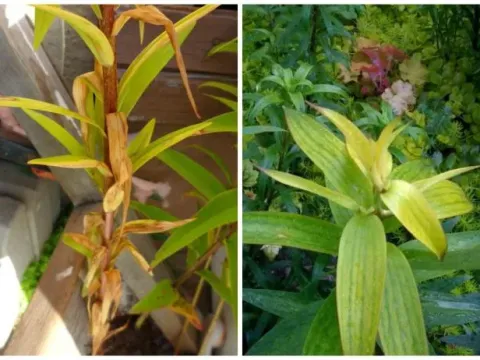
Lily rosette
Lily rosette
Lily rosette is a serious viral disease caused by the Lily rosette virus (LRV), which belongs to the Badnavirus genus. This pathogen is highly specific to the Lilium genus and causes systemic infection that disrupts the plant's normal growth and development.
What the section contains
Lily rosette
The primary vector for the virus is the aphid Myzus persicae (green peach aphid). Aphids acquire the virus by feeding on infected plants and subsequently transmit the virus to healthy lilies during their feeding process.
Transmission can also occur mechanically, especially through the use of contaminated gardening tools such as pruning shears, knives, or shovels during routine care, division of bulbs, or flower harvesting.
The virus is capable of persisting within the infected lily bulbs, making the disease transmissible through the distribution of infected planting stock. This biological persistence is a major challenge for disease containment.
Once inside the plant, the virus moves systemically, affecting all tissues including the stem, foliage, and bulb, which makes the infection impossible to cure with currently available commercial treatments.
The most distinctive symptom of Lily rosette is the severe shortening of internodes, which causes leaves to bunch together at the top or base of the stem, forming a tight, cabbage-like rosette structure.
Foliage on infected plants typically shows significant malformation, becoming curled, twisted, and often displaying a chlorotic mottle or mosaic pattern. These symptoms reflect the hormonal imbalance caused by the viral infection.
Flower stalks are severely stunted or fail to develop entirely. If buds form, they are usually misshapen, remain small, and often fail to open, eventually drying out and dying without reaching full bloom.
Root systems and bulbs are also adversely affected. Over time, bulbs decrease in size, lose their firmness and luster, and the entire plant gradually loses vigor and reproductive capacity.
Symptoms are progressive in nature. While early stages of the disease might only show mild yellowing or slight leaf twisting, the characteristic rosette shape becomes highly prominent as the infection progresses in subsequent growing seasons.
Lily rosette is considered a devastating disease for the lily industry. Since there is no cure for infected plants, they act as a permanent reservoir of the virus, posing a threat to all healthy lilies in the vicinity.
The economic impact is substantial, as infected crops lose all commercial value. In many cases, entire collections or field plots must be eradicated to prevent the virus from spreading throughout a production facility.
The ability of the virus to spread rapidly via aphid populations makes it particularly dangerous in regions where these insect vectors are abundant, potentially leading to widespread losses in a single season.
The disease contributes to the gradual decline and eventual extinction of susceptible cultivars. When infected bulbs are used for propagation, the cycle of infection continues, ensuring the long-term presence of the pathogen.
The psychological and financial impact on gardeners and breeders is high, as the loss of rare or heritage lily varieties due to this uncontrollable virus can be irreparable.
The primary method of control is strict sanitation. All infected plants must be rogueed (removed) immediately, including the bulbs and surrounding soil, and destroyed by burning or disposal in sealed containers.
Effective aphid management is essential to break the transmission cycle. Regular monitoring and the application of appropriate insecticides can reduce the population of vectors, thereby slowing the spread of the virus.
Sanitation of gardening tools is critical to preventing mechanical transmission. Sterilizing tools with a disinfectant solution between plants is a mandatory practice for anyone handling multiple lily specimens.
Sourcing clean, virus-free planting material from certified, reputable nurseries is the best prevention strategy. Growers should avoid importing bulbs from sources that do not provide clear phytosanitary assurances.
Routine scouting of the lily garden or nursery is vital. Early detection of symptoms allows for swift intervention, which is the only way to safeguard the rest of the collection from a viral outbreak.