
Pigeon pea sterility mosaic
Emaravirus cajani
The causal agent of this disease is the Pigeon pea sterility mosaic virus (PPSMV), which is classified within the genus Emaravirus. It is a segmented, negative-sense single-stranded RNA virus wrapped in a lipid envelope.
What the section contains
Pigeon pea sterility mosaic
The disease is strictly viral in nature and relies on a specific biological vector for transmission. It does not spread mechanically or through infected seeds, which is a vital aspect of its epidemiology.
The primary reservoir for the virus is perennial pigeon pea plants. These plants harbor the virus during the off-season, serving as the source of primary inoculum for new crops.
As an obligate parasite, the virus requires a living host to survive and replicate. Its lifecycle is intrinsically linked to the activity of its vector in the field.
Scientific research emphasizes that the viral particles are acquired and transmitted specifically by the eriophyid mite, which ensures the maintenance of the disease in agricultural landscapes.
The most distinctive symptom is the total sterility of the plant. Infected plants fail to produce flowers or pods, despite appearing vigorous or having lush vegetative growth.
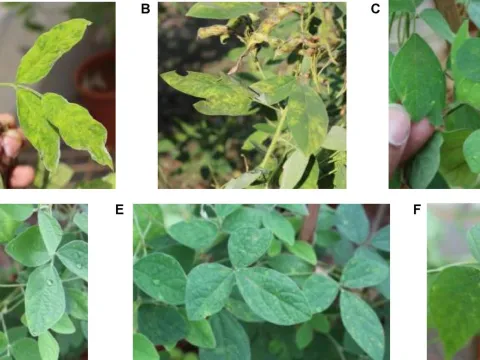
Leaves exhibit a clear mosaic pattern, characterized by yellowing (chlorosis) interspersed with green tissue. This is often the first visible indicator of infection.
Leaves also appear smaller than normal, are often curled or deformed, and the overall plant displays a stunted, bushy appearance, frequently referred to as "witches' broom".
Internode length is significantly reduced, resulting in a stunted architecture. Infected plants are usually much shorter than healthy plants in the same field.
- Total failure of pod set
- Chlorotic mosaic patterns on foliage
- Stunted growth and bushy habit
- Leaf deformation and curling
The spread of the disease is entirely dependent on the presence and activity of the eriophyid mite Aceria cajani. Without this vector, the disease cannot transmit between plants.
Warm temperatures coupled with adequate humidity create favorable conditions for the mite population to surge. Rapid multiplication of mites leads to quick secondary spread of the virus.
Continuous cropping or the presence of volunteer pigeon pea plants creates a "green bridge". This enables the virus to persist and move into newly emerged, susceptible crops.
Young seedlings are particularly vulnerable. Early infection typically results in the most severe symptoms and complete loss of economic yield potential.
Wind currents can carry the minute mites from one plant to another, leading to the formation of characteristic patches or foci of infection within the field.
Sterility mosaic is recognized as the most destructive disease of pigeon pea. In cases of early-season infection, crop yield loss can reach as high as 100%.
The disease induces total sterility, rendering the crop economically useless. Farmers suffer direct losses in yield and return on investment due to the lack of grain production.
The virus compromises the plant's physiological health, making it weaker and less resilient to other biotic or abiotic stresses, often leading to total stand failure.
The physiological disruption caused by the virus affects the overall biomass quality, meaning even the forage value of the infected plants is significantly diminished.
Widespread outbreaks of the virus often force farmers to stop cultivating the crop in affected areas, leading to significant shifts in local agricultural practices.
The use of resistant or tolerant cultivars is the most effective and sustainable long-term solution. Breeding for host-plant resistance is a priority in crop improvement programs.
Maintaining a crop-free period and ensuring spatial isolation between old and new crops is crucial for breaking the disease cycle and preventing mite migration.
Application of suitable acaricides is necessary to manage the population of the vector Aceria cajani, especially during the early stages of crop development.
Strategic adjustments in sowing dates can help the crop avoid peak periods of mite migration, thereby reducing the probability of early infection.
Rigorous sanitation measures, including the eradication of volunteer plants and weeds that might harbor the mite, are essential to minimize primary infection sites.