
Phytolacca mosaic virus
Potyvirus phytolaccae
The Phytolacca mosaic virus is a plant pathogenic virus belonging to the Potyvirus genus. It is characterized by a single-stranded RNA genome and a broad host range among dicotyledonous plants.
What the section contains
Phytolacca mosaic virus
This pathogen functions by infecting plant cells and hijacking their metabolic processes to produce viral components. This systemic infection severely disrupts the plant's ability to maintain homeostasis.
The pokeberry or pokeweed plant (Phytolacca americana) serves as the primary reservoir for this virus. It acts as a source of inoculum that can easily spread to other garden or farm crops.
Transmission occurs primarily through mechanical means, such as contact between plants or via contaminated tools during agricultural practices like pruning or harvesting.
Insects, particularly various aphid species, serve as biological vectors, carrying the virus from infected host plants to healthy ones during the feeding process.
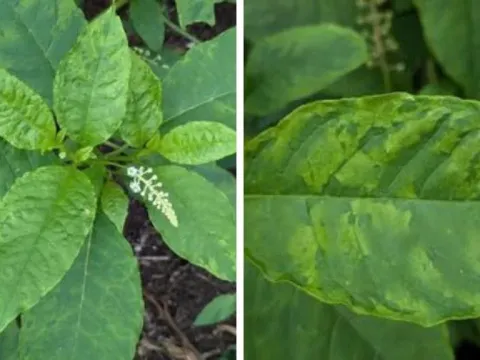
The hallmark sign of this infection is a distinct mosaic pattern on leaves, consisting of irregular light green or yellowish patches interspersed with normal dark green tissue.
Affected plants often show significant foliar deformation, including curling, wrinkling, or a reduction in total leaf size compared to healthy specimens.
Systemic symptoms also include stunted growth and a general lack of vigor. Infected plants appear much smaller and may fail to reach their biological maturity.
In some susceptible species, the stems might develop necrotic streaks or rings, leading to premature tissue death and potential collapse of the plant shoots.
In flowering plants, the virus can cause color breaking, where petals show irregular streaks or blotches, negatively impacting the ornamental quality of the plant.
The development and spread of the virus are highly favored by warm temperatures and high humidity, which stimulate both viral replication and insect vector activity.
In greenhouses, high plant density facilitates the rapid mechanical transmission of the virus, as leaves frequently brush against each other.
Environmental conditions that support the growth of reservoir hosts, such as wild Phytolacca species near cultivated fields, increase the risk of infection.
The presence of high aphid populations during the growing season significantly increases the probability of virus transmission across the field or garden.
Inadequate sanitation practices, such as failing to disinfect equipment between plants, create persistent conditions for the virus to circulate throughout the season.
The primary economic impact is caused by the inability to treat systemic viral infections in plants, as the virus integrates its components into the host physiology.
In agricultural crops, this leads to a substantial decrease in yield quantity and quality, as energy is diverted from fruit production to dealing with the infection.
For ornamental crops, the damage is essentially irreversible, rendering infected plants unsuitable for sale due to their unsightly and sickly appearance.
Infected plants exhibit reduced resistance to environmental stressors, such as drought or temperature fluctuations, often leading to early plant death.
If not managed properly, the virus can spread throughout an entire plantation, causing significant losses and necessitating the removal and destruction of the infected crop.
The most crucial control strategy is the prompt identification and roguing (removal and destruction) of all infected plants to eliminate the source of the virus.
Strict sanitation protocols must be enforced, including the thorough disinfection of all pruning tools, shears, and hands using appropriate sanitizing solutions.
Implementing effective integrated pest management (IPM) to control aphid populations is essential to reduce the number of potential vectors in the vicinity.
Weed management is vital; eliminating Phytolacca americana and other reservoir weeds around the perimeter of the crop area is highly recommended.
Using certified virus-free seed or planting material is the best preventative measure to avoid introducing the pathogen into a clean cultivation area.