
Fusarium wilt of date palm
Date palm
The causative agent of this devastating disease, widely known as "bayoud," is the soil-borne fungus Fusarium oxysporum f. sp. albedinis. This pathogen is a specialized form of the fungus that specifically targets the vascular system of the date palm.
What the section contains
Fusarium wilt of date palm
The fungus is capable of surviving in the soil for many years in the form of chlamydospores, making it highly resistant to environmental stress. Infection occurs primarily through the root system, where the fungus enters the host's xylem.
Once inside, the pathogen colonizes the vascular bundles, producing mycelium and toxins. This process disrupts the plant's internal water transport system and leads to the wilting of the fronds.
The disease is characterized by high host specificity, primarily affecting Phoenix dactylifera. Different strains of the fungus exhibit varying levels of virulence, which complicates the efforts to breed fully resistant palm varieties.
Pathogenesis involves both mechanical blockage of the xylem vessels by fungal mycelium and chemical damage to the plant tissue caused by the secretion of specific fungal metabolites.
The first external signs of Fusarium wilt typically manifest as the yellowing of leaves on one side of the crown, followed by rapid desiccation. This symptom often starts in the lower fronds and moves upward.
A diagnostic hallmark of the disease is the appearance of distinct brown or reddish-brown longitudinal stripes on the petioles. These stripes correspond to the necrotic vascular bundles damaged by the fungal infection.
As the disease progresses, the entire crown of the palm tree begins to wither and droop. Eventually, the tree dies, and the foliage takes on a characteristic grayish or whitish appearance, often described as a "burned" look.
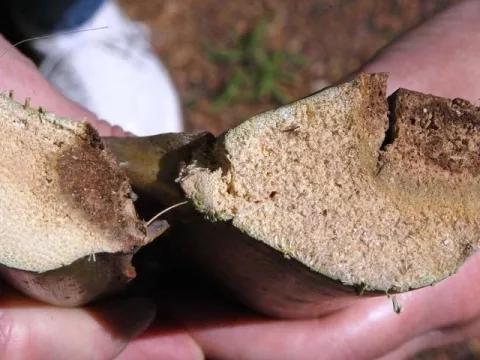
When the petiole or the trunk is cut transversely, clear evidence of the disease is visible as discoloration or browning of the vascular rings, which confirms the vascular nature of the infection.
Visual symptoms may be slow to appear in young trees, but once the disease reaches a critical stage, the decline of the palm becomes rapid and irreversible, often leading to full collapse within a few seasons.
Fusarium wilt thrives in regions with warm temperatures, as the optimal range for the fungal development is between 20 and 30 degrees Celsius. High soil temperatures significantly accelerate the infection process.
Soil moisture plays a critical role in the dispersal of the fungus. Over-irrigation or poor drainage can create a favorable environment for the spores to germinate and migrate toward the roots of healthy palms.
Human activity is the most significant factor in the spread of the pathogen. Contaminated agricultural tools, heavy machinery, and even the movement of infected soil or offshoots are common pathways for the disease to jump to new areas.
Natural vectors such as insects, small rodents, and wind during dust storms can transport the spores over short and medium distances, increasing the infection pressure within an oasis or plantation.
Poor agricultural practices, such as the use of uncertified planting material and failure to implement quarantine, are the primary reasons for the introduction and establishment of the disease in previously unaffected regions.
Fusarium wilt of date palm is considered the most destructive disease of this crop globally. It poses an existential threat to palm cultivation, causing nearly 100 percent mortality in susceptible adult trees.
The economic impact is massive, as it not only wipes out existing production but also renders the infested land unsuitable for replanting with date palms for decades due to the long-term persistence of the fungal spores.
The loss of date palms leads to the socio-economic collapse of traditional oasis communities, where the palm is the foundation of local agriculture, food security, and regional culture.
Management costs for affected areas are extreme, often requiring the destruction of all infected trees and the imposition of long-term trade restrictions on all plant parts originating from the contaminated zones.
The disease is highly aggressive and lacks effective curative treatments, making eradication nearly impossible once a plantation becomes fully infested with Fusarium oxysporum f. sp. albedinis.
Strict quarantine and biosecurity measures are the primary lines of defense. Restricting the movement of soil, machinery, and plant materials from infested areas is essential to prevent further spread.
Breeding for resistance is the most sustainable approach to managing the disease. Farmers are encouraged to use certified, resistant, or tolerant date palm cultivars for new plantings.
Sanitation is critical: when a tree shows symptoms of bayoud, it must be promptly uprooted, and the site must be treated or isolated. Burning infected material is generally recommended to destroy the pathogen inoculum.
- Regular monitoring of palm plantations for early symptoms.
- Rigorous disinfection of all tools used in the plantation to avoid cross-contamination.
- Avoidance of mechanical injuries to the root system during cultivation.
- Public education programs on the risks of moving plant materials from contaminated regions.
Integrated disease management, combining cultural practices, rigorous exclusion, and the adoption of resistant genotypes, represents the only viable path to mitigating the damage caused by Fusarium wilt.