
Fusarium wilt
Foot and
Description
Symptoms
The hallmark sign of Fusarium wilt is the rapid drooping and yellowing of foliage. Initially, this often occurs on only one side of the plant or on the lower leaves, eventually spreading to affect the entire structure.
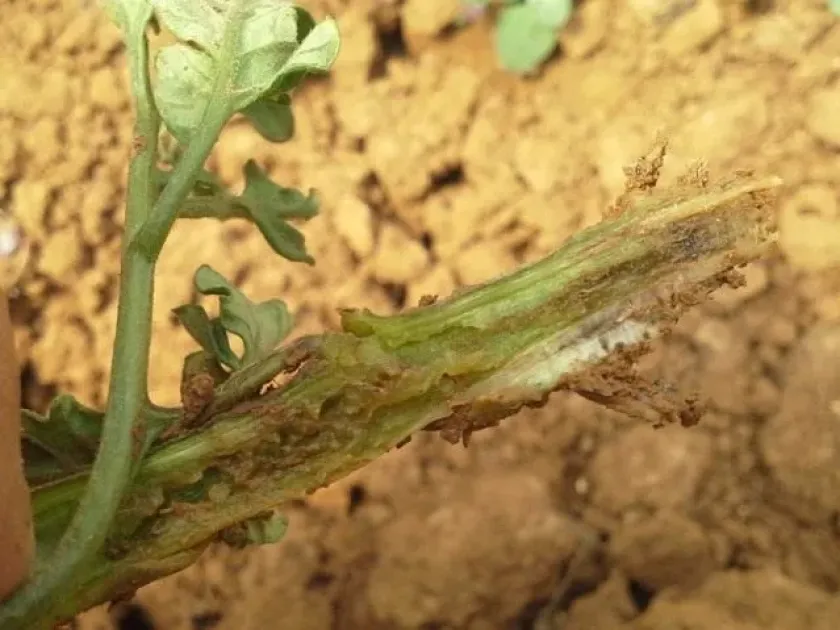
A definitive diagnostic feature is the browning or darkening of the vascular bundle within the stem or crown. By cutting into the stem, growers can observe this discolored tissue, which indicates the fungus has compromised the plant's plumbing system.
In high humidity, a fluffy white, pink, or peach-colored fungal growth (mycelium) may appear on the surface of the stem near the soil line. This serves as an indicator of active sporulation and high inoculum density in the immediate environment.
Stunted growth is common in plants that survive the initial infection, as the limited nutrient flow restricts development. Leaves may eventually turn brown, become brittle, and die, while the entire plant gradually loses its structural integrity.
In root-heavy crops, rot is often observed in the root system. The primary roots may become necrotic and brittle, while secondary roots disappear entirely, further exacerbating the plant's inability to uptake moisture from the soil.
Pathogen
Fusarium wilt is a devastating fungal disease caused by various species of the Fusarium genus, most notably Fusarium oxysporum. These fungi are soil-borne pathogens capable of infecting a vast array of crops, including vegetables, cereals, and ornamentals.
The pathogen primarily infects plants through the root system, entering the xylem tissues. Once inside, the fungus spreads rapidly through the vascular system, effectively blocking the transport of water and essential nutrients from the roots to the shoots.
Fusarium fungi produce resilient resting structures called chlamydospores, which allow the pathogen to survive in soil for many years, even in the absence of a host. This persistence makes the disease exceptionally difficult to eradicate from agricultural fields.
Beyond physical vascular obstruction, Fusarium species secrete phytotoxins that degrade plant cell walls and kill surrounding tissue. These toxins are responsible for the systemic wilting and yellowing symptoms observed in the canopy.
Many Fusarium species are host-specific, meaning they evolve to target particular crop varieties. This complexity requires an integrated approach to disease management, as shifting crop rotations alone may not be sufficient if related susceptible species are grown.
Conditions for development
The development of Fusarium wilt is strongly favored by warm soil temperatures, typically ranging from 20°C to 28°C (68°F to 82°F). High soil moisture or poor drainage creates an ideal environment for the spores to germinate and infect roots.
Plant stress is a significant contributor to disease severity. Factors such as drought, nutrient deficiency, or root damage caused by nematodes or improper cultivation practices create entry points that the fungus exploits easily.
Continuous cropping of the same host species leads to an accumulation of fungal propagules in the soil. Without an adequate rotation cycle, the pathogen population reaches a threshold that makes successful cultivation of the host impossible.
Soil pH plays a critical role in disease prevalence; acidic soils often exacerbate the growth of Fusarium. Imbalanced fertilization, particularly high nitrogen application, can also promote vegetative growth that is more susceptible to fungal colonization.
Introduction via contaminated seeds, transplants, or infested farming equipment is a primary driver for the spread of Fusarium to new areas. Once established, the pathogen is nearly impossible to remove from the field.
Why it matters
Fusarium wilt causes severe economic losses by killing seedlings outright and significantly reducing the yields of mature plants. The systemic nature of the infection ensures that once a plant is infected, it rarely recovers.
Beyond crop loss, the contamination of agricultural products with mycotoxins represents a major food safety concern. These secondary metabolites can be toxic to both humans and livestock, leading to massive financial losses due to quality rejection.
The disease forces producers to abandon specific fields or shift to less profitable crop varieties. This loss of land use flexibility creates long-term structural problems for farm management and profitability.
In storage and transit, infected fruits and vegetables exhibit rapid rot and spoilage. This reduces the shelf life of produce, leading to further post-harvest losses and increased food waste across the supply chain.
The long-term impact on soil health is significant, as fields become "sick" and unable to support high-value crops without expensive chemical sterilization or heavy reliance on resistant breeding programs.
Protection
The most effective strategy is the use of resistant or tolerant crop varieties. Plant breeders continue to develop hybrids that possess genetic immunity to specific races of Fusarium, offering the best defense for growers.
Crop rotation is essential, requiring a break of at least 4 to 5 years between susceptible crops. This period of starvation significantly reduces the population of the pathogen in the soil, allowing for future cultivation.
Sanitation practices such as removing and destroying infested plant material are critical. Growers should avoid moving soil from infested areas to clean fields to prevent the spread of chlamydospores on tools or footwear.
Biological control agents, particularly Trichoderma species, are increasingly used to suppress Fusarium. These beneficial fungi act as natural competitors and parasites, creating a barrier around the plant roots against the pathogen.
Chemical control focuses primarily on soil fumigation and seed treatments. While these methods provide early protection, they are most effective when combined with proper irrigation management and soil amendments to maintain a healthy root environment.
Discussion
No discussions yet — be the first.