
Comovirus
Comovirus
The causative agent belongs to the Comovirus genus, within the Secoviridae family. These viruses are characterized by an icosahedral virion structure containing two positive-sense single-stranded RNA molecules.
What the section contains
Comovirus
Comoviruses have a relatively narrow host range, primarily targeting legumes (Fabaceae). The Cowpea mosaic virus (CPMV) is the most well-known member, serving as a model for studying plant viral infections.
Viral replication occurs in the plant cell cytoplasm, often resulting in specific intracellular inclusion bodies. Once infected, the virus spreads systemically through the plant's vascular system.
The biology of these viruses is closely linked to specific insect vectors, particularly beetles, which are essential for effective transmission between host plants in a field setting.
Viral particles exhibit high stability, allowing them to persist in crop residues and infected seeds for extended periods, making them difficult to eradicate once established.
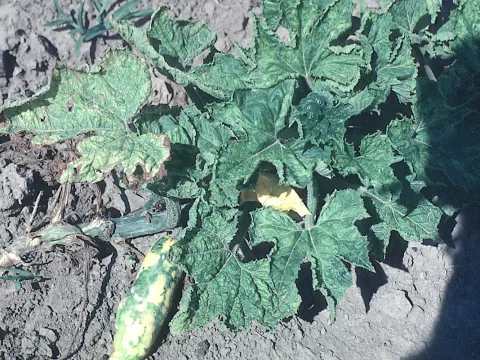
The hallmark of a Comovirus infection is a mosaic pattern on leaves, featuring a mix of light and dark green patches. Leaf chlorosis and malformation are also commonly observed.
Severe infections can lead to stunted growth, leaf puckering, or significant crinkling. Affected plants typically show a reduced overall biomass compared to healthy individuals.
Generative organs are often impaired, resulting in fewer pods, seed deformities, and decreased seed viability. Infected seeds may also display discoloration or reduced size.
Symptom expression depends on the host variety, the plant's age at the time of infection, and environmental stressors such as temperature and water availability.
Visual diagnosis is challenging due to the similarity of symptoms with other viral pathogens, necessitating laboratory analysis for definitive identification.
Viral development is highly dependent on environmental conditions, specifically warm and humid weather, which favors the activity of insect vectors like chrysomelid beetles.
Transmission occurs mechanically when vectors feed on leaf tissue, creating entry points for viral particles to infect the plant cells and initiate systemic colonization.
Infected seeds are a primary source of inoculum, introducing the virus into a field early in the growing season and establishing initial infection foci.
The presence of weeds or volunteer plants can serve as a reservoir for the virus, allowing it to persist between growing seasons and jump to new crops.
Plants subjected to environmental stress or nutrient deficiencies are generally more susceptible to viral invasion and may exhibit more severe disease symptoms.
The economic impact of Comovirus lies in significant crop yield losses, which can reach 30% to 50% in heavily infested areas due to reduced plant vigor.
Infected plants exhibit compromised photosynthetic efficiency, leading to an overall decline in growth, reduced pod set, and inferior quality of harvested produce.
Seed quality degradation is a critical concern, as virus-infected seeds often have lower germination rates and poor marketability for export or storage.
Economic losses are compounded by the necessity of replacing infected seed stocks and the increased costs associated with pest management programs aimed at vectors.
In seed production fields, the virus can lead to the loss of genetic purity and the potential rejection of harvest lots due to health and quality standards.
The most effective strategy for managing Comovirus is the use of genetically resistant or tolerant cultivars, which significantly mitigate losses.
Rigorous phytosanitary measures are essential, starting with the use of certified, virus-free seeds to ensure that the initial crop establishment is healthy.
Vector management through timely insecticide applications can help reduce the population of beetles, thereby lowering the probability of viral transmission within the field.
- Implementing spatial isolation from known infected crops.
- Effective weed control to remove alternative virus hosts.
- Crop rotation strategies to break the disease cycle.
- Deep plowing to eliminate infected crop debris.
Maintaining optimal plant health through balanced fertilization and proper irrigation helps minimize susceptibility and improves the plant's ability to withstand infection.