
Colombia cilevirus
Cilevirus colombiaense
Colombia cilevirus (Cilevirus colombiaense) is a plant-pathogenic virus belonging to the Cilevirus genus within the Kitaviridae family. It is a specific pathogen known to affect various tree species, particularly citrus.
What the section contains
Colombia cilevirus
The primary mode of transmission is through plant-feeding mites of the genus Brevipalpus. These mites act as biological vectors, carrying the virus from infected tissues to healthy host plants during their feeding activity.
Unlike many other plant viruses, Cilevirus colombiaense does not exhibit mechanical transmission via sap or seed-borne pathways, which significantly simplifies the focus for disease containment strategies.
Once introduced into the plant cells, the virus hijacks the cellular machinery to replicate, causing localized tissue damage that disrupts the plant's physiological functions and overall structural integrity.
It remains an emerging pathogen of concern, requiring constant surveillance by phytosanitary authorities to prevent its further geographical spread in commercial agricultural regions.
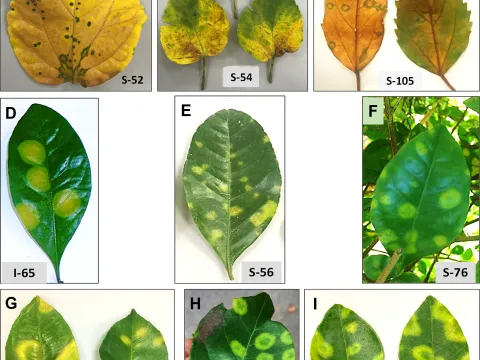
Symptoms typically start as localized chlorotic spots on the leaf surface, which eventually develop into necrotic lesions. These spots often correspond directly to the feeding tracks left by the mite vectors.
As the infection progresses, severe leaf deformation occurs, characterized by curling or premature abscission. This significantly reduces the photosynthetic capacity of the canopy and weakens the tree.
Infected fruits often display characteristic ringspots or mottled patterns. These symptoms severely degrade the market quality of the harvest, rendering the fruit commercially unacceptable.
Chronic stages of the disease lead to general decline, marked by dieback of terminal shoots and a visible reduction in the vigor of the affected tree.
- Chlorotic spots developing into necrotic lesions.
- Curling and deformation of leaves.
- Ringspot symptoms on fruit skin.
- Premature leaf and fruit drop.
- General decline and dieback of the tree canopy.
The development of the disease is strictly correlated with the population dynamics of Brevipalpus mites. These vectors thrive and reproduce rapidly under warm environmental conditions.
Temperatures ranging from 25 to 30 degrees Celsius are considered optimal for the biological activity of the mites, thereby accelerating the spread of the virus within the orchard.
High relative humidity levels support the survival of the vector population, facilitating their movement between plants and increasing the frequency of virus inoculation.
Poor orchard management, such as inadequate irrigation and lack of weed control, creates a favorable environment for vectors and stresses the trees, making them more susceptible to viral impact.
Abandoned or poorly maintained orchards serve as primary reservoirs for the virus, allowing it to persist and spread to adjacent productive plantings through vector migration.
The primary economic impact is a dramatic reduction in fruit yield, caused by the premature abscission of fruit and the overall physiological stress placed on the tree.
Market losses occur due to the unsightliness of the fruit, as ringspots and surface lesions disqualify the harvest from premium export or fresh market channels.
The virus severely depletes the tree's energy reserves, predisposing it to secondary attacks by opportunistic pathogens, which can lead to the death of entire trees within a short period.
Management of the virus necessitates intensive eradication efforts, including the removal of infected trees, which incurs high costs for the growers.
The lack of commercially resistant citrus cultivars underscores the severity of the threat, leaving prevention as the most critical defense against this virus.
The most effective strategy for managing Colombia cilevirus is the intensive control of the Brevipalpus mite population using regular applications of effective acaricides.
Strict phytosanitary regulations regarding the movement of nursery stock are essential to ensure that virus-free material is used for new orchard establishment.
Sanitation practices, such as the pruning and immediate destruction of symptomatic branches, are recommended to lower the viral inoculum level within the orchard environment.
Maintaining optimal tree health through balanced nutrition and proper irrigation helps trees better withstand the infection, although it does not provide immunity.
Integrated pest management (IPM) programs, which combine chemical acaricide treatments with biological control agents, should be implemented to achieve sustainable suppression of the mite vectors.