
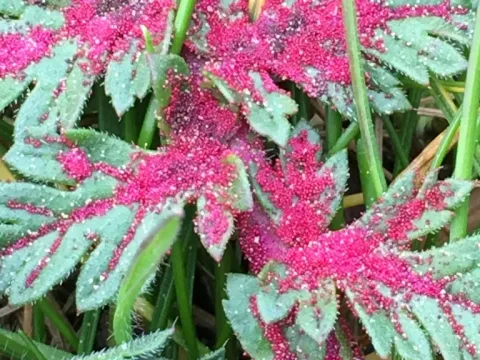
Cercospora leaf spot of geranium
Filaree red
The disease is caused by fungal pathogens from the Cercospora genus, which specifically target the foliage of plants within the Geraniaceae family. This pathogen is a significant threat in both greenhouse and outdoor environments.
What the section contains
Cercospora leaf spot of geranium
The fungus survives primarily in infected plant debris left in the soil or on the surface. These dormant structures allow the pathogen to persist through unfavorable seasons until suitable conditions arise.
Spores are disseminated by wind currents, water splashing during irrigation, or by workers handling infected plant material. Once a plant is infected, the fungus initiates the cycle of colonization.
The mycelium develops within the leaf tissue, gradually extracting nutrients from the host. This process is reinforced by the production of abundant conidia, which act as secondary inoculum for neighboring plants.
Biology of the pathogen is closely tied to its host's physiological state. Stressed or malnourished plants often exhibit higher susceptibility to colonization compared to robust specimens.
Symptoms typically manifest as small, circular, reddish-brown spots on the underside or surface of older leaves. These spots are often surrounded by a faint, lighter halo.
As the infection progresses, the lesions expand and may coalesce, forming larger, irregularly shaped necrotic areas that compromise the integrity of the entire leaf.
A distinctive feature of this disease is the development of a greyish, powdery fungal growth in the center of the spots, visible especially under high humidity conditions.
Severely affected leaves exhibit yellowing (chlorosis), followed by browning and premature abscission. This results in significant defoliation and loss of the plant's decorative value.
If the infection extends to the petioles or stems, it can cause girdling, leading to the collapse of individual branches or the entire plant structure.
The development of the fungus is strictly dependent on high relative humidity, typically exceeding 75–80 percent. Moisture on the leaf surface is a prerequisite for spore germination.
Temperature plays a crucial role, with an optimum range of 20 to 25 degrees Celsius. Under these conditions, the incubation period is minimized, allowing for rapid disease spread.
Poor ventilation and overcrowded planting density create pockets of high humidity within the canopy, facilitating the infection of otherwise healthy leaves.
Overhead irrigation methods significantly increase the risk of disease by promoting splashing and creating prolonged periods of leaf wetness, which pathogens exploit.
Environmental stress, such as low light or improper fertilization, weakens the plant's natural defense mechanisms, making it easier for fungal hyphae to penetrate the epidermal layer.
The primary impact of the disease is the substantial reduction of the plant's photosynthetic capacity, which directly stunts growth and reduces flower production.
The aesthetic decline caused by necrotic lesions renders the plants unsuitable for commercial sale, floral displays, or competitive gardening.
In cases of severe infestation, the disease can lead to the total death of the foliage, leaving the plant vulnerable to secondary bacterial infections or environmental stress.
Economic damage is twofold: the loss of plant inventory and the increased operational costs associated with recurring fungicide applications and intensive sanitation efforts.
In landscape settings, the disease ruins the visual uniformity of beds, necessitating the removal of entire batches of infected geraniums to prevent further spread.
Integrated management is essential, focusing on reducing humidity and removing sources of infection. Prevention is significantly more effective than curative measures.
- Utilize disease-free propagation material and sterile growing media.
- Ensure adequate spacing between pots to improve air circulation.
- Switch to drip irrigation to keep the foliage dry.
- Immediately rogue and destroy all symptomatic plant parts to limit spore dispersal.
- Apply preventative copper-based or systemic fungicides during high-risk seasons.
Sanitation practices should be rigorous; cleaning tools and disinfecting the growing area after each cycle helps eliminate the survival structures of the fungus.
Balanced fertilization, particularly ensuring adequate potassium levels, promotes thicker cell walls and strengthens the plant's natural resistance against fungal invasion.