
Carlavirus
Carlavirus
The Carlavirus genus consists of filamentous plant viruses containing a single-stranded positive-sense RNA genome. These pathogens are widely distributed and infect a diverse range of agricultural and horticultural hosts.
What the section contains
Carlavirus
The genus is named after the type species, Carnation latent virus. Viral particles are typically flexible, helical, and elongated, usually measuring between 600 and 700 nanometers in length.
Transmission in nature primarily occurs through vectors, specifically aphid species, in a non-persistent manner. This means the virus can be acquired and transmitted by an aphid within seconds of feeding.
Mechanical transmission via handling or contaminated tools is also possible for many species within this genus, though it is often secondary to vector-based spread.
Carlaviruses are characterized by their ability to remain latent in host plants for extended periods, making detection difficult without specialized molecular diagnostic techniques.
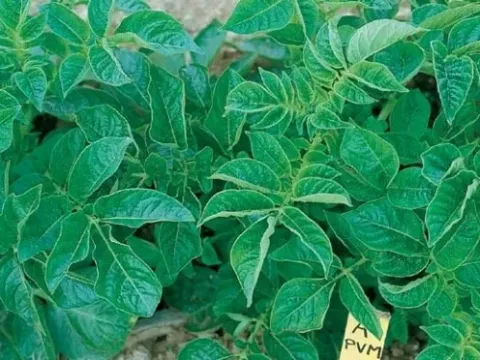
Common symptoms of infection include mosaic patterns, which manifest as patches of light green or yellow contrasting with the normal dark green color of the leaf tissue.
Infected plants frequently exhibit reduced growth, resulting in stunting, malformed leaves, and a generally poor physiological state compared to healthy specimens.
In sweet potatoes, Carlaviruses often cause vein clearing, chlorosis, and sometimes leaf rolling, which severely compromises the plant's ability to undergo photosynthesis.
Depending on the specific virus species and the host variety, symptoms might also include necrotic spots or general leaf yellowing that spreads across the canopy.
Because many Carlaviruses cause mild or symptomless infections, crops may appear healthy while acting as active reservoirs for the virus to spread to more sensitive hosts.
The incidence of Carlavirus is heavily dependent on the presence and density of insect vectors, particularly aphids, which are more active in warm and dry environmental conditions.
Continuous cropping and high-density planting provide ideal pathways for the rapid transmission of the virus throughout the field via insect movement.
Wild host plants and weeds surrounding cultivated fields often serve as perennial reservoirs, allowing the virus to persist from one season to the next.
The use of infected propagative material, such as cuttings or tubers, is a critical factor in the introduction and establishment of the virus in new areas.
Environmental stress can exacerbate the visible symptoms of the virus, although the pathogen itself can spread efficiently across a wide variety of climatic zones.
The economic impact of Carlavirus is primarily due to systemic infection, which leads to significant losses in both crop yield and quality.
Damage to the photosynthetic apparatus of the plant causes smaller leaf surface area and reduced storage organ development, such as stunted tubers in sweet potatoes.
Beyond quantity, quality factors like sugar content, starch composition, and shelf life are negatively affected, making the produce less desirable for commercial markets.
Infected plants exhibit weakened vigor, leaving them more susceptible to secondary environmental stresses, including drought, nutrient deficiency, and secondary fungal infections.
The cost of managing Carlavirus is compounded by the need for regular crop inspection, rogueing, and the replacement of infected germplasm with clean material.
The primary control strategy is the use of certified virus-free planting material, often produced through tissue culture and meristem-tip propagation.
Implementing effective integrated pest management (IPM) to control aphid populations is essential to reduce the rate of virus transmission within the field.
Maintaining a weed-free zone around fields and eliminating alternative weed hosts helps minimize the virus inoculum present in the immediate environment.
Spatial isolation between new crops and existing, potentially infected, fields is a vital practice to prevent the encroachment of vectors carrying the pathogen.
Regular monitoring and immediate rogueing (removal and destruction) of symptomatic plants are necessary to limit the spread of the virus within a healthy population.