
Capulavirus
Capulavirus
Description
Symptoms
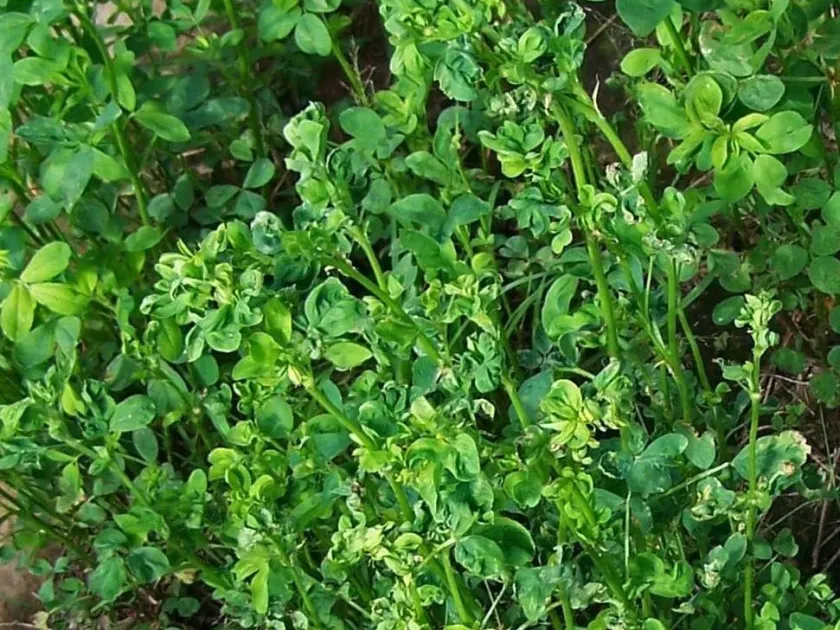
The most prominent symptoms of Capulavirus infection include leaf curling, crinkling, and severe deformation of the leaf blades. Affected plants often exhibit marked stunting and reduced biomass compared to healthy specimens.
Early-stage infections often manifest as chlorotic mosaic patterns, where the green color of the leaves is interrupted by yellow patches, indicating systemic virus movement through the vascular tissue.
Reproductive development is frequently impaired, leading to flower deformation, reduced fruit set, and overall poor yield quality. In some host plants, the fruit may become stunted or show signs of surface necrosis.
Symptom expression is highly dependent on the host cultivar and the timing of the infection. Plants infected at an early growth stage are typically the most severely affected, often remaining unproductive for the entire season.
- Leaf curling and puckering.
- Chlorotic mosaic or interveinal yellowing.
- Significant growth stunting.
- Flower and fruit malformation.
- Necrotic spotting in advanced stages.
Pathogen
Capulaviruses (genus Capulavirus) are members of the Geminiviridae family. These pathogens are characterized by a single-stranded DNA genome and are known to cause systemic infections in a wide range of economically important plants.
The transmission of these viruses is primarily facilitated by insect vectors, specifically aphids (Aphididae). The viral transmission occurs in a persistent, circulative manner, meaning the aphid must feed on the host plant for an extended period to acquire and subsequently inoculate the virus.
The viral genome structure is optimized for rapid replication within host cells, allowing the virus to interfere with normal plant development and physiological pathways efficiently.
Capulaviruses exhibit significant genetic variability, which poses challenges for long-term diagnostic and control strategies in diverse agricultural environments.
The genus includes several distinct species, often associated with legume and solanaceous crops, where they persist as latent threats in regional ecosystems.
Conditions for development
The spread of Capulavirus is intrinsically linked to the population dynamics of its aphid vectors. Warm and dry weather conditions are particularly conducive to the rapid reproduction and migration of aphid populations.
Weed hosts in and around agricultural fields act as critical reservoirs for the virus. During periods when no primary crop is present, the virus persists in these weeds, creating a continuous infection cycle.
High planting density in agricultural fields facilitates easier movement for insect vectors, leading to faster virus transmission across the field once an initial source of infection is established.
Abiotic stress factors, such as drought or nutrient deficiencies, weaken the plant's defense mechanisms, potentially making them more susceptible to viral invasion and severe symptom development.
Proximity to previously infected fields or landscapes with high wild plant diversity increases the probability of virus introduction into new commercial plantings.
Why it matters
Capulavirus infections are highly detrimental because they cause permanent physiological damage, and there are currently no direct chemical treatments to cure an already infected plant.
The primary economic impact stems from significant reductions in yield and quality. Malformed fruits often fail to meet commercial standards, resulting in heavy financial losses for producers.
In large-scale production, a single outbreak of Capulavirus can cause substantial crop losses, often requiring costly destruction of infested plants to prevent further spread within the facility.
Infected plants suffer from disrupted metabolism, which reduces their overall nutritional value and makes them more susceptible to secondary stressors, such as fungal pathogens or environmental extremes.
Managing the impact of the disease is labor-intensive, requiring strict adherence to monitoring and control protocols to protect the surrounding crop area from contamination.
Protection
Effective management begins with strict control of aphid vectors. The application of systemic insecticides is a standard practice to reduce the vector population and minimize the windows for virus transmission.
Sanitation is paramount: removing weeds that serve as virus reservoirs is essential for breaking the disease cycle and preventing the introduction of the virus into the field.
Farmers should prioritize the use of high-quality, virus-free planting material. Using certified seeds or transplants significantly lowers the risk of introducing the virus into a clean environment.
Implementing spatial and temporal isolation between different host crops can interrupt the movement of aphid populations and limit the potential for secondary spread across large areas.
Breeding for host plant resistance or tolerance to Capulavirus is a key long-term goal for agricultural researchers, providing a sustainable alternative to chemical-heavy control measures.
Discussion
No discussions yet — be the first.