
Cardamom mosaic virus
Macluravirus cardamomi
Description
Symptoms
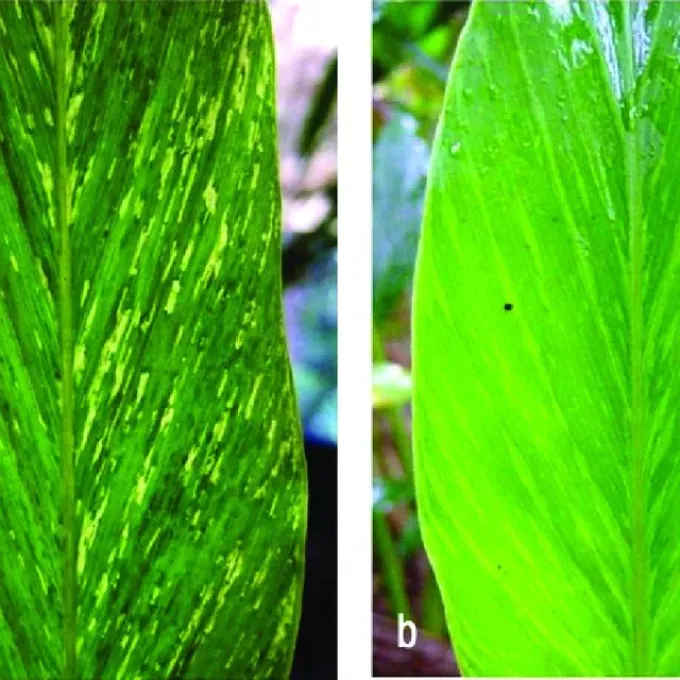
The primary symptom of cardamom mosaic virus is the development of a distinct mosaic pattern on the leaves of the infected host plants.
Affected leaves typically exhibit interveinal chlorosis, which manifests as light-green to yellow spots or streaks across the leaf surface.
Plants suffering from the infection show significantly stunted growth, reduced height, and a loss of overall vigor compared to healthy specimens.
Leaves often become distorted, crinkled, or reduced in size, which impacts the photosynthetic capacity of the plant and its ability to produce yields.
Severe infections frequently result in the deformation of flower panicles, leading to poor fruit set and reduced quality of the spice pods.
Pathogen
The pathogen is Macluravirus cardamomi, which is classified within the genus Macluravirus in the Potyviridae family.
It is a plant virus possessing a single-stranded RNA genome that specifically targets plants within the Zingiberaceae family.
The virus is non-persistently transmitted in the field by several species of aphids, which act as the primary vectors of the disease.
Mechanical transmission is also a significant factor, occurring when contaminated tools or handling facilitate the spread of the virus via sap.
Vegetative propagation using infected rhizomes is a major pathway for the long-distance dispersal and establishment of the virus in new areas.
Conditions for development
The incidence of the disease is highly correlated with the seasonal population dynamics of aphid vectors in the plantation environment.
Warm and humid conditions favor the rapid proliferation of aphid populations, leading to high infection rates across the cultivated fields.
Dense planting patterns and poor canopy management create favorable microclimates for vector movement and subsequent virus transmission.
The proximity of wild cardamom relatives or other susceptible hosts provides a persistent reservoir for the virus during the off-season.
Failure to implement quarantine measures for new plant material significantly increases the risk of introducing the virus into clean zones.
Why it matters
Cardamom mosaic virus is considered one of the most destructive diseases in cardamom-producing regions, causing massive economic losses.
The viral infection significantly reduces the production of essential oils and other phytochemicals that define the commercial value of cardamom.
Ongoing infections exhaust the plant energy reserves, leading to shorter plantation lifespans and the eventual need for total replanting.
Weakened plants are highly susceptible to opportunistic secondary infections, including root rot and other fungal pathogens of the soil.
The cumulative impact of reduced yields and lower product quality poses a major threat to the livelihoods of smallholder cardamom farmers.
Protection
The core management strategy for controlling the virus is the use of healthy, virus-indexed planting material during plantation establishment.
Regular surveillance and the immediate roguing of infected plants are essential to slow down the rate of pathogen spread within the plantation.
Systemic insecticide treatments are required to manage aphid populations and disrupt the transmission cycle of the virus.
Strict sanitation protocols must be enforced, including the sterilization of tools used for harvesting or rhizome division between plants.
- Maintaining a weed-free field to eliminate potential alternative hosts
- Using reflective mulches to deter aphid landing and colonization
- Establishing buffer zones between infected and healthy plots
- Implementing integrated pest management (IPM) to maintain low vector densities
Discussion
No discussions yet — be the first.