
Solanum yellow mosaic virus
Begomovirus solanummoheliense
The causative agent is a virus belonging to the Begomovirus genus within the Geminiviridae family, characterized by a single-stranded DNA genome.
What the section contains
Solanum yellow mosaic virus
This virus relies exclusively on the Bemisia tabaci whitefly complex for transmission between host plants in agricultural environments.
The virus is acquired by the whitefly after feeding on an infected plant and is then transmitted systemically to subsequent healthy hosts.
Once inside the plant tissue, the virus spreads through the phloem, interfering with the normal physiological and developmental processes.
Genetic variability among different strains of the virus can lead to varying levels of severity in different Solanaceous hosts.
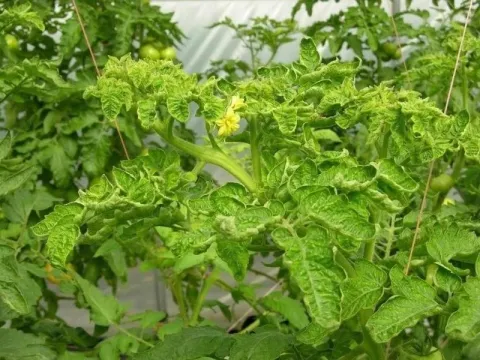
The most prominent symptom is a distinct yellow mosaic pattern on the leaves, which significantly impacts the plant's ability to photosynthesize.
Infected leaves often exhibit curling, thickening, and varying degrees of crinkling, which leads to a stunted and distorted appearance of the entire plant.
Internode elongation is severely reduced, resulting in a bushy, dwarf growth habit that is easily identifiable in the field.
Flowering is frequently disrupted, leading to flower drop or the production of fruits that are small, deformed, and chlorotic.
Overall plant vigor declines rapidly, and the systemic nature of the infection ensures that all newly developing leaves show signs of the disease.
The disease development is heavily dependent on the population density of the whitefly vector, which thrives in warm and dry conditions.
Temperatures ranging from 25°C to 30°C create an ideal environment for rapid whitefly reproduction and high rates of viral transmission.
Weed hosts serve as essential reservoirs for both the virus and the whitefly, bridging the gap between cropping seasons and ensuring survival.
Poor field sanitation and the presence of nearby infected crops facilitate the rapid movement of vectors into new plantings.
High relative humidity inside greenhouses can sometimes mitigate whitefly activity, but temperature remains the primary driver of disease spread.
Economic losses due to Solanum yellow mosaic virus are significant, as infected plants yield little to no marketable fruit.
The virus severely compromises the plant's physiological integrity, making it less resilient to other environmental stressors and pathogens.
Early-season infections can lead to total crop failure, necessitating the complete removal and destruction of the infected plantation area.
Costs associated with insecticide applications to manage vector populations place a heavy financial burden on growers.
Long-term impact involves a reduction in genetic diversity of available planting stock if high-susceptibility varieties are continually used.
Integrated Pest Management (IPM) is the most effective approach, focusing primarily on controlling whitefly populations through systemic insecticides.
Physical barriers such as insect-proof nets in greenhouses are highly recommended to prevent vectors from entering the crop area.
Roguing infected plants immediately upon the appearance of symptoms is critical to prevent the local spread of the viral inoculum.
Maintaining a weed-free perimeter around fields reduces the availability of secondary hosts for the virus and the vector.
Selecting virus-resistant or tolerant cultivars is the best long-term strategy to ensure stable production in regions where the virus is endemic.