
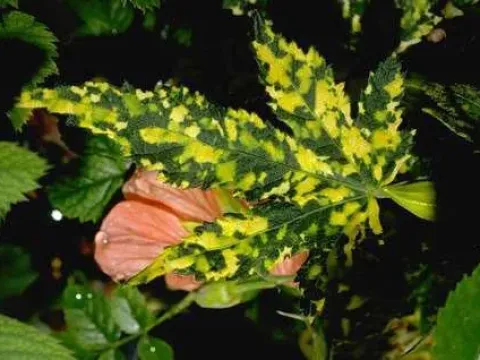
Abutilon mosaic Brazil virus
Begomovirus abutilonbrazilense
The causative agent of the disease is the Abutilon mosaic Brazil virus (AbMBV), belonging to the genus Begomovirus within the Geminiviridae family. It is a plant-infecting virus with a single-stranded circular DNA genome.
What the section contains
Abutilon mosaic Brazil virus
The virus replicates in the host plant cell nuclei, manipulating the plant's machinery to produce viral proteins. These proteins facilitate the formation of typical twin-shaped (geminate) virions.
Biological activity of the virus is restricted to the phloem tissue, where it interferes with the translocation of nutrients. The virus relies exclusively on insect vectors for dissemination between plants.
It demonstrates a high degree of host specificity, primarily targeting the Malvaceae family. The evolution of the virus has led to a highly efficient interaction with host plant immune systems.
Due to its specialized nature, the virus is not mechanically transmissible in the field, making the role of the whitefly vector essential for the survival and spread of the pathogen.
The hallmark symptom is a bright yellow or chlorotic mosaic pattern on the leaves. The foliage exhibits a striking, often net-like or spotted appearance, leading to severe discoloration.
Leaf deformation is commonly observed, including puckering, curling, or reduction in leaf size. The asymmetrical growth caused by the virus ruins the aesthetic appearance of the plant.
Infected plants show clear signs of stunted growth and general vigor loss. Internodes become shortened, giving the plant a compact and abnormal bushy structure.
Flowering is significantly negatively impacted; the plant may produce fewer, smaller, or deformed blooms. Often, floral buds abort prematurely before fully opening.
- Variegated yellow leaf patches.
- Reduced photosynthetic efficiency.
- Loss of architectural plant shape.
Favorable conditions for the development of the virus are high temperatures and humidity, which are optimal for the rapid population growth of the insect vector, Bemisia tabaci (whitefly).
Greenhouse environments provide ideal conditions for the spread of the disease. The high density of plants facilitates the movement of the whitefly from one individual to another, causing outbreaks.
Propagation through infected cuttings is the primary method of long-distance transmission. Plants obtained from infected mother stock often carry the virus in a latent, symptomless state.
Stress factors such as improper watering or nutritional deficiencies can weaken a plant's ability to tolerate the infection, making symptoms appear more severe than in well-cared-for plants.
The duration from initial infection to visible symptom expression varies depending on the plant variety and the viral load introduced by the feeding insect.
The virus causes devastating losses in the ornamental industry, particularly for nurseries specializing in Abutilon and Hibiscus species, as affected plants lose all market value.
Commercial production is severely hampered by this virus, often requiring the complete destruction of infected nursery batches to prevent widespread contamination across the facility.
Systemic infection depletes the plant's metabolic reserves, resulting in long-term damage to root systems and making the plant prone to secondary opportunistic pathogens.
In tropical and subtropical regions, the virus acts as a persistent threat, serving as an infection reservoir for other related Malvaceae crops grown in open field environments.
The persistent nature of the viral infection makes recovery impossible, forcing growers to invest in expensive replacement and prevention programs annually.
Effective control requires a multi-faceted approach centered on strict whitefly population management using systemic insecticides and biological control agents.
The use of virus-indexed, certified disease-free propagation material is the most critical step in preventing the introduction of the virus into a new greenhouse or collection.
Any plant showing characteristic mosaic symptoms must be isolated and destroyed immediately. Routine monitoring for early detection of the whitefly vector is essential for success.
Sanitation practices such as cleaning tools, pots, and surfaces are necessary to maintain a sterile environment. Eliminating weeds that can serve as alternative hosts is equally important.
Enhancing plant resistance through balanced nutrient management and maintaining stable environmental conditions helps mitigate the impact of the disease if the initial viral load is low.