
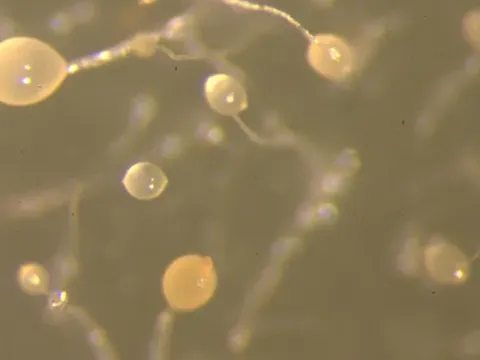
Dictyostelium
Dictyostelium
Dictyostelium is not a plant disease pathogen; it is a genus of cellular slime molds commonly found in forest soils.
What the section contains
Dictyostelium
These organisms belong to the phylum Amoebozoa and exist primarily as independent, soil-dwelling amoeboid cells.
They feed on bacteria and organic debris, performing a role similar to other soil protozoa in nutrient cycling.
They do not invade plant tissues, do not form lesions, and do not cause wilting, necrosis, or any form of plant infection.
Their biological significance is linked to ecological processes rather than agricultural pathology.
The distribution of Dictyostelium is determined by moisture levels, bacterial density, and pH of the soil environment.
They thrive in well-aerated, moisture-rich soils that support a high diversity of microbial life.
Aggregation into multi-cellular fruiting bodies is triggered by the depletion of local bacterial food sources.
These organisms prefer high organic content, which provides both food for the bacteria they consume and a suitable microclimate.
Significant chemical pollution, especially in heavy metal or intense pesticide-contaminated soils, can inhibit their development.
There is no economic or agronomic damage associated with Dictyostelium as it has no phytopathogenic activity.
They do not parasitize plants and do not interfere with the health or productivity of agricultural crops.
In fact, their consumption of soil bacteria helps maintain a balanced microbial community within the rhizosphere.
They are frequently utilized as a standard model organism in biomedical research due to their predictable life cycle.
Any concerns regarding their impact on plant health are based on misunderstandings of their ecological position.
No protective or control measures are required, as Dictyostelium poses no threat to farming or gardening operations.
Maintaining soil health through organic matter management and crop rotation supports a diverse and stable soil biota.
Avoiding unnecessary applications of broad-spectrum biocides preserves the natural soil food web.
Standard agronomic practices that encourage healthy, fertile soils automatically support these beneficial microorganisms.
No specific legislation or agricultural guidance exists for controlling these organisms, reflecting their neutral to beneficial status.