
Didymium melanospermum
Didymium melanospermum
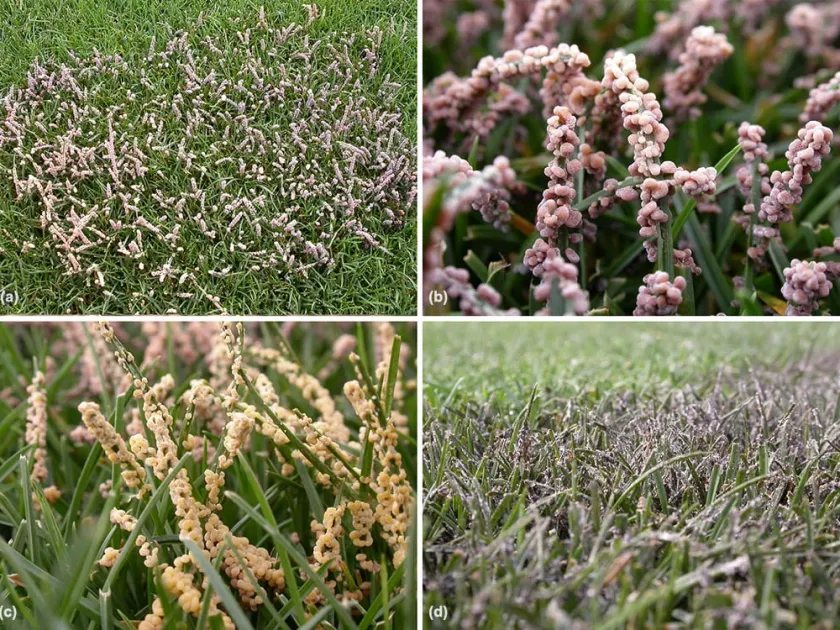
Description
Symptoms
The primary symptom is the presence of small, powdery, grayish or black cushions attached to the leaves, stems, or even lawn blades.
These fruiting bodies are structurally distinct, appearing as dense clusters that can be easily rubbed off the plant surface with minimal force.
When moist, the organism might present as a viscous, translucent mass, which progressively darkens and dries into a crusty, black powder over several days.
There is typically no initial yellowing or necrosis of the underlying plant tissue, as the organism remains localized on the surface layer.
Observant gardeners will notice these signs most prominently after prolonged rain or in areas where morning dew persists for a significant portion of the day.
Pathogen
Didymium melanospermum is a type of myxomycete, commonly known as a slime mold, which thrives in moist and shaded environments.
Unlike parasitic fungi, this organism acts as a saprotroph, feeding on bacteria, fungi, and decaying organic matter found on the surface of soil or plants.
The life cycle involves a motile plasmodium stage that eventually matures into sessile, black spore-bearing structures known as sporangia.
These sporangia do not invade plant tissues deeply; instead, they adhere to the exterior surfaces, using stems and leaves as physical scaffolds for reproduction.
Biological classification places this organism among species that are generally considered harmless but can cause nuisance and superficial damage under specific conditions.
Conditions for development
High humidity and poor air circulation are the fundamental drivers for the rapid development of Didymium melanospermum fruiting bodies.
Optimal environmental temperatures range from 15°C to 25°C, coinciding with seasonal weather patterns that keep plant surfaces wet for extended periods.
Dense vegetation or crowded planting beds restrict airflow, preventing the natural drying of leaves and fostering a climate suitable for slime mold growth.
Accumulation of organic mulch or decomposing plant debris on the soil surface provides a rich nutrient base for the plasmodium stage.
Over-irrigation, especially in the evening, creates an artificial environment where moisture remains trapped within the canopy, facilitating rapid colonization.
Why it matters
The main harm inflicted by this slime mold is the physical shading of leaves, which inhibits the plant's ability to perform photosynthesis effectively.
This suppression of vital biological processes can lead to stunted growth and loss of vigor, particularly in young seedlings or sensitive greenhouse crops.
The aesthetic degradation caused by the black, dusty coating is significant for ornamental plants and sports turf, leading to economic losses in landscape management.
Furthermore, the slime mold acts as a trap for debris and moisture, potentially creating a secondary infection site for more aggressive bacterial pathogens.
While rarely fatal, the persistent presence of the organism can weaken the plant, making it less resilient to subsequent environmental stresses.
Protection
The most effective strategy is the modification of the microclimate to ensure that foliage dries quickly after wetting events or watering.
Sanitation practices, such as removing fallen leaves and excessive mulch, are crucial to eliminating the organic base required for development.
Pruning or thinning overgrown plants will significantly improve air circulation, effectively reducing the chances of surface colonization by the slime mold.
In cases of heavy infestation, mild copper-based fungicides can act as a barrier to prevent the maturation and dispersal of the spores.
- Improve soil drainage.
- Avoid overhead watering in evenings.
- Prune lower plant foliage.
- Maintain proper plant spacing.
Discussion
No discussions yet — be the first.