
Didymella blight
Didymium
Description
Symptoms
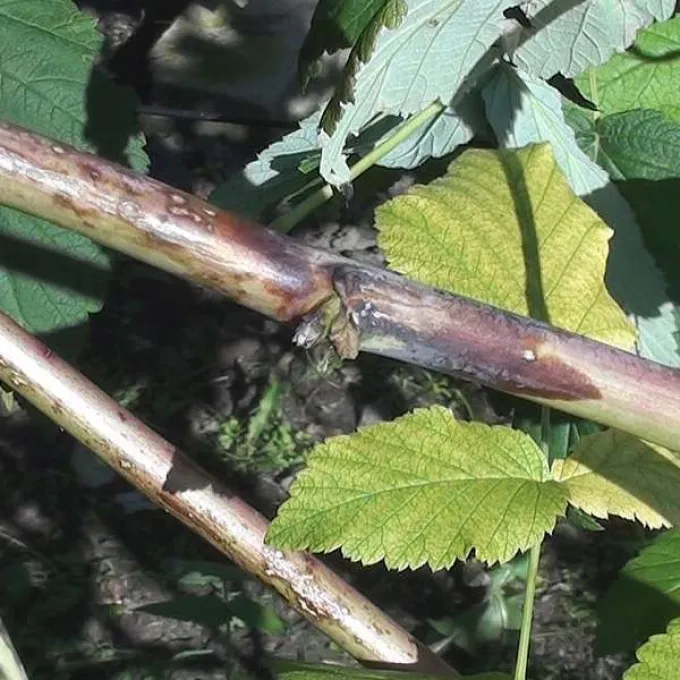
The earliest symptoms appear as small, violet or reddish-purple spots on the lower parts of young canes during the spring season.
As the infection progresses, these spots expand, often encircling the cane and leading to the development of necrotic, dark brown tissues.
Small, black, dot-like fruiting bodies (pycnidia) become visible within the infected lesions, which are a diagnostic sign of the pathogen.
The bark of the affected canes may crack and peel, causing the vascular tissue to dry out and the cane to become brittle.
Leaf infection manifests as dark brown lesions with yellow margins, leading to premature yellowing and leaf abscission during the summer.
Pathogen
The disease is caused by the fungus Didymella applanata, which primarily infects cane fruits and certain woody ornamentals.
The pathogen overwinters as mycelium and fruiting bodies (pseudothecia and pycnidia) on the infected canes of the host plant.
During spring, airborne and water-splashed spores are released, which act as the primary source of infection for new growth.
The fungus enters the plant tissue through natural openings, such as leaf axils, or via mechanical injuries caused by pruning or insects.
Once inside, the mycelium colonizes the cortical tissue, gradually expanding and causing physiological stress to the cane's vascular system.
Conditions for development
High humidity and moderate temperatures are the most critical factors favoring the germination and spread of Didymella spores.
Periods of frequent rainfall or heavy dew during the spring and early summer create optimal moisture levels for the infection to thrive.
Poor airflow within dense plant canopies keeps the foliage and stems wet for longer durations, facilitating pathogen colonization.
Over-fertilization with nitrogen promotes succulent growth, making the canes significantly more susceptible to fungal entry and establishment.
Shaded locations with limited sunlight prevent the drying of canes, effectively extending the window for the pathogen to infect tissues.
Why it matters
Didymella blight causes significant economic loss by killing flower buds and causing the death of entire fruit-bearing canes.
Affected plants exhibit reduced vigor, which makes them less competitive and more prone to secondary infections by other pathogens.
Severe infestations lead to a marked decrease in yield and lower quality of the harvested fruits due to stunted cane growth.
Plants weakened by the disease show poor winter hardiness and are more likely to die during extreme cold weather conditions.
Continuous infection cycles gradually deplete the plant's reserves, shortening the overall productive lifespan of the berry patch.
Protection
Strict sanitation practices, including the removal and burning of all infected canes after the harvest, are essential for control.
Selecting disease-resistant cultivars is the most effective long-term strategy for managing Didymella blight in commercial operations.
Proper pruning and thinning techniques improve air circulation and sunlight penetration, which helps keep the plant tissues dry.
Applications of copper-based or systemic fungicides during the early growth stages can provide a protective barrier against infection.
Maintaining a balanced fertility program helps the plants develop robust tissues, naturally increasing their resistance to fungal blight.
Discussion
No discussions yet — be the first.