
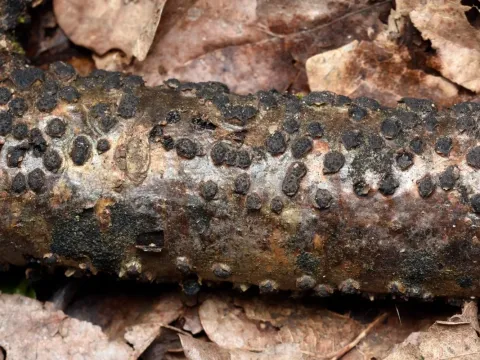
Diatrypaceous fungi
Diatrypales
Diatrypaceous fungi (order Diatrypales) are a group of ascomycetes commonly found on woody plants. They typically function as saprobes, but can transition to a pathogenic role when trees are stressed or weakened.
What the section contains
Diatrypaceous fungi
The disease is characterized by necrotic lesions in the bark and cambium layers. The pathogen enters the plant through wounds, pruning cuts, or natural cracks, disrupting the normal translocation of nutrients.
The mycelium develops within the bark tissue, eventually forming stromata. These stromata rupture the host's epidermis to produce perithecia, which are essential for the dispersal of fungal spores.
The lifecycle of Diatrypales is closely linked to the physiological state of the host. In many cases, these fungi are opportunistic, colonizing dead or dying branches that have been compromised by environmental factors.
As cosmopolitan organisms, they are widely distributed in forest ecosystems and orchards, where they participate in the biological process of wood decomposition and recycling of organic matter.
The primary symptom is the emergence of dense, black, warty or discoid structures known as stromata on the bark surface. These growths can vary in shape and are often clustered.
Infection zones typically exhibit drying, darkening, and cracking of the bark. Over time, the bark may peel away from the underlying wood, revealing the necrotic layer beneath.
Systemic progression of the fungus can cause the dieback of entire branches, often resulting in the sudden death of twigs or limbs due to the girdling effect of the necrosis.
- Development of black, hardened stromatic crusts.
- Vertical cracking and peeling of the bark.
- Localized limb dieback and wilting of foliage.
- Dark, necrotic lesions on the wood surface.
- Premature loss of branches on mature trees.
In wet weather, the surface of the stromata may display a subtle matte or whitish powdery appearance, indicating the active release of conidia or spores.
Environmental stress is the most critical driver of Diatrypales infections. Drought, temperature fluctuations, and physical wounding significantly increase a tree's susceptibility to these pathogens.
Optimal development occurs under high humidity and moderate temperatures, which favor spore germination and the establishment of mycelia in the host tissues.
Poor orchard hygiene, such as leaving pruning debris on the ground, creates a massive reservoir of inoculum that increases the risk of infection during the growing season.
Insects that bore into the bark often act as vectors, facilitating the entry of fungi into deeper tissues and spreading the spores throughout the plantation.
Overcrowded plantings and poor canopy aeration create a conducive microclimate for the fungi to thrive and move between healthy trees.
The main harm caused by these fungi is the gradual destruction of the tree's conductive vascular system, leading to overall plant decline and reduced photosynthetic capacity.
Orchards face significant economic losses due to the loss of bearing wood and the need for frequent, extensive corrective pruning, which stunts tree growth.
Structural integrity of the wood is compromised as the fungus breaks down the internal tissues, increasing the risk of mechanical failure and branch breakage during storms.
Chronic infections weaken the tree over many years, making it susceptible to secondary pest attacks and potentially shortening its lifespan significantly.
In ornamental settings, the presence of black necrotic patches and dead branches detracts from the aesthetic value of the trees and necessitates expensive restorative care.
Effective management begins with maintaining high levels of tree vigor through proper irrigation, fertilization, and site management to prevent physiological stress.
Sanitation is paramount; all infected, necrotic, or dead branches should be pruned out immediately and disposed of by burning or deep burial to eliminate the inoculum source.
Pruning tools must be sterilized regularly to prevent the mechanical transmission of fungal spores from diseased trees to healthy ones.
Applying copper-based fungicides to pruning wounds can provide a necessary chemical barrier against spore entry. Preventive sprays are also recommended during periods of high humidity.
Routine scouting and monitoring of the orchard enable the early detection of necrotic symptoms, allowing for timely intervention and better preservation of the canopy structure.