
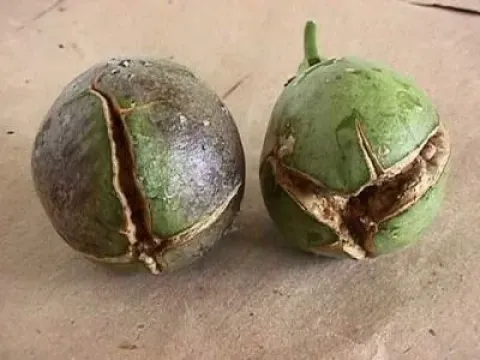
Passion fruit woodiness disease
Cowpea aphid-borne
The causal agent of this disease is the Passion fruit woodiness virus (PWV), which belongs to the Potyvirus genus. It is a non-persistent virus, meaning it can be transmitted by vectors within seconds or minutes of probing or feeding on a host plant.
What the section contains
Passion fruit woodiness disease
The primary vectors responsible for the spread of PWV are various aphid species, most notably the cowpea aphid (Aphis craccivora). These insects acquire the virus while feeding on infected vines and transmit it rapidly to healthy ones during subsequent feeding sessions.
Transmission can also occur through mechanical means, such as the use of contaminated pruning tools. If tools are not disinfected between plants, the virus can be easily spread through the sap during routine maintenance and harvesting operations.
Once inside the plant tissues, the virus travels through the phloem to all parts of the vine. It integrates into the plant's system, causing long-term physiological changes that interfere with fruit development and general plant health.
Because there is no cure for viral infections in plants, the biology of the disease focuses on preventing the virus from establishing itself in the vineyard by managing vectors and using certified clean materials.
Early symptoms typically appear on the leaves as mosaic patterns, chlorotic spots, or mottling. The leaves may become deformed, wrinkled, or show signs of curling, which are classic indicators of viral stress.
The most distinctive sign, which gives the disease its name, is the effect on the fruit. Infected passion fruits develop a hardened, woody, and thick rind, often losing their smooth surface and becoming distorted and stunted.
Inside the fruit, the pulp may be underdeveloped, and the amount of juice is drastically reduced. The seeds may also fail to mature properly, rendering the fruit commercially worthless and unfit for consumption.
The overall growth of the vine is negatively impacted, with shortened internodes and stunted tip growth. Flower production decreases, and the plant often struggles to maintain its normal cycle of fruit set and development.
In some instances, the virus may remain latent, showing few visible signs on the foliage while still affecting the quality of the fruits. This makes consistent field scouting critical for early detection and mitigation of the virus.
The disease spreads most rapidly under warm weather conditions that favor the rapid reproduction and migration of aphid populations. Higher vector activity directly correlates with increased rates of transmission across the field.
Dense planting configurations create favorable conditions for the quick movement of aphids from one vine to another. When plants are crowded, the virus can spread throughout an entire block in a very short period.
Nearby weeds or alternative host plants can act as reservoirs for the virus. These reservoirs allow the virus to persist in the environment even when no commercial passion fruit plants are present in the immediate vicinity.
Environmental stress, such as poor water management or nutrient deficiencies, can weaken the vines. A stressed plant is generally more susceptible to viral impact and may show more severe symptoms compared to a well-tended, healthy plant.
Routine cultural practices, such as pruning or training during peak insect activity periods, can inadvertently facilitate the rapid spread of the virus across the plantation if sanitary measures are ignored.
The primary economic harm is the total loss of marketable yield. Hardened, woody fruits cannot be sold or processed, resulting in significant revenue losses for farmers who rely on high-quality fruit production.
Long-term infection leads to the exhaustion of plant reserves, resulting in reduced vine longevity. Farmers are often forced to remove and replant infected areas, which incurs high operational costs and loss of production time.
The quality of the juice is significantly degraded, as the virus disrupts the metabolic pathways of the plant. This leads to imbalanced sugar and acid levels, making the fruit unacceptable for the processing industry.
The infected vineyard becomes a source of inoculum for neighboring fields. This necessitates strict containment measures to prevent the disease from spreading to healthy surrounding areas, creating an ongoing management burden.
The disease limits the potential for sustainable passion fruit production, especially in regions where aphid control is difficult due to environmental regulations or lack of effective management strategies.
The most effective strategy is the management of aphid populations. Regular application of targeted insecticides during periods of peak insect migration is essential to reduce the transmission rate of the virus.
It is vital to use only certified, virus-free planting stock. Starting with clean material derived from tissue culture or reliable nursery sources is the foundation of preventing viral outbreaks in new plantings.
Rigorous sanitation of tools is required. Disinfecting pruning shears and harvesting equipment with appropriate solutions after contact with each plant prevents mechanical transmission of the virus.
Field monitoring and rapid roguing are crucial. If infected plants are identified, they should be immediately removed from the field and destroyed to prevent them from serving as a source of the virus for healthy vines.
Maintaining a clean field environment by removing weeds and ensuring the optimal health of the vines through proper nutrition and irrigation can help the plants tolerate environmental stress and minimize the visibility of viral symptoms.