
Patellaria black fungus
Patellaria atrata
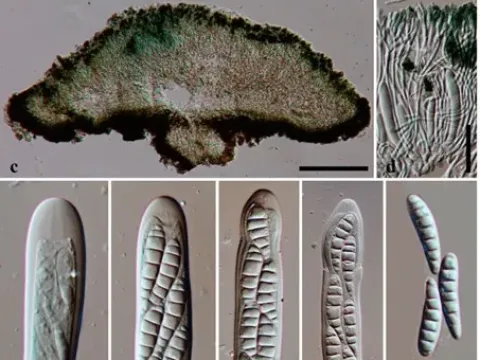
The causative agent of this disease is the fungus Patellaria atrata, which belongs to the class of Ascomycetes. It is primarily considered a saprotrophic organism that can become pathogenic on weakened plant tissues.
What the section contains
Patellaria black fungus
The fungus produces small, black, saucer-shaped fruiting bodies known as apothecia. These structures develop on the bark of infected branches, where they aggregate in groups.
The mycelium of the fungus penetrates the bark layers, eventually reaching the cambium. This action compromises the tree's ability to transport nutrients and water throughout its vascular system.
Spore production occurs within the apothecia, allowing for the widespread dissemination of the fungus. Rain and wind serve as the primary carriers, spreading spores to healthy plant parts.
While often found on decaying wood, it frequently colonizes stressed or damaged ornamental and forest trees. Its biology is centered on exploiting gaps in the host's natural defenses.
The most visible symptom is the appearance of tiny, black, disc-like fruiting bodies on the bark. These spots often stand out against the lighter color of healthy bark.
The bark surrounding the infection sites may show signs of cracking, peeling, or discoloration. On older wood, the bark may become brittle and eventually fall off entirely.
The tree may exhibit general signs of decline, including thinning canopy and leaf chlorosis. If the main branch is girdled by the fungus, that section will typically die back.
Darkened, necrotic patches on the wood surface, visible upon closer inspection, indicate where the fungus has successfully established its mycelial network.
During wet weather, the fruiting bodies may swell and become more prominent, revealing the extent of the infestation on the bark surface.
High relative humidity is the primary catalyst for the development and spread of Patellaria atrata. Prolonged rainfall or mist facilitates active spore release and germination.
Poor aeration in the canopy, often due to improper planting density or lack of pruning, creates a stagnant environment favorable for fungal growth.
Temperatures ranging from +15°C to +25°C provide the thermal environment needed for optimal fungal development. In these conditions, the pathogen grows significantly faster.
Mechanical damage to the tree, such as wounds from pruning or storm damage, provides easy entry points for the fungal spores to colonize the host's tissues.
Plants that are physiologically stressed due to nutrient deficiencies, drought, or extreme cold are much more susceptible to colonization by this opportunistic fungus.
The primary damage is the disruption of the vascular cambium, which hinders the normal growth and nutrient distribution of the tree. This often leads to the death of affected branches.
The aesthetic value of trees is severely degraded, making the disease a concern for nursery growers and landscapers. Infected specimens often lose their vigor and decorative appeal.
Chronic infestation weakens the structural integrity of branches, making them more prone to secondary infections by more aggressive pathogens or wood-boring insects.
If left unmanaged, the fungus can spread across the entire canopy, leading to the gradual decline and eventual death of the entire tree over several growing seasons.
In nursery settings, the presence of this fungus necessitates strict culling of plants, leading to financial losses and wasted resources invested in tree care.
Sanitation is the most effective management approach. All infected branches must be pruned back to healthy wood and removed from the site to prevent further spore dispersal.
Pruning should always be performed during dry weather to minimize the risk of new infections. All pruning tools should be sterilized after every cut to avoid cross-contamination.
Improving air circulation through proper spacing and thinning of the canopy helps keep the bark surface dry, making it less hospitable to fungal growth.
Applying copper-based fungicides can act as a protectant, particularly on young or recovering trees, though this should be combined with proper cultural practices for best results.
- Seal large pruning wounds to prevent moisture entry.
- Maintain optimal tree health through regular irrigation and fertilization.
- Monitor trees regularly, especially after periods of high humidity.