
Patterson's rust
Puccinia pattersoniana
Description
Symptoms
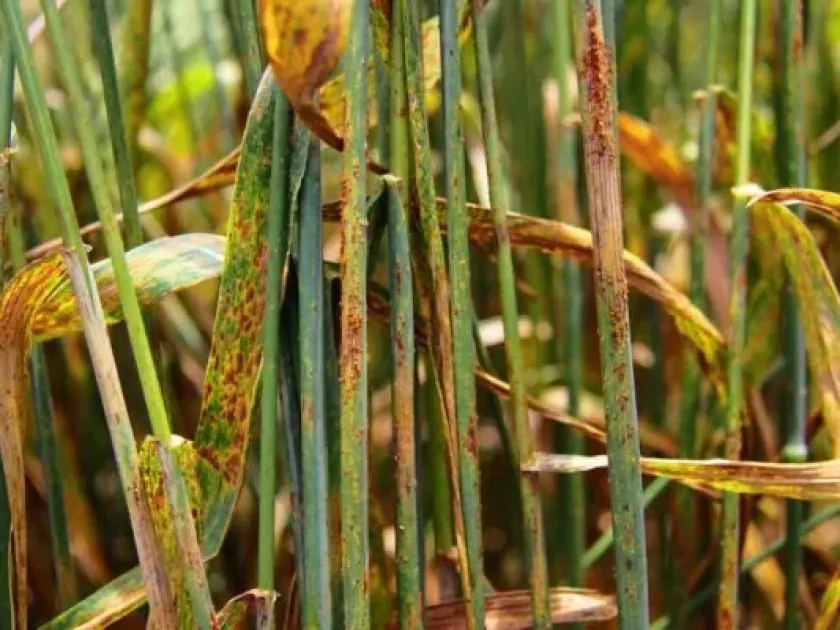
The first clinical signs of infection appear as small, chlorotic spots on the leaves. Over time, these develop into characteristic pustules (uredinia) that break through the epidermis, releasing mass quantities of rusty-brown spores.
As the disease progresses, these pustules may coalesce into elongated stripes. The surrounding tissue eventually loses its green color, dries out, and turns brittle, which directly impairs the plant's photosynthetic efficiency.
Severe infestations result in extensive yellowing, leaf necrosis, and premature defoliation. The stems may also be affected, leading to poor nutrient transport and overall stunting of the plant's development.
On intermediate hosts, the fungus often manifests in its aecial stage, causing visible deformation and swelling of shoots. These symptoms are typically observed in the spring during the primary infection phase.
- Rusty-colored powdery pustules on leaf surfaces.
- Premature drying and browning of the foliage.
- Deformation and reduced vigor of the plant canopy.
Pathogen
The causative agent of this disease is the highly specialized fungus Puccinia pattersoniana, which belongs to the Basidiomycota phylum. This fungus is an obligate parasite, meaning it can only survive and complete its life cycle within the living tissues of its host plant.
The pathogen utilizes a complex life cycle, which frequently involves an alternation between different host species. Spores are disseminated via wind currents, allowing the disease to spread rapidly across large agricultural areas during favorable weather conditions.
The fungus produces various types of spores throughout its cycle, enabling it to adapt to changing environments and endure off-season periods on perennial grasses or crop debris.
Primary hosts for this rust are typically wild grasses, including species within the Agropyron and Elymus genera. The fungus penetrates the leaf epidermis to derive nutrients, significantly weakening the host plant's physiological status.
The genetic diversity of this pathogen poses a persistent challenge for plant breeders, as the fungus is capable of evolving new virulent races, overcoming the resistance of previously stable crop varieties.
Conditions for development
Patterson's rust development is heavily influenced by humidity levels. High ambient humidity, morning dew, and frequent fogs create an optimal environment for the germination of spores on the surface of host leaves.
Temperatures ranging from +15°C to +22°C are considered ideal for the rapid spread of the pathogen. Deviations from these ranges can significantly inhibit or slow down the infection rate within the field.
High planting density contributes to the disease by reducing airflow within the crop canopy, thus maintaining a stable, humid microclimate that favors fungal colonization and spore proliferation.
The presence of wild alternate hosts in close proximity to cultivated fields acts as a reservoir for the pathogen. Eliminating these reservoirs is crucial for preventing early-season outbreaks of the rust.
Nutritional imbalances, particularly deficiencies in potassium or excess nitrogen, can weaken the plant's natural defense mechanisms, making it more susceptible to penetration by fungal hyphae.
Why it matters
The primary economic harm stems from significant yield losses due to decreased photosynthetic surface area. This results in poor grain filling, which reduces both the thousand-grain weight and overall yield per hectare.
Grain quality is negatively impacted, often becoming shriveled and having lower test weights. This lowers the commercial grade of the harvest and causes direct financial losses for the producer.
Infected plants exhibit increased vulnerability to secondary infections and environmental stressors like drought. The combined impact of these factors can significantly compromise crop resilience and final productivity.
The necessity for frequent fungicide applications to control the disease increases production costs. Without proper management, the infection can recur annually, creating a sustained economic burden on the farm.
Additionally, the nutritional quality of forage and straw is reduced in severely affected crops, making them less valuable for livestock feeding purposes and limiting their secondary utility.
Protection
Effective management begins with strict field hygiene, including the removal of weeds and wild grasses that serve as alternative hosts. Maintaining clean field borders is essential to reduce the primary inoculum load.
Systemic fungicides are recommended when early symptoms are detected. Proper timing of application ensures the chemical reaches the target tissue, effectively halting fungal development before widespread damage occurs.
The deployment of disease-resistant varieties is the most sustainable long-term strategy. Ongoing breeding efforts focus on identifying and incorporating resistance genes to combat the evolving nature of the pathogen.
Crop rotation and spatial isolation from previously infected fields serve as critical tactical measures to disrupt the disease cycle and limit the ability of the pathogen to establish itself in new areas.
Optimal planting dates and balanced soil fertility practices help crops reach maturity more quickly, allowing them to bypass the most vulnerable developmental stages during peak spore dispersal periods.
Discussion
No discussions yet — be the first.