
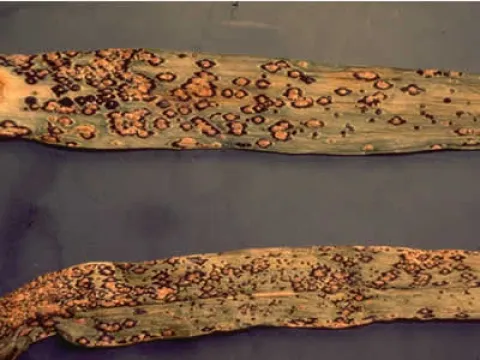
Foxtail rust
Uromyces setariae-italicae
The causal agent of this disease is the fungus Uromyces setariae-italicae. It is an obligate parasite belonging to the order Pucciniales (rust fungi), known for its high specificity towards host plants.
What the section contains
Foxtail rust
The life cycle of the pathogen is complex, involving the production of urediniospores and teliospores. These spores are designed for both rapid spread during the growing season and survival through unfavorable conditions.
The fungus penetrates the plant tissues through stomata and develops an extensive mycelial network within the intercellular spaces of leaves and stems, extracting essential nutrients.
The spread of the fungus is primarily driven by wind currents, which carry the spores over vast distances. This allows the pathogen to establish new infection sites throughout the agricultural landscape.
Biological studies indicate that this pathogen primarily targets the Setaria genus, including foxtail millet and various grassy weeds that act as alternate or primary hosts for the fungus.
The most visible sign of foxtail rust is the presence of small, rust-colored pustules, known as uredinia, appearing on the leaves and leaf sheaths of the infected plants.
As the disease progresses, these pustules rupture the plant epidermis, releasing a cloud of orange-brown urediniospores. This dusting effect is a classic characteristic of rust diseases.
Severely infected plants exhibit yellowing and chlorosis, followed by premature drying and necrosis of leaf tissue. This significantly impairs the plant's ability to maintain normal physiological function.
In later stages of the season, dark telia may develop at the site of infection. These are often darker and more compact than the earlier uredinia, marking the transition of the pathogen into its dormant stage.
- Rust-colored spots on the foliage.
- Epidermal rupture on leaves and stalks.
- Reduced vigor and stunted plant growth.
- Premature leaf senescence and death.
Foxtail rust thrives under conditions of high relative humidity and mild temperatures. Frequent rain, heavy dew, or prolonged periods of fog are critical for successful spore germination.
The optimal temperature range for the pathogen's development is between +18°C and +25°C. Within these temperatures, the cycle from infection to spore production is significantly accelerated.
Dense crop stands create a favorable microclimate by restricting airflow and increasing moisture retention, which facilitates the rapid proliferation of the fungal pathogen within a field.
Excessive nitrogen application can also exacerbate the severity of the disease by promoting succulent growth that is more susceptible to fungal penetration.
Surrounding areas with untreated wild grasses serve as an ongoing reservoir for the pathogen, constantly introducing inoculum into the crop fields throughout the summer.
The economic impact of foxtail rust is primarily observed through a decrease in grain yield. By damaging leaves, the fungus reduces the plant's photosynthetic capacity, leading to lighter, poorly filled grains.
In fodder crops, the disease reduces the biomass quality and nutritional value of the harvested material, negatively impacting livestock feed performance.
Chronic infections weaken the overall health of the plant, making it more susceptible to environmental stress, such as drought, as well as secondary infestations by pests or other diseases.
Significant yield losses can occur in susceptible varieties, especially if infection occurs early in the growing season, potentially leading to total loss of commercial quality in extreme cases.
The reduction in green leaf area directly limits the plant's capability to accumulate energy for grain maturation, directly affecting the final harvest weight.
Integrated disease management is essential. Crop rotation is a primary cultural practice, as it breaks the lifecycle of the pathogen by removing the host plants necessary for its survival.
Sanitation practices, including the destruction of weeds (especially Setaria species) and the incorporation of crop debris into the soil, are highly effective in reducing initial inoculum levels.
Fungicide applications are recommended when symptoms are detected early. Utilizing systemic fungicides can provide effective protection during the most vulnerable stages of plant development.
Selecting and planting resistant or tolerant cultivars remains the most sustainable approach to preventing damage caused by foxtail rust in agricultural systems.
Regular monitoring of fields is crucial for the timely identification of outbreaks, allowing for a swift and targeted response to minimize potential losses in productivity.