
Fragile brittlegill
Russula fragilis
Description
Symptoms
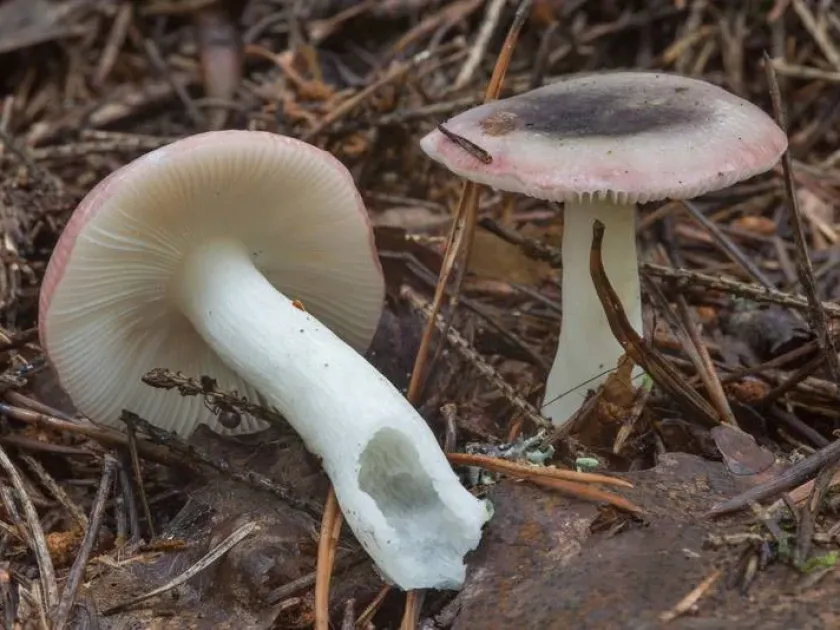
The primary diagnostic sign is the appearance of small, delicate fruit bodies. The cap often exhibits a depressed center and a noticeably tuberculate-striate margin as it matures.
The gills underneath the cap are white, thin, and remarkably brittle, which is the most prominent identifying feature of this species. They break easily when touched or handled.
The stem is fragile, often hollow, and lacks the structural density found in other edible mushroom species. This fragility makes the fungus difficult to collect intact.
Cap color can range widely, including shades of violet, purple, green, and yellow. Often, the center of the cap fades to a paler or yellowish tint while the edges remain darker.
A distinctive fruity scent, often compared to the smell of apples, serves as a helpful sign for mycological identification. This separates it from other non-fragrant members of the genus.
Pathogen
The fragile brittlegill, scientifically known as Russula fragilis, is a basidiomycete fungus belonging to the Russulaceae family. In agronomic contexts, this object is not considered a plant disease as it does not infect or cause pathology in crops.
This organism functions as a saprotroph and mycorrhizal partner in forest ecosystems. It interacts with the root systems of trees to facilitate nutrient exchange, which is a vital natural biological process.
The fungus is characterized by a fragile structure, particularly in the cap and stem. Its taxonomy is defined by specific microscopic features of the spores and the color variability of its fruit bodies.
Russula fragilis mycelium spreads through forest soil and leaf litter. It remains strictly confined to natural forest environments and is not a pest or a pathogen that affects arable fields or greenhouses.
From a culinary and agricultural perspective, the fungus is considered inedible due to its very acrid and spicy taste. It does not threaten crop health or require any protective measures from farmers.
Conditions for development
The fungus requires high humidity and significant moisture in the forest litter to support the development of its fruit bodies. It thrives in shaded environments away from direct sunlight.
Optimal development occurs during late summer and autumn when rainfall is abundant. Sudden temperature fluctuations can inhibit the growth of the fungal reproductive parts.
Russula fragilis favors acidic soils in coniferous and deciduous forests. The presence of symbiotic tree hosts is essential for the persistence of its mycelium in the habitat.
Spore dispersal is facilitated by wind, enabling the colonization of new patches of suitable substrate. The fungus relies on a stable microclimate to maintain its population density.
Presence of organic debris and decomposing wood provides the necessary environment for the mycelium to survive. It is strictly tied to woodland ecosystems and does not emerge in agricultural fields.
Discussion
No discussions yet — be the first.