
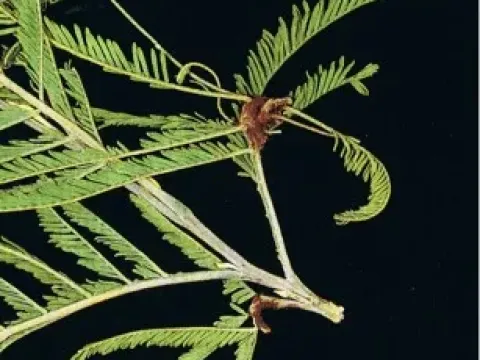
Acacia rust
Uromyces laburni
The disease is caused by the fungus Uromyces laburni, an obligate parasite that specifically targets plants within the Fabaceae family.
What the section contains
Acacia rust
It belongs to the order Pucciniales and completes its life cycle by forming various types of spores that allow for survival and spread.
The pathogen utilizes the host plant's internal resources to develop its mycelium, which eventually emerges as fruiting bodies.
Because it is a host-specific fungus, its prevalence is directly linked to the distribution of its primary plant hosts in a given area.
The fungus is highly efficient at dispersing its spores through wind and splashing rain, ensuring rapid colonisation of susceptible plants.
The most distinctive symptom is the appearance of small, bright yellow or orange pustules on the leaves and sometimes on young stems.
These pustules eventually rupture the plant's epidermis, releasing masses of powdery spores that cover the infected surface.
As the season progresses, the pustules may turn darker as the fungus produces teliospores, marking the transition to the next phase.
Leaves affected by the rust often show chlorosis, curling, and eventually necrosis before falling off prematurely.
Severe infestations lead to stunted shoot growth and an overall decline in the visual health and vitality of the tree or shrub.
Acacia rust thrives in environments characterized by high humidity, prolonged dampness on foliage, and moderate temperatures.
The spores require film water or high relative humidity to successfully germinate and penetrate the host plant's tissue.
Poor ventilation within the plant canopy significantly increases the risk of infection by preventing leaves from drying quickly after rain.
Warm spring and summer weather combined with regular precipitation patterns create the most favorable window for disease development.
Shaded locations or densely planted areas often exhibit higher levels of infection due to the accumulation of moisture.
The primary impact of this disease is the reduction of the leaf surface area available for photosynthesis, which stunts plant growth.
Premature defoliation weakens the plant's immune system, making it more susceptible to environmental stressors like frost and drought.
In ornamental settings, the disfiguration caused by the rust spots significantly lowers the aesthetic value of the affected acacia species.
Weakened plants show a decrease in flowering and long-term vitality, potentially leading to branch dieback over several growing seasons.
Constant re-infection can result in severe decline, forcing the removal of the affected plants if the disease remains uncontrolled.
The first line of defense is rigorous sanitation, which involves collecting and destroying all fallen leaves at the end of the season.
Pruning out heavily infected branches helps reduce the initial inoculum level within the immediate vicinity of the plants.
Fungicide applications, particularly those containing copper or systemic triazoles, are effective when applied at the first signs of symptoms.
Proper spacing and site selection are essential to ensure adequate airflow, which keeps the foliage dry and inhibits fungal growth.
- Apply preventative fungicides during wet spring weather.
- Avoid overhead irrigation that keeps leaves wet for long periods.
- Monitor plants regularly for early detection and immediate action.