
Acacia gall rust
Uromycladium tepperianum
Description
Symptoms
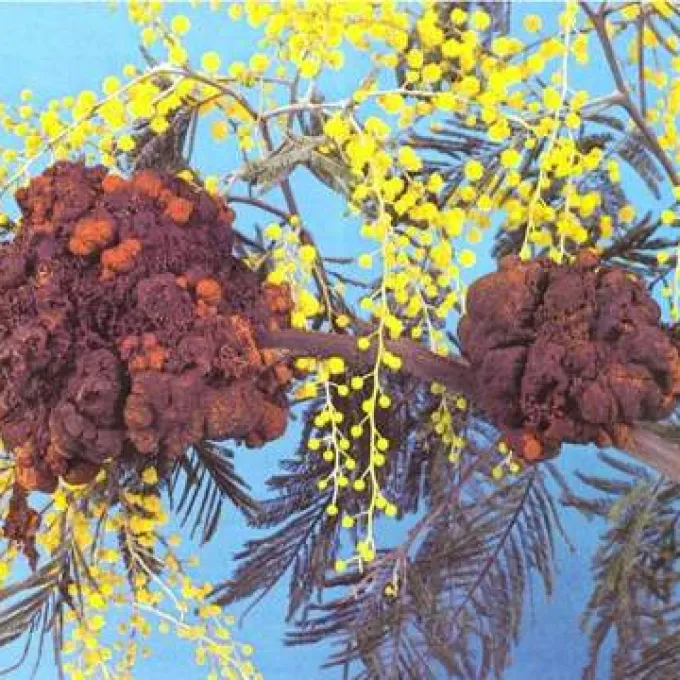
The most prominent sign of infestation is the formation of conspicuous galls, which are tumor-like growths that can develop on twigs, branches, and inflorescences.
Initially, these galls are firm and greenish, but as the fungus matures and begins sporulation, they become dark brown, soft, and covered with a powdery mass of spores that can be easily dislodged by wind or rain.
Affected branches often show signs of deformation and bending. In many cases, the heavy weight of the galls causes branches to break under moderate stress or wind pressure.
Flowering parts of the plant are severely impacted, with inflorescences becoming completely distorted and failing to produce viable seeds or pods, which severely limits the tree's reproductive potential.
Systemic infection leads to a gradual decline of the plant, characterized by foliage loss, stunted growth, and in severe cases, the death of the entire tree.
Pathogen
The causative agent of this disease is the highly specialized basidiomycete fungus Uromycladium tepperianum. This fungus belongs to the order Pucciniales and is known for its ability to induce significant morphological changes in its host plants.
The pathogen specifically infects various species of the Acacia genus. It triggers the host plant to redirect nutrients and growth hormones, resulting in the development of characteristic woody or spongy galls at the site of infection.
The fungus completes its life cycle within the galls, where it produces various types of spores. These spores are released into the environment, allowing the pathogen to spread effectively between branches and neighboring host trees.
Uromycladium tepperianum is considered an obligate parasite, meaning it relies entirely on the living tissues of the acacia tree to survive and propagate its spores.
Unlike many other rust fungi that primarily affect leaves, this pathogen targets a wide array of plant tissues, making its management significantly more complex in diverse climatic conditions.
Conditions for development
The development of Acacia gall rust is heavily dependent on moisture. High relative humidity and prolonged periods of wetness on the surface of the plant are essential for spore germination and infection.
The disease spreads most rapidly during periods of high precipitation and dew formation. These conditions allow the spores to penetrate the plant tissues successfully.
Wind is the primary vector for the dissemination of spores. In densely planted areas where airflow is restricted, the risk of cross-infection among trees is significantly increased.
While the pathogen can survive in various climates, it thrives in environments that provide consistent moisture and moderate temperatures, often leading to seasonal outbreaks.
Proper spacing and management of site conditions play a crucial role in preventing the establishment of the fungus in healthy acacia stands.
Why it matters
Acacia gall rust causes significant physiological stress to the host tree, diverting energy that would otherwise be used for growth and defense against other stressors.
In forestry and urban landscaping, the primary impact is the loss of aesthetic value, as the galls are unsightly and the tree architecture becomes severely damaged.
The reproductive failure caused by the infection of flower buds has long-term implications for the natural regeneration and seed bank dynamics of affected acacia populations.
Weakened trees become more susceptible to secondary infections by other fungi and colonization by wood-boring insects, further accelerating the decline of the individual plant.
- Reduced biomass production and annual wood growth.
- Structural instability and limb breakage.
- Total loss of seed production.
- Increased risk of secondary pathogen colonization.
Protection
Sanitation is the most effective management tool. Regularly inspect acacia trees and prune any branches bearing visible galls, ensuring that the removed material is disposed of by burning.
Ensure adequate spacing between trees to improve air circulation, which helps keep the canopy dry and reduces the chances of spore germination.
In nursery settings, systemic fungicides may be used as a preventative measure, though timing and coverage are critical to achieving effective disease suppression.
Selection of resistant or less susceptible acacia species is the most sustainable approach, especially in regions where the fungus is known to be endemic.
Avoid the movement of infected plant material to new areas to prevent the introduction and spread of the pathogen, which is a major concern in global biosecurity.
Discussion
No discussions yet — be the first.