
Abortiporus biennis
Abortiporus biennis
Description
Symptoms
Infection often goes unnoticed in its early stages. Initial signs include reduced leaf size, chlorosis (yellowing of foliage), and thinning of the tree crown, which may be mistaken for abiotic stress factors.
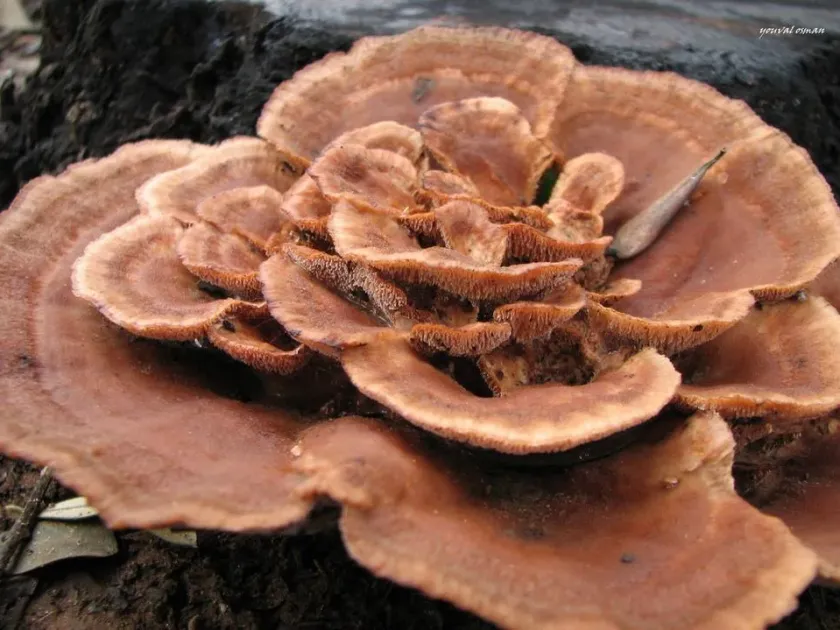
The most reliable field sign is the appearance of fan-shaped, rosettes of fruiting bodies at the base of the trunk or from exposed roots. They often display a distinct brownish or ochre color with a porous underside.
Upon removing a section of bark near the base, a white, mycelial mat can often be observed. The underlying wood typically shows clear signs of white rot: a bleached, fibrous, and softened texture compared to healthy wood.
As the decay progresses, the tree may show signs of structural instability, such as cracks or exudates along the trunk base. A hollow sound when striking the butt of the tree is a strong indicator of advanced internal decay.
- Premature loss of leaves or thinning canopy.
- Presence of characteristic fungal rosettes at the ground level.
- Visible white mycelium under the bark near the roots.
- Increased risk of windthrow due to root system degradation.
Pathogen
The fungus Abortiporus biennis is a wood-decaying pathogen belonging to the order Polyporales. It is known to cause white rot in both living trees and woody debris, acting as a facultative parasite.
The pathogen primarily colonizes the root system and the butt of the trunk. It enters through mechanical wounds or exposed root surfaces, where the mycelium begins to degrade the cellulose and lignin components of the wood.
Unlike many other fungi, this species can produce both annual and perennial fruiting bodies, which are typically found near the base of infected trees. These structures are essential for the production and dispersal of basidiospores.
The mycelium network spreads aggressively within the xylem, disrupting the tree's internal transport system. This progressive breakdown weakens the structural integrity of the wood, leading to long-term decline.
It is capable of persisting in the soil and on decaying wood for several years. This survival capacity makes it a challenging pathogen to manage, as it can easily reinfect replanted areas if the previous inoculum is not removed.
Conditions for development
Abortiporus biennis thrives in moist environments, particularly in areas with poor drainage. High soil moisture levels significantly accelerate the growth of the fungus and the spread of its mycelium.
Mechanical injuries represent the primary entry point for the pathogen. Damage caused by lawn mowers, trimmers, or construction work on roots provides the perfect conditions for the fungus to establish itself.
Optimal growth occurs during warm seasons, specifically when temperatures range between 20°C and 25°C. During these times, the fungus is metabolically active and capable of colonizing wood at a rapid rate.
Periods of heavy and prolonged rainfall stimulate the formation of fruiting bodies. This cycle leads to massive spore release, significantly increasing the probability of new infections within the vicinity.
Trees that are already stressed—due to drought, nutrient deficiency, or prior pest damage—are much more susceptible to colonization compared to healthy, vigorous specimens which may be able to contain the infection.
Why it matters
The primary harm caused by this fungus is the destruction of the water and nutrient transport tissues. This results in hydraulic failure, causing branches to die back and eventually killing the entire tree.
The structural degradation of the roots and the trunk base poses a serious safety risk. Heavily infected trees may fall unexpectedly during windy conditions, potentially damaging property and endangering people.
In orchards, the disease causes significant economic loss by reducing fruit production and overall quality. The host plant directs its energy toward defense rather than yield, leading to reduced vigor.
Infection can spread to adjacent trees via root-to-root contact. This ability to create infection patches makes it a serious threat in nurseries, parks, and dense plantations where root systems intertwine.
Mitigation efforts are costly and often only successful if started early. Frequently, the only solution for heavily infected trees is total removal, which represents a complete loss of the individual plant.
Protection
Proactive cultural management is the best defense. This includes avoiding damage to the trunk and root zone and ensuring proper sanitation after any necessary pruning or maintenance work.
If an infected tree is identified, an assessment of the damage is required. If the rot is extensive and affecting the structural integrity of the tree, complete removal—including the root ball—is recommended.
Following the removal of a diseased tree, the site should be cleared of all woody debris, as the fungus can persist in stumps and roots. Burning or deeply burying the wood is necessary to eliminate the inoculum.
Improving soil drainage around trees is critical for creating an environment unfavorable to the fungus. Preventing water stagnation helps the tree's root system remain healthy and resistant to pathogens.
Regular inspections and the use of biostimulants to improve tree vitality can help mitigate the risks. Early detection allows for the implementation of containment measures before the fungus spreads to surrounding vegetation.
Discussion
No discussions yet — be the first.