
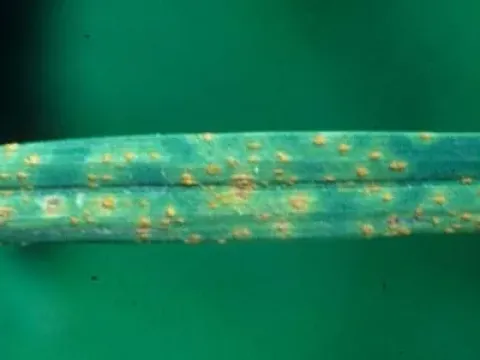
Orchard grass rust
Uromyces dactylidis
The disease is caused by the fungus Uromyces dactylidis Otth. This obligate parasite specifically targets Dactylis glomerata (orchard grass) and related species, often requiring alternate hosts to complete its complex biological cycle.
What the section contains
Orchard grass rust
The fungus produces various types of spores, including urediniospores, which are responsible for rapid secondary infection cycles during the growing season. It thrives by colonizing the intercellular spaces of leaves and stems, extracting essential nutrients.
The pathogen can survive the winter as teliospores on dead plant matter or as mycelium in living tissues of perennial grasses. This enables it to persist in fields and re-emerge whenever favorable environmental conditions return.
Effective dispersal is achieved through wind and rain splashes, which carry spores across fields. The ability of the fungus to produce multiple generations of spores within a single season makes it a highly potent threat in susceptible stands.
Understanding the life cycle of Uromyces dactylidis is essential for developing timely disease management strategies in both pasture and seed production settings.
Initial symptoms include small, pale yellow spots on the leaf surface. As the infection progresses, these spots develop into eruptive pustules (uredinia) that break through the epidermis, releasing masses of orange-yellow spores.
Infected leaves rapidly lose their vigor, turning yellow and eventually drying out completely. If the infection is severe, the entire leaf surface may become covered with pustules, leading to significant chlorosis and tissue necrosis.
Towards the end of the season, the fungus produces dark-colored teliospores. These appear as raised, brown to black streaks on the leaf tissue, marking the transition to the dormant phase of the fungal lifecycle.
Plants affected by orchard grass rust appear stunted and show decreased growth rates compared to healthy neighbors. The overall density of the stand may decrease as heavily infected plants fail to thrive or die off prematurely.
The visual presence of the "rust" dust on the foliage is the most reliable indicator, which can easily be identified by brushing a leaf against dark fabric or clothing.
High humidity and prolonged leaf wetness are the primary drivers of rust development. Periods of frequent rainfall, heavy morning dew, or consistent fog significantly increase the infection rate.
The optimal temperature range for the germination of fungal spores is between +15°C and +22°C. Within these parameters, the incubation time is minimized, allowing the disease to spread rapidly through the field.
Poor airflow, often caused by dense, lush growth in nitrogen-rich stands, creates a stagnant, humid microclimate. This environment is highly conducive to spore production and the colonization of new tissue.
Nutritional imbalances, particularly a deficiency in potassium, can weaken the plant's cell walls, making it easier for fungal hyphae to penetrate and establish infection.
Strong winds are a critical factor in the wider spread of the disease, moving spores from infested pastures to clean fields, sometimes over very long distances.
Orchard grass rust causes significant reductions in dry matter yield, negatively impacting the productivity of forage systems. Infected foliage is less nutritious and less palatable to livestock.
The loss of photosynthetic area severely weakens the plant, reducing its ability to store carbohydrates. This diminishes the plant’s regrowth potential and long-term survival in perennial meadows.
In seed production fields, the impact is even more severe, as the disease can drastically reduce both the volume and the viability of the harvested seed.
Feeding value is compromised due to lower protein and energy content in rusted hay. This can lead to decreased animal weight gain or milk production in grazing animals that consume infected grasses.
The recurring nature of the disease requires producers to invest in ongoing monitoring and potential chemical controls, increasing the total cost of production per hectare.
The use of resistant cultivars is the most effective and sustainable method to manage orchard grass rust. Breeding programs focus on genetic resistance to reduce the need for fungicides.
Proper field management, such as maintaining optimal plant density, improves airflow and reduces humidity, which helps keep the canopy drier and less prone to infection.
Timely harvesting or mowing the grass can remove the bulk of the inoculum, interrupting the fungal cycle. Ensuring that plant debris is managed effectively is also a key preventive measure.
When environmental conditions favor an epidemic, systemic fungicides can be applied to protect the crop. It is important to follow local regulations and ensure application timing coincides with early disease detection.
Balanced fertilization, particularly ensuring adequate potassium levels, helps maintain structural integrity of the plant tissues, effectively acting as a form of physiological resistance against the pathogen.