
Orchid anthracnose
Colletotrichum orchidis
Description
Symptoms
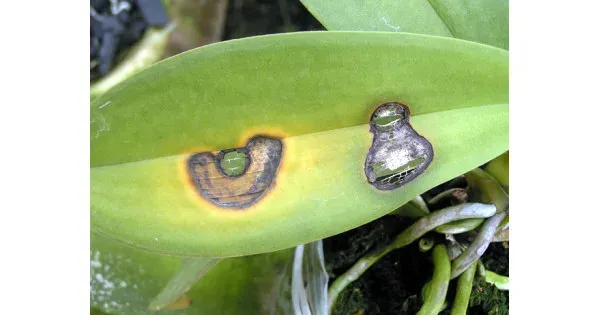
The most recognizable symptom is the appearance of dark, sunken spots on leaves, which may initially look like small, water-soaked dots. Over time, these spots expand and become dark brown or black.
In many cases, the lesions exhibit a concentric ring pattern. Under high humidity, the centers of these spots may produce gelatinous pink or orange spore masses, which are a hallmark of the Colletotrichum genus.
In addition to foliage, the pathogen can infect pseudobulbs and flower spikes, leading to browning, shriveling, and premature drop of flowers and buds.
Advanced stages of the disease result in the total collapse of leaf tissue, turning it brittle and yellow. If left untreated, the lesions coalesce, causing large portions of the leaf to die.
- Small, sunken, dark brown or black lesions.
- Concentric patterns within the necrotic spots.
- Pink or orange spore masses on the leaf surface.
- Premature defoliation and tissue decay.
Pathogen
Orchid anthracnose is primarily caused by the fungal pathogen Colletotrichum orchidis. This fungus is a specialized parasite that colonizes the tissues of various orchid species, causing significant structural damage to the plants.
The life cycle of the pathogen involves the production of conidia within structures called acervuli. These structures erupt through the epidermis of the host tissue, releasing spores that are easily spread by water droplets or air currents.
The fungus is highly resilient and can survive for extended periods in plant debris, contaminated pots, or growing media, making it a persistent threat in greenhouse environments.
Upon landing on a susceptible leaf, the spores germinate and form appressoria, specialized structures that allow the fungus to penetrate the plant cuticle and invade the intercellular spaces.
As the mycelium spreads, it secretes enzymes that degrade the plant cell walls, leading to the characteristic necrotic lesions associated with the infection.
Conditions for development
The development of orchid anthracnose is strongly correlated with high humidity levels, often exceeding 75%. Standing water on the surface of leaves is a primary catalyst for spore germination.
Temperatures ranging from 20°C to 28°C (68°F - 82°F) are considered ideal for the rapid growth and sporulation of Colletotrichum orchidis.
Poor ventilation and restricted airflow are significant environmental factors that allow moisture to persist on plant surfaces, providing the necessary window of time for the fungus to infect the host.
Stress factors, such as improper fertilization, inadequate light, or root system damage, significantly weaken the plant's resistance, making it more susceptible to infection.
Contaminated garden tools are one of the most common vectors for the disease, transferring spores from infected plants to healthy ones during routine maintenance or repotting.
Why it matters
Anthracnose can devastate an orchid collection by rapidly spreading from plant to plant. The aesthetic damage is often severe, making affected plants unsuitable for display or commercial sale.
By disrupting photosynthesis and exhausting the plant's nutrient reserves, the infection leads to stunted growth and a complete failure to produce blooms in subsequent cycles.
Severe infections that reach the pseudobulbs or crown of the plant can lead to the systemic decay of the orchid, ultimately resulting in the death of the entire specimen.
The presence of the disease necessitates strict quarantine measures, which are time-consuming and disruptive to the management of a private or commercial collection.
Long-term economic damage includes the cost of fungicides, labor for sanitation, and the potential loss of rare or expensive cultivars that are particularly sensitive to fungal pathogens.
Protection
The first line of defense is the immediate isolation of infected orchids. Use sterilized shears to remove affected parts, ensuring you cut well into healthy green tissue to remove all hidden mycelium.
After pruning, treat the cut surfaces with a fungicide paste or natural antiseptic like cinnamon to seal the wound and prevent secondary pathogens from entering.
Systemic fungicides containing active ingredients such as mancozeb, thiophanate-methyl, or copper-based compounds are effective at controlling the spread of the fungus.
Good cultural practices are essential: increase airflow around the plants, avoid overhead watering to keep foliage dry, and ensure that the growing media is well-draining.
Regular sanitation of the growing area and the use of sterile pots and tools during repotting will significantly reduce the risk of recurring outbreaks in your collection.
Discussion
No discussions yet — be the first.