
Orchid anthracnose
Colletotrichum coelogynes
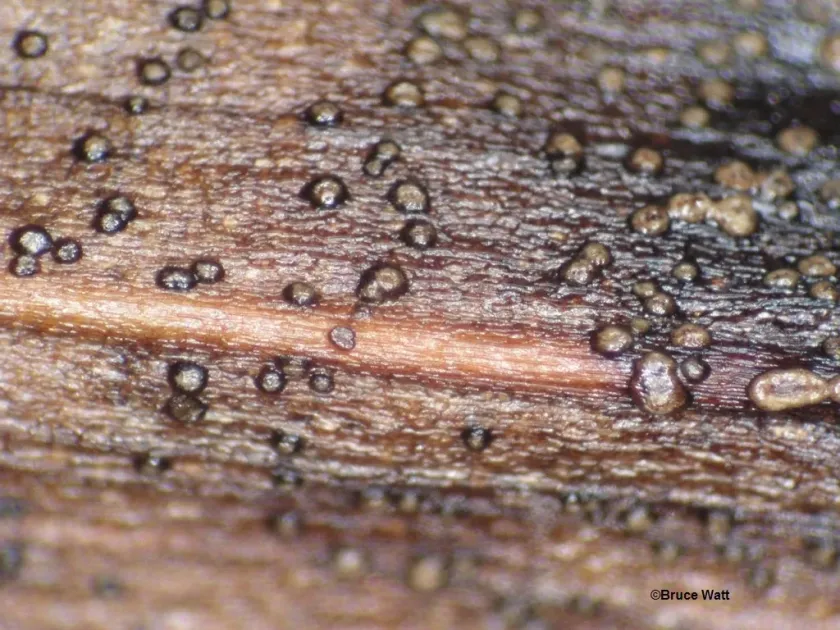
Description
Symptoms
The disease typically begins as small, water-soaked, yellowish spots on the leaves. As the infection progresses, these spots turn brown or black and often develop a well-defined border.
In mature lesions, you can observe concentric rings, which are a hallmark of anthracnose infection. In humid environments, small pink or cream-colored pustules appear, indicating active sporulation.
Pseudobulbs affected by the fungus become soft and spongy, eventually leading to shriveling and tissue collapse. If the infection reaches the crown, the entire plant may be at risk of death.
Flowers are also susceptible, showing tiny sunken spots that mar the beauty of the blooms. In severe cases, the flower buds may abort before they even have a chance to open.
The speed at which the necrotic tissue expands is a strong indicator of anthracnose. Without intervention, these spots can merge, covering the entire surface of the leaf within a short time.
Pathogen
Orchid anthracnose is caused by the fungal pathogen Colletotrichum coelogynes. This fungus is a specialized parasite that targets various orchid species, causing localized necrosis and eventual plant decay.
The fungus penetrates plant tissues through natural openings like stomata or via small mechanical wounds. Once inside, the mycelium rapidly colonizes the intracellular spaces, feeding on the plant's resources.
Its life cycle relies on the production of conidia, which are spores held in specialized structures called acervuli. Under optimal conditions, these spores are released in large quantities to infect neighboring plants.
The pathogen is highly persistent, capable of surviving in dead organic matter or within the potting substrate for extended periods. This makes eradication challenging in professional greenhouses.
The high virulence of Colletotrichum coelogynes allows it to thrive even in low-density collections. Understanding its ability to adapt to indoor microclimates is essential for effective mitigation.
Conditions for development
High relative humidity, typically exceeding 75%, is the primary environmental trigger for Colletotrichum coelogynes. Prolonged leaf wetness is highly conducive to spore germination.
Warm temperatures ranging from +22°C to +28°C create a perfect setting for the fungus to multiply aggressively. This range is common in many home and greenhouse environments.
Poor air circulation significantly increases the risk of an outbreak. Stagnant air prevents the drying of foliage and creates pockets of high humidity where the fungus can easily spread.
Nutritional imbalances, particularly an excess of nitrogen, can lead to succulent, weak growth that is more prone to fungal attacks. Proper fertilization is vital for maintaining a strong cuticle.
Inadequate hygiene, such as reusing pots without sterilization or splashing water during irrigation, acts as a primary vehicle for moving spores throughout the collection.
Why it matters
Orchid anthracnose is destructive to the aesthetic value of the plant, often rendering rare or valuable specimens unsightly. Beyond aesthetics, the disease saps the orchid's vigor.
As the infection consumes the plant's tissues, the orchid struggles to perform photosynthesis, leading to stunted growth. Over time, the plant becomes unable to produce new roots or leaves.
The infectious nature of the fungus poses a significant threat to commercial orchid growers. An undetected outbreak can lead to the loss of entire batches of plants in a short period.
Treatment is costly and time-consuming, involving the purchase of fungicides and increased labor for plant monitoring and sanitation. For many, the risk of total loss is the greatest harm.
If the infection reaches the stem or crown, the damage is often irreversible. This highlights the importance of early detection and immediate action to prevent systemic failure of the plant.
Protection
The immediate isolation of infected plants is the first rule of control. Keeping the source of the disease away from the rest of your collection helps prevent the spread of spores.
Surgical removal of infected parts should be done using sterile tools. Always ensure the cut is made into healthy, green tissue to remove all traces of the fungus.
Applying systemic fungicides containing copper, mancozeb, or triazoles is highly effective. Regular treatments at 10-14 day intervals are usually necessary to clear the infection.
- Improve greenhouse ventilation.
- Sterilize all cutting tools between uses.
- Quarantine all new plant additions.
- Avoid overhead watering of foliage.
Proactive care, including adequate light and balanced nutrition, builds strong, resistant plants. A healthy orchid is significantly more capable of resisting opportunistic fungal pathogens.
Discussion
No discussions yet — be the first.