
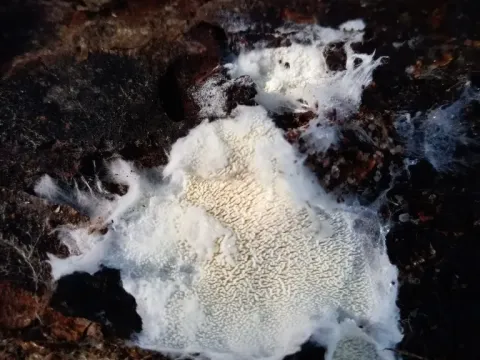
Trechispora stevensonii
Trechispora stevensonii
The causative agent of the disease is the basidiomycete fungus Trechispora stevensonii, classified as a soil-borne pathogen. This microorganism is capable of saprotrophic existence in the soil, feeding on organic matter, but can switch to a parasitic lifestyle under specific conditions.
What the section contains
Trechispora stevensonii
The fungus develops a fine, web-like mycelium that spreads through the rhizosphere. Unlike many aggressive pathogens, Trechispora stevensonii grows slowly but demonstrates high resistance to unfavorable environmental factors.
The biology of the pathogen is closely related to its ability to colonize organic matter in the upper soil horizons. The inoculum survives as hyphae or spores in the soil and on crop residues for several years, awaiting optimal conditions for infection.
The fungal mycelium penetrates root and stem base tissues through micro-cracks or wounds caused by soil-dwelling pests. During its life cycle, it secretes enzymes that degrade cell walls, weakening the host plant's structural integrity.
Systematically, this species belongs to the Hydnodontaceae family. Its identification is often challenging, as the fruiting bodies are rarely visible to the naked eye, requiring laboratory isolation and identification.
Disease development is directly related to soil moisture levels. The pathogen thrives in moderately moist and poorly aerated zones, where conditions favor mycelial expansion and root system infestation.
Temperature plays a crucial role in the fungus's aggressiveness. Trechispora stevensonii shows high activity during cooler periods, which often coincides with the early vegetative stages of various agricultural crops.
The presence of abundant non-decomposed plant residues in the soil facilitates the build-up of the infection pressure. Crops grown under no-till or reduced tillage systems may be at higher risk of colonization.
Increased soil acidity creates a favorable environment for the development of this fungus. In such soils, the natural competitive microflora is suppressed, allowing the pathogen to dominate the rhizosphere.
Inadequate crop rotation and planting susceptible crops on the same field too frequently lead to disease outbreaks. Furthermore, dense planting schemes that limit airflow and trap humidity increase the risk of fungal spread.
The primary damage is the inhibition of the root system, which leads to nutrient and moisture uptake deficiencies. This significantly reduces overall biomass and crop yield.
Root damage typically manifests as plant wilting during peak sunlight hours, even when soil moisture is adequate, due to the roots' inability to transport water to the leaves.
In cases of severe infection, seedling emergence is sparse, as the pathogen causes pre-emergence or post-emergence damping-off. This necessitates field reseeding and causes significant economic losses.
Damaged tissues become entry points for secondary infections, including bacterial rots. This accelerates the death of the plant and limits the possibility of effective chemical intervention.
In industrial production, the pathogen causes crop unevenness, complicating field operations and harvesting. The fungus may even persist on harvested crops if storage conditions allow for moisture accumulation.
Strict adherence to crop rotation, incorporating non-host crops, is the foundation of management. This strategy breaks the infection cycle and reduces the pathogen population in the soil.
Liming of acidic soils is a critical management practice. Maintaining a balanced soil pH significantly restricts the growth and activity of Trechispora stevensonii.
Agronomic practices, such as deep plowing, facilitate the rapid decomposition of plant residues, effectively reducing the infection source in the upper soil layers.
Systemic fungicide seed treatment is essential for protecting young seedlings during their most vulnerable stage. Chemical selection should target the specific activity spectrum of soil-borne fungi.
- Optimization of irrigation schedules to prevent over-saturation.
- Balanced nutrient application to enhance plant immune resilience.
- Utilization of certified, disease-free seed material.
- Regular phytosanitary monitoring of crop conditions.