
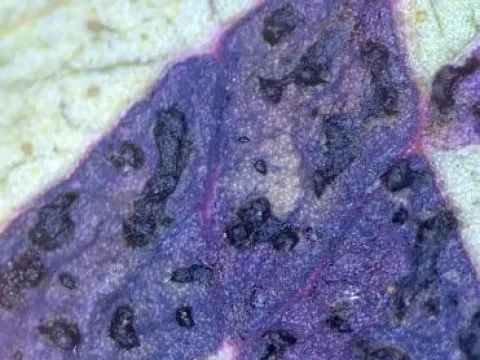
Eucalyptus teratosphaeria leaf spot
Teratosphaeria microspora
The causative agent of this disease is the ascomycete fungus Teratosphaeria microspora. This pathogen is a well-known member of the group of fungi causing leaf spot diseases in various Eucalyptus species globally.
What the section contains
Eucalyptus teratosphaeria leaf spot
The disease affects the photosynthetic organs of the tree, significantly impairing its physiological processes. It is recognized as a serious pathogen that colonizes leaf tissue during active growth phases.
The pathogen's life cycle is strictly dependent on environmental moisture, which is required for spore germination and infection establishment. The fungus creates reproductive structures known as conidiomata within the host tissue.
Once established, the mycelium spreads within the leaf mesophyll, causing cellular disruption and necrosis. The fungus is capable of surviving in dead leaf litter, serving as an inoculum source for subsequent seasons.
Dispersal primarily occurs through rain-splash and wind-borne spores, allowing the disease to spread rapidly within dense plantations or nurseries under humid conditions.
Initial signs of Teratosphaeria infection appear as small, chlorotic spots on the leaf surface. As the fungus develops, these spots enlarge and transition into distinct necrotic lesions, often dark brown or black in color.
A yellow halo typically surrounds the necrotic zones, reflecting the plant's response to fungal toxins. In cases of severe infection, lesions may coalesce, leading to significant areas of dead tissue on the leaf.
The underside of affected leaves often exhibits small, black, pin-head-sized structures, which are the fruiting bodies of the fungus. These structures release spores, facilitating the secondary spread of the infection.
Severe infestations lead to premature defoliation, which severely stresses the tree. Younger shoots and foliage are particularly vulnerable to these symptoms, leading to stunted growth.
- Chlorotic spots progressing to brown necrosis.
- Yellow halo surrounding necrotic leaf spots.
- Presence of black conidiomata on the lower leaf surface.
- Premature leaf drop and canopy thinning.
The development of Teratosphaeria microspora is highly favored by high humidity and moderate temperatures, typically between 18°C and 25°C. Prolonged wet periods significantly increase the risk of an outbreak.
Dense stand architecture, which limits airflow through the canopy, creates a microclimate with stagnant, humid air. This environment is ideal for spore germination and prolonged fungal activity.
Trees undergoing nutritional stress or those planted in unsuitable ecological niches are more susceptible to infection. Poor site selection is a critical management failure that exacerbates disease impact.
Seasonal patterns of infection often coincide with periods of high rainfall and cloudy, foggy weather. During dry seasons, the pathogen remains largely latent or restricted to plant debris.
The movement of contaminated nursery stock is the primary pathway for the pathogen's introduction into new, disease-free areas. Strict quarantine and phytosanitary checks are essential.
Teratosphaeria leaf spot poses a significant threat to eucalyptus productivity, particularly in young plantations. The reduction in leaf area leads to a sharp decline in photosynthetic output, resulting in diminished wood volume.
Persistent infections weaken the tree's overall vigor, predisposing it to secondary pests and other opportunistic pathogens. In severe cases, high infection levels can lead to the mortality of seedlings.
Economically, the disease impacts forestry operations by necessitating chemical interventions and potential replanting of affected areas. The loss of growth increment extends the time required for a harvestable crop.
The ecological stability of the forest is compromised when large-scale defoliation occurs. This can disrupt local biodiversity and negatively affect the aesthetic value of plantation areas.
Increased operational costs related to disease management and monitoring add to the financial burden of plantation maintenance, threatening the profitability of the forestry project.
Effective management begins with the selection of resistant Eucalyptus genotypes. Breeding programs aimed at identifying tolerance to Teratosphaeria are the most sustainable long-term strategy.
Cultural practices, such as maintaining appropriate tree spacing, are crucial to ensure good ventilation and reduce canopy humidity. This practice significantly lowers the potential for fungal buildup.
Sanitation measures, including the removal and destruction of infected leaf litter and pruning of infected branches, are essential to reduce the local inoculum load, especially in nursery settings.
Fungicide application may be warranted in high-risk areas or nurseries during favorable weather conditions. Proper timing of sprays based on weather monitoring is critical for efficacy.
Continuous monitoring and early detection of lesions allow for rapid response and containment. Strict adherence to biosecurity protocols when transporting seedlings prevents the widespread distribution of the fungus.