
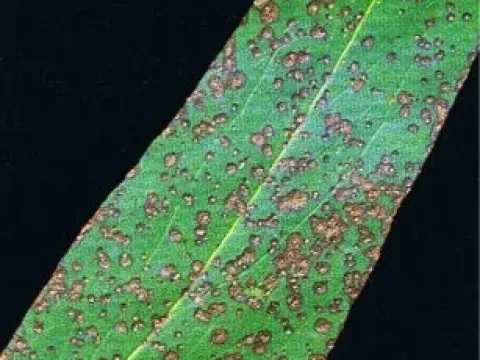
Eucalyptus Teratosphaeria leaf blight
Teratosphaeria cryptica
The disease is caused by the ascomycete fungus Teratosphaeria cryptica (formerly known as Mycosphaerella cryptica), which is recognized as one of the most destructive pathogens of Eucalyptus species.
What the section contains
Eucalyptus Teratosphaeria leaf blight
The fungus produces two types of spores: wind-dispersed ascospores that facilitate long-distance transmission, and conidia that allow for rapid local spread within the canopy.
It predominantly infects young Eucalyptus trees in nurseries and plantations, typically those under five years of age, causing significant physiological distress.
The pathogen can survive as saprophyte or dormant mycelium on fallen leaf litter and infected twigs, serving as a continuous source of inoculum for subsequent seasons.
Research into the genomic diversity of Teratosphaeria cryptica is ongoing to better understand its virulence and host specificity in different geographic regions.
The initial symptoms include small chlorotic spots on juvenile leaves, which progressively enlarge and turn into necrotic, reddish-brown or purple-colored lesions.
Infected leaves exhibit significant curling, twisting, and premature abscission, resulting in canopy thinning and stunted tree development.
Necrotic lesions frequently develop on young stems and petioles, which can cause severe shoot distortion and tip dieback.
Under conditions of high humidity, an olive-gray fungal fruiting layer may become visible on the underside of the leaves and on the affected stem lesions.
- Chlorotic and necrotic spots on young foliage.
- Leaf distortion and curling.
- Premature leaf drop.
- Shoot dieback and stem lesions.
The development of the disease is heavily dependent on moisture; periods of frequent rainfall, high humidity, and heavy dew are critical for spore germination and infection.
Temperatures ranging from 15 to 25 degrees Celsius create the optimal thermal environment for the mycelium to colonize the host tissues effectively.
Poor ventilation and high stocking density in nursery settings lead to prolonged leaf wetness, significantly accelerating the rate of infection spreading.
Young plantations that lack proper spacing suffer from microclimate conditions that favor persistent pathogen activity throughout the growing season.
Tree stress, often caused by nutrient imbalances or secondary insect attacks, reduces the host's natural defenses, leading to more severe disease outcomes.
Teratosphaeria leaf blight causes substantial economic losses by reducing the growth rate, biomass production, and overall wood quality of Eucalyptus plantations.
The loss of apical dominance due to shoot dieback results in abnormal branching patterns, which negatively impacts the potential timber volume and straightness.
High levels of infection can lead to the mortality of seedlings and saplings in nurseries, necessitating costly replanting and maintenance procedures.
Persistent foliage loss over several years weakens the overall vigor of the trees, making them susceptible to secondary pathogens and environmental stressors.
By impairing photosynthetic capacity, the disease restricts the carbon gain of the trees, which in turn limits the profitability of short-rotation forestry.
The most sustainable management strategy is the deployment of resistant or tolerant Eucalyptus genotypes through selective breeding and clonal propagation programs.
Good silvicultural practices, including proper site selection and optimal planting density, are essential to improve air circulation and reduce leaf wetness duration.
Sanitation practices such as removing infected branches and cleaning up leaf litter help to reduce the primary inoculum load within the plantation environment.
Chemical control using copper-based or systemic fungicides can be effective in high-value nurseries, provided they are applied before or early in the infection cycle.
Integrated disease management, involving regular field scouting and early detection, is crucial to minimize the economic impact and prevent widespread outbreaks.