
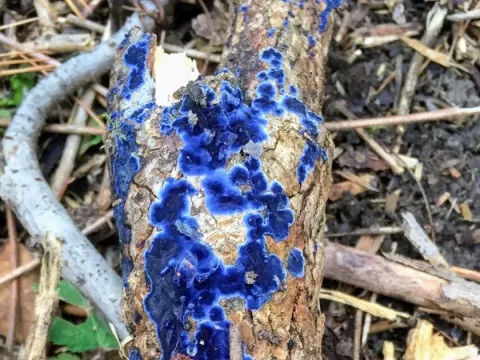
Cobalt Crust
Terana caerulea
The Terana caerulea, commonly known as Cobalt Crust, is a species of crust fungus in the family Phanerochaetaceae. It is distinguished by its intense, vibrant blue color, which is a rare feature in the fungal kingdom.
What the section contains
Cobalt Crust
This fungus acts as a saprotroph, meaning it derives its nutrition from decaying organic matter. It plays a significant ecological role by breaking down lignin and cellulose in dead hardwood branches and logs.
Its fruiting bodies form thin, flat, and spreading patches on the surface of the wood. These patches can span large areas and appear as a textured, leather-like film that adheres tightly to the substrate.
The lifecycle involves the release of spores that are transported by wind or water. Once they land on suitable, damp wood, they germinate and form a new mycelium network.
Although it is not a primary pathogen of healthy, thriving trees, it can colonize weakened or wounded areas, effectively becoming an opportunistic organism in neglected orchards or forests.
The primary symptom is the appearance of bright, cobalt-blue patches on the bark of trees, particularly on the underside of branches or on fallen logs where moisture collects.
As the fungus matures, the texture of the growth may become velvety or slightly crinkled. The deep blue pigmentation is persistent and remains visible throughout the year, even in dry conditions.
The wood beneath the fungus may show signs of decay, often appearing bleached or softened, which indicates the breakdown of the cellular structure of the timber.
In humid environments, the growth may look more succulent, while in drier periods, the margins of the fungus might become slightly brittle or cracked.
Because the fungus targets dead wood, identifying it on a living tree is a clear indicator that specific limbs or sections are experiencing severe stress or decay.
Cobalt Crust thrives in high-humidity environments. It is frequently found in shaded, cool areas where moisture remains trapped against the tree trunk or on rotting wood resting on the forest floor.
It prefers hardwood substrates such as oak, beech, ash, and poplar. The presence of damp, decaying wood is the essential requirement for its establishment and colonization.
Dense canopies and lack of sunlight prevent the evaporation of water from bark surfaces, creating an ideal microclimate for Terana caerulea to flourish.
Mechanical injuries to the bark, such as those caused by storms, wildlife, or improper pruning, provide the entry points necessary for the fungus to infiltrate deeper tissues.
The fungus is most active during the spring and autumn seasons when temperatures are moderate and rainfall is consistent, allowing the mycelium to spread rapidly across available surfaces.
The impact of Cobalt Crust is primarily related to the decomposition of wood. While it is rarely the initial cause of a tree's death, it accelerates the decay of structural wood.
By weakening the inner layers of the branches and trunk, the fungus reduces the tree's structural integrity, making it more prone to breaking under heavy wind or snow loads.
Its presence on ornamental trees is often considered unsightly, detracting from the aesthetic value of a garden or park setting due to the striking and unusual color of the fungal growth.
The moisture retained by the fungal colonies can create a bridge for other, more aggressive pathogens to enter the tree, leading to complex infections that are harder to treat.
Neglecting the presence of this fungus on fruit trees may eventually lead to the loss of large branches, which in turn reduces the overall productivity and lifespan of the tree.
Effective management begins with good sanitation. Removing deadwood, fallen branches, and decaying stumps from the orchard prevents the fungus from finding a place to establish.
Proper pruning techniques are essential. All cuts must be clean and protected with wound sealants to ensure the wood does not remain damp and exposed to fungal spores.
Improving air circulation within the tree canopy by thinning out excess foliage helps reduce the humidity levels that the Cobalt Crust fungus needs to survive.
If the fungus is detected, the affected areas should be scraped clean back to healthy wood and disinfected with appropriate copper-based fungicidal solutions.
- Regular monitoring of tree health during the dormant season.
- Ensuring adequate soil drainage to minimize ambient humidity.
- Maintaining tree vigor through balanced fertilization and hydration.